Members Behaving Badly
£22.00Members Behaving Badly: A History of Britain in 52 Parliamentary RoguesÂ

Showing 113–128 of 173 resultsSorted by latest
Members Behaving Badly: A History of Britain in 52 Parliamentary RoguesÂ
In ancient times, the vast area that stretches across what is now modern-day Iraq and Syria saw the rise and fall of epic civilizations who built the foundations of our world today. It was in this region, which we call Mesopotamia, that history was written down for the very first time. With startling modernity, the people of Mesopotamia left behind hundreds of thousands of fragments of their everyday lives. Immortalised in clay and stone are intimate details from 4000 years ago. We find accounts of an enslaved person negotiating their freedom, a dog’s paw prints as it accidentally stepped into fresh clay, a parent desperately trying to soothe a baby with a lullaby, and countless receipts for beer. Historian Dr Moudhy Al-Rashid examines what these people chose to preserve in their own words about their lives, creating the first historical records and allowing us to brush hands with them thousands of years later.
A spectacular, vivid, groundbreaking work of history which takes us into the mind and lives of medieval women.
From renowned, prize-winning historian Frank Dikötter – ‘the historian of China’ (Spectator) – a commanding new history of China’s path to Communism, brought to the people at the barrel of a gun

A thrilling political history about the months that brought England to the cusp of civil war, from the acclaimed author of The Blazing World
Could we ever see Vladimir Putin in the dock for his crimes? What about a Western ally like Benjamin Netanyahu? Putting a country’s leader on trial once seemed unimaginable. But as Steve Crawshaw describes in ‘Prosecuting the Powerful’ – a blend of powerful eyewitness reporting and gripping history – the possibilities of justice have been transformed. Crawshaw includes recent stories from the front lines of justice in Ukraine, Israel/Palestine and at The Hague, as well as his earlier encounters with war criminals like Slobodan Milosevic.
The word ‘samurai’ stands for ideals of courage, honour, self-sacrifice and loyalty. Yet much of the common understanding is imaginative fiction. This book explores the concept from medieval reality, through early modern changes, to today’s hugely varied popular culture, challenging preconceptions and exploding myths.

The true story of Daniel Defoe and the dirty tricks which helped bring Scotland into union with England. In 1706, Edinburgh was on the brink of a popular uprising. Men and women took to the streets to protest the planned union with England, fearing the end of Scottish sovereignty. But unbeknownst to the mob, a spy was in their midst – the English writer Daniel Defoe, now bankrupt and thrice pilloried, had turned a government agent. Marc Mierowsky tells the dramatic story of Defoe and his fellow spies as they sabotaged the Scottish independence movement from the inside. Together they disseminated propaganda and built a network of operatives from London to the upper Highlands, providing the English government with up-to-the-minute intelligence and monitoring its adversaries’ every move.
“At once deeply researched and as readable as a thriller.”?Mark Galeotti ? “An important book about the world’s most dangerous mercenary outfit. Margolin unearths new details that will surprise readers.”?Sean McFate ? “Margolin takes readers deep into the shadowy underworld. . . . A must read.”?Clarissa Ward, CNN “A tale of violence and political intrigue that reads like a Tom Clancy novel written by Fyodor Dostoyevsky.”?The Wall Street Journal ? “Riveting. . . . It’s a vital window onto the weird world of secretive, privatized modern warfare.”?Publishers Weekly (starred review) An eye-opening, terrifying history of this notorious and widely influential mercenary group. Â This book exposes the history and the future of the Wagner Group, Russia’s notorious and secretive mercenary army, revealing details of their operations never documented before. Using extensive leaks, first-h
An astonishing maritime adventure: the true story of a Captain’s wife forced to take the helm in the most perilous seas, beating the odds in Antarctica to save herself, her husband and their ship’s mutinous crew.
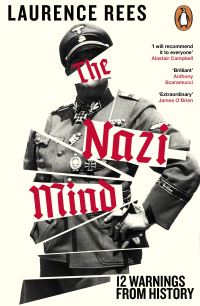
How could the Nazis have committed the crimes they did? Why did commandants of concentration and death camps willingly – often enthusiastically – oversee mass murder? How could ordinary Germans have tolerated the removal of the Jews? In this book, Laurence Rees combines history and the latest research in psychology to help answer some of the most perplexing questions surrounding the Second World War and the Holocaust. Ultimately, he delves into the darkness to explain how and why these people were capable of committing the worst crime in the history of the world. Rees traces the rise and eventual fall of the Nazis through the lens of ‘twelve warnings’ – whilst also highlighting signs to look out for in present day leaders who, for example, take control of the media, propound conspiracy theories, and talk about ‘them’ against ‘us’.
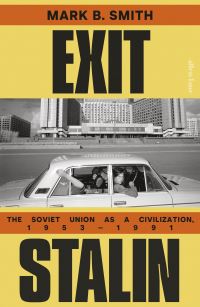
With Stalin’s death, the Soviet Union remained a repressive, harsh and belligerent place, but one which became more predictable for its citizens and one which made a genuine attempt to create the egalitarian, progressive country that the Russian Revolution had once promised. That this attempt would fail was not clear until the 1980s. Mark B. Smith’s book recreates the day-to-day life of this vast state, the largest ever to exist.
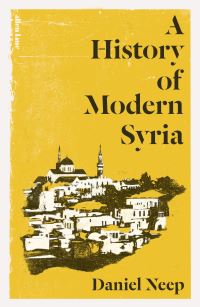
Few countries have had as vexed a political history as Syria. Carved out of the Ottoman empire at the end of the First World War, Syria was brutally ruled as a French colony, cut off by a series of new borders with equally newly created neighbours that pulled apart families, trade networks and political assumptions that had already been ravaged by the war. Syria’s subsequent history has been a series of attempts to make sense of its borders, including a failed attempt in the late 1950s to unite with Egypt and several humiliations at the hands of Israel’s armed forces. It has been a satellite of France, an ally of the USSR and, most recently, torn apart by a civil war that has now been in turn subverted by the rise of the Islamic State, an entity that refuse to acknowledge any of Syria’s existing borders.
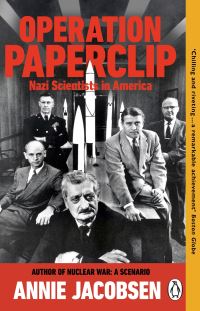
In the chaos following WWII, many of Germany’s remaining resources were divvied up among allied forces. Some of the greatest spoils were the Third Reich’s scientific minds. The United States secretly decided that the value of these former Nazis’ forbidden knowledge outweighed their crimes, and the government formed a covert organization called Operation Paperclip to allow them to work without the knowledge of the American public. In this book, Annie Jacobsen follows more than a dozen German scientists through their postwar lives and into one of the most complex, nefarious, and jealously guarded government secrets of the 20th century.
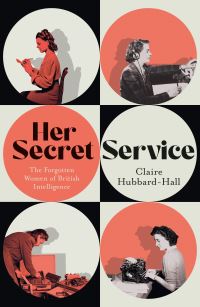
Since the inception of the Secret Service Bureau back in 1909, women have worked at the very heart of British secret intelligence – yet their contributions have been all but written out of history. Now, drawing on private and previously-classified documents, leading historian Claire Hubbard-Hall brings their gripping true stories to life. From encoding orders and decrypting enemy messages to penning propaganda and infiltrating organisations, the women of British intelligence played a pivotal role in both the First and Second World Wars. Prepare to meet the true custodians of Britain’s military secrets.
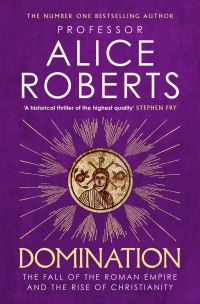
A sweeping and gripping new history of the decline of the Roman Empire and the dawn of the Catholic Church by number one bestselling author Professor Alice Roberts.Â