Showing 17–32 of 252 resultsSorted by latest
-
£30.00
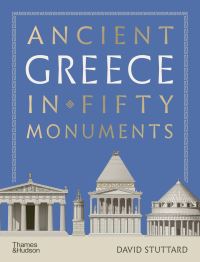
An arresting visual tour of the great sites of ancient Greece, told through its city states and the monuments they built to endure through the ages. ‘We have raised … monuments that those alive today look on with wonder, as those in generations still to come will wonder, too.’ More than 2,000 years later, the words uttered by the Athenian politician Pericles have been proven correct many times over. Ancient Greece continues to captivate, and its monuments still inspire awe. But what is it that makes something ‘Greek’? Exploring ancient Greece through its monuments – from the Parthenon in Athens to the sanctuary of Apollo at Delphi and the Temple of Zeus at Olympia – classicist David Stuttard reveals the values that united the disparate Greek world and made their mark on history. New digital reconstructions bring ancient Greece to life via buildings and monuments that still survive and can be visited today.
-
£25.00
From the bestselling author of Viking Britain, a stunning new perspective on the medieval world.
‘Surprising, original and compelling’ RORY STEWART
-
£16.99
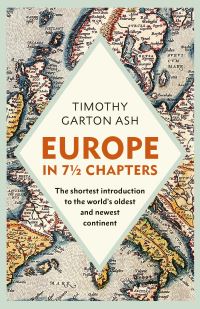
It has never been more important to understand the rich and fascinating story of the European continent. As the old global order crumbles under the double shock of Donald Trump and Vladimir Putin, everyone is wondering whether Europe can step into the breach. But what is this Europe? Drawing on a lifetime of studying, travelling in and writing about Europe, Timothy Garton Ash tells the continent’s story in a hundred pages. Brilliantly readable, witty, accessible yet profound,’ Europe in 7 1/2 Chapters’ takes you on an exhilarating journey through geography, history and culture – from wars and revolutions to food and football – to show how Europe came to be as it is today: more united than ever, and more divided. Can it still flourish in this dangerous new world and even shape it for the better?
-
£14.99
Historian Bettany Hughes unearths the stories of a civilisation through seven of its most precious treasures, revealing the people, power and beliefs that shaped the Nile’s enduring world. Her thrilling journey of discovery explores the secrets and splendour of the Great Pyramid of Giza, the Sphinx, Cleopatra’s secret island of Philae, Hatshepsut’s temple at Deir el-Bahari, Tutankhamen’s tomb, the underwater city at Alexandria, and the most beautiful mummy in the world. Drawing on her own vivid first-hand encounters at each site, Hughes brings to life the splendour, drama and humanity of ancient Egypt as never before.
-
£25.00
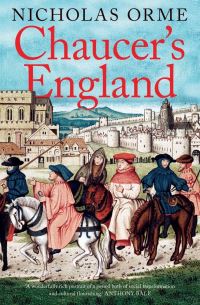
Who were Chaucer’s thirty-three pilgrims, and why were they heading to Canterbury? What do they and their tales tell us about medieval England as a place, and about the daily lives of its people? Leading historian Nicholas Orme brings literature and history together to answer this question, using the ‘Canterbury Tales’ and the other great writings of Chaucer’s day. In ten chapters, he explains what people thought: about time and space, religion and the social system. He shows their wide degree of literacy and how they spent their leisure. He takes us through the politics of the day, the crusades, and the lifestyles of the nobility, clergy, townsfolk and country dwellers, along with the landscapes they lived in. This is an intimate and intriguing guide to the world which produced some of the greatest poetry in the English language, re-creating Chaucer’s England in all its richness and variety.
-
£14.99
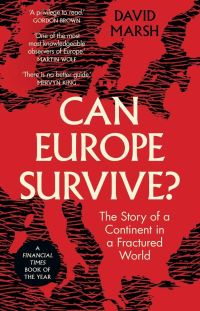
A bold new account of Europe’s plight as it faces political fracture, economic stagnation and external challenges from the U.S., China and Russia. Drawing on unpublished archives and interviews with over 150 leading figures, David Marsh investigates Europe’s present crisis, from the march of populism, Franco-German malaise, and the breakdown of relations with Putin’s Russia. Fault lines are emerging in the monetary union, while the fight against climate change has impacted growth. Facing its gravest test since WWII, Europe must find fresh reserves of resilience – and seek out renewed international partnerships to ensure success.
-
£25.00
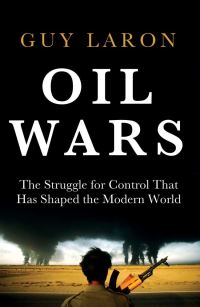
For the last 20 years, Putin’s Russia has weaponised its vast resources of oil and gas, trying to use them to dominate Ukraine and, later, with growing audacity, challenge NATO itself. But this is far from the first time this tactic has been used. Over the last 150 years, access to oil and gas has repeatedly been used as a tool to gain an advantage. Looking at the global picture, including Vietnam, India, and Egypt, Guy Laron charts the connection between oil, gas, and political power from the First World War through the Cold War to the crises of today. He shows how political actors leveraged their power through key chokepoints: production sites, pipelines, and even refineries. Whilst at the same time, companies lobbied states to block rivals and eliminate competition. This has been a high-stakes game over the controlling heights of the world economy that continues until this very day.
-
£40.00
In 1804, immediately after his coronation as Emperor, Napoleon created the Marshalate, the supreme martial rank of the empire. Over the next decade, he elevated to it some of his most outstanding generals, who played leading roles in his extraordinary campaigns – including the brave Ney, the flamboyant Murat, the vain Massena, the iron Davout and the logistics master Berthier. Some of them were son of aristocrats, others of innkeepers or coopers, but all carried the baton of a Marshal of France. Andrew Roberts masterfully captures their personalities and ambitions, capacities and rivalries. But unlike Lincoln, who forged a team of rivals, Napoleon created a nest of vipers whose lust for glory descended into destructive competitiveness and mutual recrimination. For all his inspiring qualities as a leader, he manipulated and controlled those whose loyalty he most needed to survive, and ultimately only two of them rode beside him at Waterl
-
£30.00
A battle hymn to the idea of the fortress, what it is, why and where it came from; spanning prehistoric hill fort to twenty-first century military base
-
£14.99
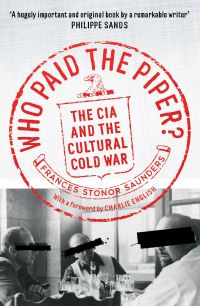
During the Cold War, the battle for ideological and economic supremacy was fought on every front. At the heart of the US’s campaign to inoculate the world against Communism and advance its own liberal democratic ideals was the CIA’s Congress of Cultural Freedom – an organisation that was as clandestine as it was powerful. Drawing on declassified documents and exclusive interviews, this book exposes the astonishing secret campaign to deploy some of the most vocal exponents of intellectual freedom in the West (including Hannah Arendt, Isaiah Berlin, Leonard Bernstein, Robert Lowell, George Orwell, and Jackson Pollock) as instruments – whether they knew it or not, whether they liked it or not – of America’s secret service. One of the great stories of intellectual and artistic corruption by power, this work is a classic of investigative history and a landmark portrait of a period when politics and culture became dangerously intertwined.
-
£25.00
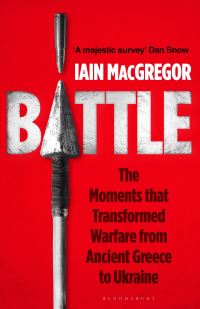
A richly detailed exploration of the most significant battles of the last 3000 years and how they transformed history
-
£35.00
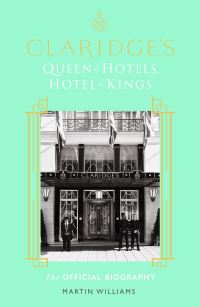
There is no hotel in the world quite like Claridge’s. A byword for luxury, exclusivity and grandeur, it has, from its inception in 1812, showcased the finest traditions of British hospitality while continually demonstrating a flair for innovation and renewal. For generations of crowned heads, power brokers and celebrities, it has been the best – indeed, the only – place to stay in London. Few would dispute its right to be considered the Queen of Hotels and Hotel of Kings. In this comprehensive, lively and superbly readable account, Martin Williams invites readers to check in at the world’s most storied hotel and immerse themselves in the colourful history of a London landmark. He evokes the glamour, excitement and drama of each chapter in Claridge’s unfolding story while taking us behind the scenes to explain how and why it has become, for all who know and love it, both a legend and a way of life.
-
£25.00
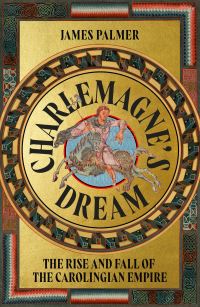
Today, the Carolingians are best known as the dynasty of Charlemagne. In a few remarkable decades spanning the late eighth and early ninth centuries, Charlemagne united much of modern-day Europe through conquest and diplomacy, establishing the continent’s first empire since the fall of Rome. ‘Charlemagne’s Dream’ depicts the entire sweeping arc of the Carolingian dynasty – the men and women who laid the foundations for his achievements, and the colourful heirs who squandered his legacy. They fought and traded with power centres as far-flung as Córdoba, Constantinople, and Baghdad. They gathered scholars and philosophers to drive a cultural and intellectual renaissance. They allied with the pope, forever changing the relationship between church and state. And they dispatched the first missionaries to northern Europe, expanding Christendom’s reach farther than ever imagined.
-
£18.99
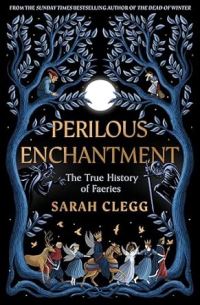
We often think of them as tiny, glittering creatures fluttering about in pastel tulle, but fairies haven’t always been so benign. Here, historian Sarah Clegg explores the true history of fairies, and the menace and ambiguity that always lurks within the shimmering fantasy. This history takes us from elf fires in Iceland to a burial mound in Ireland; and from a stream in Cottingley where two sisters created a fairy hoax to a modern-day fairy ball in Los Angeles. Along the way, Clegg reveals fairies’ connection to ancient gods and their role in the witch-trials, and examines their seductive presence in romantasy today. This is a story of how fairy myths grew and spread across Europe, of how they changed and developed, and why we have, for centuries, been so enthralled by the danger and enchantment of the fae.
-
£20.00
Ancient Rome retold through the lives of ordinary people.
-
£35.00
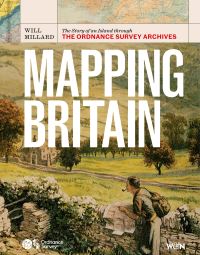
Will Millard brings the illustrious Ordnance Survey archive to life in a fully-illustrated story of Britain that explores what these maps can tell us about where, why and how we have moved around this island over the centuries. We find disappearing villages, secretive smuggling paths, top-secret military plans and even the detailed maps of Buckingham Palace gifted to Queen Victoria on her 50th jubilee. Rich, rewarding and endlessly fascinating, the book is an unmissable record of how our landscape has changed – and how it might do so in the future.