Showing 97–112 of 195 resultsSorted by latest
-
£16.99
For over five centuries, the Roman Empire ruled much of Europe, North Africa and the Middle East. It produced some of history’s greatest orators and statesmen, as well as some of its most debauched and corrupt tyrants. Shaping world affairs, the Roman Empire advanced economics, trade, archaeology and culture, but did so through conquest, bloodshed and enslavement of its enemies. This was the Roman way: vae victis, ‘woe to the conquered’. In this book, historian Jacob F. Field tells the entire story of Imperial Rome. Beginning with Julius Caesar first laying the foundations for the Empire right up to the collapse of Rome’s power, follow the journey of the Empire’s rise to unprecedented heights and learn what caused it to eventually fall. This accessible and entertaining history tells the stories of the greatest triumphs and most catastrophic disasters, the battles that defined the era, and what it was like to live under the Romans.
-
£25.00
The most famous trial of the twentieth century – told through the eyes of the women history forgot. In November 1945, the world turned its gaze to Nuremberg. Inside a courtroom built by and for men, justice was being sought for crimes almost beyond comprehension. The spotlight fell on Nazi leaders, Allied prosecutors and military judges – but in the shadows, women were recording, interpreting, witnessing, painting, testifying. Yet their names were often missing from the headlines. Eighty years on, this book finally returns them to the centre of the story. The work follows eight extraordinary figures: a young Soviet interpreter balancing political survival with truth-telling; a British painter capturing justice in oils; a French resistance fighter who survived Auschwitz to confront her persecutors; a Hungarian countess hosting both Nazis and survivors in a single house.
-
£12.99
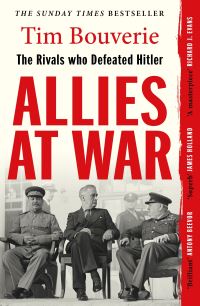
After the fall of France in June 1940, only Britain stood between Hitler and total victory. Desperate for allies, Winston Churchill did everything he could to bring the United States into the conflict, drive the Soviet Union and Nazi Germany apart and persuade neutral countries to resist German domination. By 1942, after the German invasion of Russia and the Japanese attack on Pearl Harbor, the British-Soviet-American alliance was in place. Yet it was an improbable and incongruous coalition, divided by ideology and politics and riven with mistrust and deceit. Churchill, Roosevelt and Stalin were partners in the fight to defeat Hitler, yet they were also rivals who disagreed on strategy, imperialism and the future of liberated Europe. Only by looking at their points of conflict, as well as of co-operation, are we able to understand the course of the war and world that developed in its aftermath.
-
£16.99
Mary Beard points to the surprising connections between antiquity and the present. From revolutionaries to dictators, Bob Dylan to Beyoncé, she joins forces with the varied modern characters who have been transfixed by the ancient world. It’s not compulsory, she argues, to be excited by antiquity, but it’s a shame not to be. After half a century teaching and studying classics, she fills the book with lively stories, curious facts and some good gossip. This book explains why the deep past does really affect us all.
-
£25.00
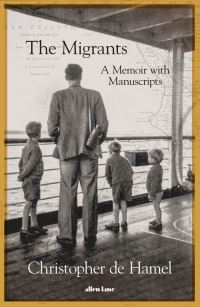
Christopher de Hamel is one of the world’s best-known scholars and writers on illuminated manuscripts. He was mostly brought up in the south of New Zealand, where his family moved when he was four. This book magically evokes a childhood at vast distance from Europe, recalling his thrill and wonder in first encountering medieval manuscripts in libraries there and the realization that they too are migrants far from home. ‘The Migrants’ explores the immense journeys of books and people. It is a tale of colonization and the migration of culture, of motives and idealism, triumphs and disasters, bringing us face-to-face with history.
-
£11.99
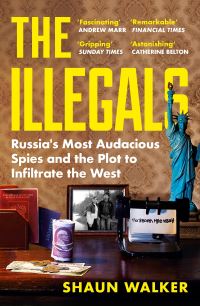
In 2010, two decades after the Cold War, ten Russian spies were arrested in the US following a ten-year FBI operation. Among them were three couples who had lived as Americans for years, and one agent who had nearly forgotten Russian. They had hidden their true identities from their children, neighbours and even their partners. Moscow expert Shaun Walker captures the untold history of Russia’s deep cover spy programme, from the ‘great illegals’ of the 1920s and 1930s to the twenty-first century, when agents maintained their fake identities and loyalties after the fall of the Soviet Union.
-
£36.99
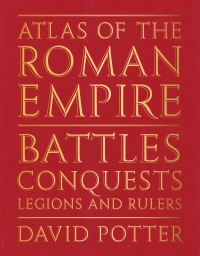
‘Atlas of the Roman Empire’ explores every aspect of the empire’s rise, apogee and fall. Comprehensive political maps show the dynamic ebb and flow of conquest and resistance. Battle maps illustrate key victories and defeats, illuminating the tactics that made Rome so successful, as well as its errors and disasters. Political and social life is not neglected, featuring surprisingly intimate portaits of life across the empire, from the emperors and their rivals to ordinary soldiers.
-
£14.99
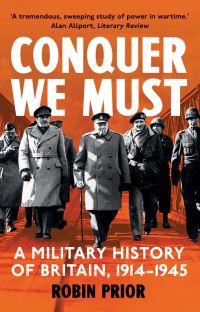
The First and Second World Wars were separated by a mere two decades, making the period 1914-1945 an unprecedentedly intense and violent era of history. But how did Britain develop its complex military strategy during these wars, and how were decisions made by those at the top? Robin Prior examines the influence politicians had on military operations, in the first history to assess both world wars together. Drawing uniquely on both military and political archives and previously unexamined sources Prior explores the fraught relationships between civilian and military leaders: from Lloyd George’s remarkably interventionist stance on military tactics during the First World War to Churchill’s near-constant arguments with American leaders during the Second.
-
£25.00
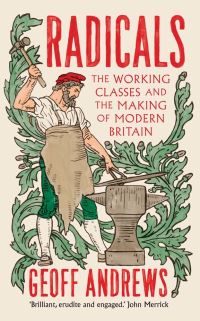
The political Left in Britain rose out of the Industrial Revolution, as the working classes emerged as the leading force in the call for social change. Their contributions extended widely to political representation, the birth of the Labour Party and women’s suffrage, the autodidact tradition in adult education, and Britain’s literary culture. Throughout subsequent decades, the working classes remained central to the British radical tradition. Geoff Andrews traces the history of the Left and the Labour Party through the ideas of leading thinkers, writers, educationalists, trade unionists, and politicians. Ranging from the Workers Educational Association to the General Strike and the Women’s Liberation Movement, Andrews uncovers the voices of key figures.
-
£10.99
40 Maps That Will Change How You See the World is a collection of historic and contemporary maps and the insights they reveal about geography, geopolitics, art, history, science and society.
-
£20.00
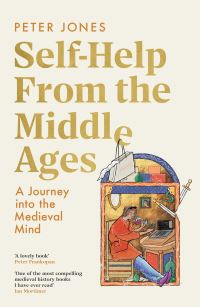
When Dante called despair ‘the sin that freezes the heart,’ was he describing the first burnout? What can a painting by Giotto reveal about our hunger to see others fail? Can desire ever lift us closer to wisdom, not drag us from it? What can a twelfth-century monk teach us about burnout, envy, or despair? Far more than we might imagine. In ‘Self-Help from the Middle Ages’, historian Peter Jones travels through Europe’s archives and libraries to uncover a lost psychology: a world where confession was therapy, sin was diagnosis, and the Seven Deadly Sins served as a map of the human mind.
-
£11.99
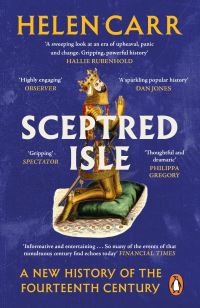
Beginning with the death of Edward I in 1307 and ending with the deposition of Richard II in 1399, ‘Sceptred Isle’ is the story of a century told through the lives of the last Plantagenets, uncovering lesser-known voices and untold stories along the way. Through the epic drama of regicide, war, the prolonged spectre of the Black Death, religious antagonism, revolt and the end of a royal dynasty, we encounter the human stories behind a fractured monarchy, the birth of the struggle between Europeanism and nationalism, social rebellion and a global pandemic. ‘Sceptred Isle’ is a thrilling narrative account of a century of revolution, shifting power and great change – social, political and cultural – shedding new light on a pivotal period of English history and the people who lived it.
-
£10.99
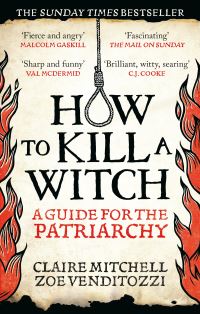
As a woman, if you lived in Scotland in the 1500s, there was a very good chance that you, or someone you knew, would be tried as a witch. Witch hunts ripped through the country for over 150 years, with at least 4000 accused, and with many women’s fates sealed by a grizzly execution of strangulation, followed by burning. Inspired to correct this historic injustice, campaigners and writers Claire Mitchell, KC, and Zoe Venditozzi, have delved deeply into just why the trials exploded in Scotland to such a degree. In order to understand why it happened, they have broken down the entire horrifying process, step-by-step, from identification of individuals, to their accusation, ‘pricking’, torture, confessions, execution and beyond.
-
£25.00
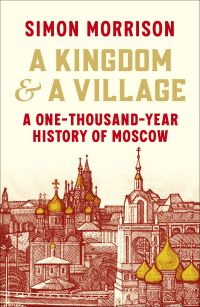
The city of Moscow stands at the centre of a nation comprising eleven percent of the globe’s landmass, 11 time zones and nearly 150 million people, some 13 million of whom live in the capital. In ‘A Kingdom and a Village’, historian Simon Morrison offers a vividly rendered history of Russia’s heart and soul, tracing its transformation from a ‘big village’ – the demeaning nickname the St. Peterburg nobility gave to its provincial neighbour – into a spectacular metropolis of vast geopolitical import.
-
£30.00
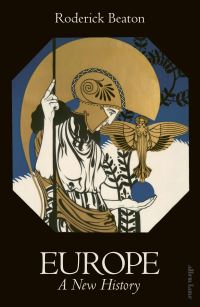
Roderick Beaton tells the story of Europe as never before – as the history of an idea, and a collective identity. Since its dramatic birth in ancient Greece, ‘Europe’ has been defined, and redefined, by its people. Through this powerful lens, and with the narrative drive and scope of a novelist, Beaton deftly surveys Europe’s major historical developments: the rise and fall of Rome; the explosion of Christianity; the intellectual ferment of the Renaissance and the Enlightenment; the arrival of Europeans in the Americas; the violent upheavals of the 19th and 20th centuries; and the uncertainties of the present. Throughout, original sources allow the voices of the past, from Tacitus to Thatcher, to speak for themselves. Grappling with the multi-layered identities that have always come with being European, Europe places the Europe of today in a long arc of history stretching back more than 2500 years.
-
£10.99
The ancient Roman empire was the supreme arena, and to rule as a Caesar was to stand as an actor upon the great stage of the world. No biographies invite us into the lives of the Caesars more vividly or intimately than those by Gaius Suetonius Tranquillus, written from the centre of Rome and power, in the early 2nd century AD. That Rome lives more vividly in people’s imagination than any other ancient empire owes an inordinate amount to Suetonius. Now award-winning author and translator Tom Holland brings us even closer with this translation. Giving a deeper understanding of the personal lives of Rome’s first emperors, and of how they swayed the fates of millions, ‘The Lives of the Caesars’ provides an immersive experience of a time and culture at once familiar and utterly alien to our own.