Nuremberg
£10.99The compelling story of the only German-Jewish translator to work with the psychiatrists in Nuremberg prison

Showing 113–128 of 195 resultsSorted by latest
The compelling story of the only German-Jewish translator to work with the psychiatrists in Nuremberg prison

Trace the tumultuous history of Europe during the Early Middle Ages through 90 specially commissioned maps and a authoritative narrative. Medieval Europe remains a mystery to many, yet the relative dearth of information about the period cannot mask its crucial importance in history. Often mischaracterized as a time of darkness and decline, the period from AD 476 to 1000 was marked by turmoil, rebirth and transformation. From the towering legacy of Constantine to the iron rule of Charlemagne, and the Huns, Goths and Saxons to the Slavs, Franks, Vikings, Rus, Bulgars and Magyars, John Haywood brings to life the dynamic story of how a new Europe emerged from the ashes of the crumbling Roman Empire. We witness the spread of Christianity, the emergence of Islam, the rise and fall of kingdoms, and the birth of the leading nations of modern Europe.
Before the revolution, the Shah of Iran seemed invincible. The world watched in awe as he commanded a huge army and oversaw an economy awash with billions of dollars of oil revenues. The regime’s secret police had crushed communist opposition and the Shah appeared to have bought off the conservative Muslim clergy inside the country. On the international stage, Iran had become an invaluable ally to the West during the Cold War. But village streets spoke of a different country – people derided the Shah as an American lackey and blamed him for economic inequality, for spending recklessly on lavish parties and for ignoring the Muslim majority. When a volcanic religious revolution erupted, led by Ayatollah Khomeini, the Shah was forced into exile. How did it all go so wrong? This book reveals how the Iranian Revolution was as world-shattering an event as the French and Russian revolutions, and how its repercussions are still felt today.
A Book of the Year in the Daily Telegraph and Economist
'This book reads like a spy novel' FINANICAL TIMES
'Entertaining and vivid' OBSERVER
'Reads like a thriller' THE SUN
————————————
The astonishing story of the ten million books that were smuggled across the Iron Curtain during the Cold War.
This year, as they have for millennia, many people around the world will set out on pilgrimages. But these are not only journeys of personal and spiritual devotion – they are also political acts, affirmations of identity and engagements with deep-rooted historical narratives. Kathryn Hurlock follows the trail of pilgrimage through nineteen sacred sites – from Tai Shan to Jerusalem, Amritsar to Buenos Aires – revealing the many ways in which this ancient practice has shaped our religions and our world. Pilgrimages have transformed the fates of cities, anointed dynasties, provided guidance in hard times and driven progress in good. Filled with fascinating insights, this book unveils the complex histories and contemporary endurance of one of our most fundamental human urges.
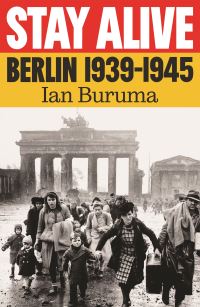
In 1939, when Ian Buruma’s epic opens, Berlin has been under Nazi rule for six years, and its 4.3 million people have made their accommodations to the regime, more or less. When war broke out with Poland in September, what was most striking at first was how little changed. Unless you were Jewish. Then life, already hard, was soon to get unfathomably worse. By 1943, with the German defeat at Stalingrad, ordinary life in Berlin would acquire an increasingly desperate cast. The last three years of the war in Berlin are truly a descent into hell, with a deranged regime in desperate free fall, an increasingly relentless pounding from Allied bombers, and the mounting dread of the approaching Soviet army. And by war’s end Berlin’s population had fallen by almost half. Among the people trying to stay alive in the city was Ian Buruma’s own father, a prisoner conscripted into forced labour in the war economy along with 400,000 other imported work

The great majority of people alive today have come of age in a world of remarkable stability, presided over by either one or two superpowers. This is not to say the world has been peaceful; but it has to an extent been predictable. As an increasing number of Great Powers now jostle for regional supremacy our world has become more fragile, unpredictable – and combustible. To understand the threats that face us in this complex new terrain, we must look to the lessons of the late nineteenth and early twentieth century – a time when Great Powers clashed and sought regional dominance, when nationalism and populism were on the rise, and many felt that globalization had failed them: a time, in other words, that carries eerie parallels with our own. ‘The Coming Storm’ is a prescient, thoughtful and chilling examination of the current state of the world.
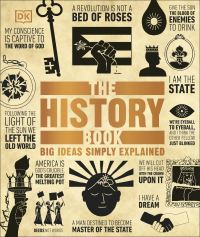
Discover the most significant moments in the history of the world, from the origins of Homo Sapiens to the arrival of the internet, and from the French Revolution to the Space Race. And come face to face with the world’s most influential leaders, thinkers, and political figures, from Julius Caesar to Barack Obama – a truly accessible and comprehensive route into a fascinating and essential subject.
Nature editor and Science Book Prize winner Henry Gee explores the future of our species and our probable extinction, while suggesting how, through technological innovation, we might indefinitely postpone our fate.
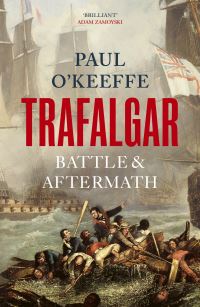
At or about 1.15 in the afternoon of 21 October 1805, Vice Admiral Horatio Nelson was struck by a 22-gramme, 15-millimetre French musket round fired down from the mizzen top of the Redoutable, a distance of some 70 feet to HMS Victory’s quarter deck. It nicked the edge of his epaulette, and passed diagonally down, through the material of his coat and into the left shoulder, fracturing the upper part of the scapula or shoulder blade, then the second and third rib. It pierced the left lung, dividing a branch of the pulmonary artery, and emerged to sever the spine, splintering the sixth and seventh vertebrae above and below as it crashed between. The soft lead ball – distorted by collisions with bone – ended its flight embedded in muscle two inches below the right scapula. In this fresh and visceral retelling of the battle of Trafalgar, Paul O’Keeffe traces the course of events both prior and subsequent to that fatal shot.
In 1786, France’s ancien régime was functioning as usual. Its alliance with the victorious American colonies had restored its diplomatic prestige, the economy seemed to be flourishing, and internal politics seemed quiet. But just a few short years later, the dynasty which had ruled France for over 800 years was swept away. What happened to cause such devastating change to the long-established political structure? John Hardman traces the political history of the French Revolution, from its origins to its aftermath. Hardman argues that the nature of ancien régime politics, the mismanagement of the fiscal crisis, and a new generation of young, overly confident politicians brought the Bourbon monarchy’s apparatus crashing down.
In 410 CE, Roman rule of Britain collapsed, bringing a centuries-long occupation to an end. A century later, Britain was dividing into two areas with contrasting cultures, an expansive ‘Anglo-Saxon’ south and east, and a shrinking Celtic west and north. How did this transition happen? And why did the customs of the Germanic incomers prevail in England, unlike elsewhere in Europe? In this deeply researched account, Nicholas J. Higham addresses these difficult questions head on. Higham draws on archaeological evidence and contemporary literature, including the writings of Gildas, to reconsider the accepted narrative.
Lambert argues for a dynamic new understanding of the 19th century, showing how British policymakers shaped a stable European system that it could balance from offshore. Through judicious deployment of naval power against continental forces, and the defence strategy of statesmen such as the Duke of Wellington, Britain ensured that no single European state could rise to pose a threat, rebuilt its economy, and established naval and trade dominance across the globe. This is the remarkable story of how Britain kept a whole continent in check – until the final collapse of this delicately balanced order at the outset of World War One.
How should we deal with nuclear weapons? The discovery of nuclear fission fundamentally changed the world order. Its power was harnessed, nuclear bombs invented, and the cities of Hiroshima and Nagasaki were destroyed. In recurring international crises and calls for arms control, the threat of nuclear war has hung over humanity ever since. David Holloway traces how these weapons shaped the last century, from the US-Soviet arms race to the rivalry between India and Pakistan. Deterrence and intimidation, alliances and war plans, international treaties and organizations have all played their role. At the centre were political leaders – among them Truman, Kennedy, and Reagan, as well as Stalin, Khrushchev, and Gorbachev – who all had their fingers on the nuclear button.
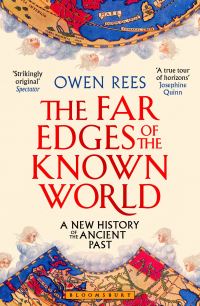
What was it like to live on the edges of ancient empires, at the boundaries of the known world? In this bold revisionist history of the ancient world, Owen Rees shifts our focus from the centres of Greece and Rome to the lively, long-ignored societies on the borders.
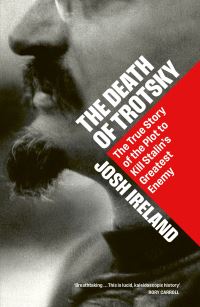
In August 1940, a man walked into Leon Trotsky’s study in Mexico City and drove an ice pick into his skull. The killer? Ramon Mercader – an aristocratic Spaniard turned Soviet assassin. The mastermind? Joseph Stalin. But this was no simple hit. It was the climax of a decade-long global hunt: a story of seduction and betrayal, of fake identities and secret loyalties, of idealists and fanatics, lovers and spies. While Trotsky raged in exile – still clinging to his revolutionary dream – Stalin’s agents closed in. And at the heart of it all was Mercader: a man trained to lie, charm and ultimately to kill.
No products in the basket.