Plunder
£25.00The last weeks of World War II on the Western Front in Europe witnessed extraordinary scenes of heroism, horror, melodrama and pathos.

Showing 1–16 of 195 resultsSorted by latest
The last weeks of World War II on the Western Front in Europe witnessed extraordinary scenes of heroism, horror, melodrama and pathos.
The grandson of a King. The son of the Viceroy of India. Churchill’s nephew. Held captive at the notorious Colditz prisoner of war camp, they were the Prominente: scions of the British establishment, and pawns in the hands of Nazi leaders. As a German defeat loomed, the SS head of the POW camps Gottlob Berger made a pivotal decision: he would disobey direct orders and spare their lives. ‘Please remember what I have done for you when the war ends,’ he asked. This Nazi overseer, who would later be convicted of war crimes, held their future in his hands. Eighty years later, David Lascelles – the son of George, Earl of Harewood, who would never have been born if his father had been executed – traces the Prominentes’ extraordinary journey and wonders who Gottlob Berger was and what motivated his fateful decision: compassion? Remorse? Or self-interest?
The year is 1981. Tehran is in violent turmoil in the wake of the Iranian Revolution. The Soviets are planning to overthrow the Ayatollah’s fledgling Islamist regime. If they do so, one response from America – unknown to the public – would be to use nuclear weapons. ‘Redwood’ is the story of how at the height of the Cold War, one mysterious double agent, whose intelligence reached the highest levels of British and American governments, cracked open the KGB, revealed the Kremlin’s secret plot and prevented Armageddon.’Redwood’ was the MI6 codename for this unsung, hitherto unknown hero of the Cold War, a highly-trained six-foot-four Russian intelligence officer who chose to expose the KGB’s deepest secrets, compelled to swap sides by a shaming secret of his own. Facing exposure, with both the Iranian Revolutionary Guards and his own KGB colleagues closing in, he demanded that MI6 try to smuggle him out of Iran in a high-stakes escape pla
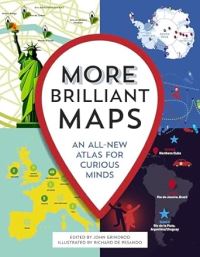
Which country doesn’t have a national football team? Where is the town with no wifi? Who travelled further on tour: Taylor Swift or Coldplay? Which are the world’s noisiest cities? How many countries are wider than the moon? Maps don’t just show us where we are, they show us how we live. They reveal unexpected connections between far-flung places, they show how history has shaped geography, and they uncover fascinating facts that will spark your curiosity. This stunning collection of 100 maps will take you on a unique visual journey through history, geography, identity sport, the arts, technology, space, and more. If you have ever wondered how many dinosaurs would fit the length of Vatican city, where to go diving for shipwrecked treasure, or which country imports the most ketchup, this is the book for you.
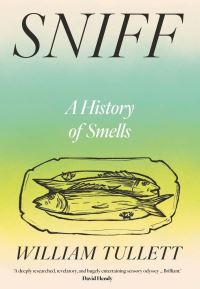
A remarkable account of the weird and wonderful history of smellAcross vast periods of time and around the globe, smell has been central to human life. From the incense burned in medieval religious rituals to the use of modern sniffer dogs, smells have been central to our sense of identity, our ability to build communities, and, perhaps less positively, to mark those deemed unwelcome within them. Our sense of smell brings us the pleasure of good food, wine, and perfume, but it also warns us of dangerous fire, gas, and rot.What did the past smell like? Why does our own world smell the way it does?Moving through key locations, from libraries to forests, churches to hospitals, Will Tullett explores the peculiar history of smell. We smell witchcraft and murder, fin de siècle Parisian theatres, and cinemas in 1960s New York. What emerges is not just a history of smells, but biographies of the many noses that have sniffed them.
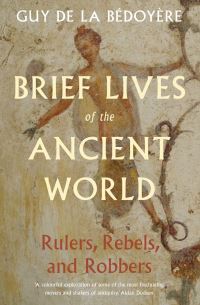
A fascinating window into the history of the ancient world, told through thirty-five fascinating figures
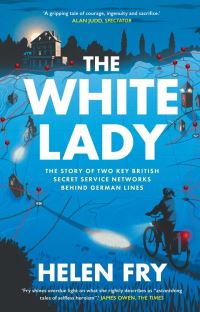
A major new history of the two most important British secret service networks in the First and Second World Wars. Drawing on recently declassified information, Fry examines who the agents were, how they were recruited, and how the intelligence they gathered directly impacted the outcome of both wars. Operators in the field sent over 800 radio messages to London and delivered more than 1000 reports, including groundbreaking information on Hitler’s secret weapon the V-1. This is a compelling account of the agents who risked their lives and found ingenious ways to smuggle intelligence out of occupied Belgium.
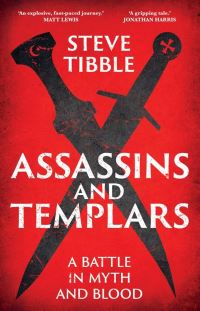
The story of the medieval world’s most extraordinary organisations, the Assassins and the Templars. In this engaging account, Steve Tibble traces the history of these two groups from their origins to their ultimate destruction. He shows how, outnumbered and surrounded, they survived only by perfecting ‘the promise of death’, either in the form of a Templar charge or an Assassin’s dagger. Death, for themselves or their enemies, was at the core of these extraordinary organisations. Their fanaticism changed the medieval world – and, even up to the present day, in video games and countless conspiracy theories, they have become endlessly conjoined in myth and memory.
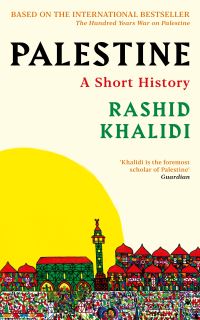
‘Come for a walk with me, if you would, along the streets of Jerusalem. My family has walked these streets for more than a thousand years.’ With this invitation, this book offers a powerful introduction to Palestinian history through a century of conflict and resistance. Blending incisive research with his own family memories, celebrated scholar Rashid Khalidi traces Palestine’s story from the British occupation to Israel’s ongoing colonial war. Powerfully explaining the history behind the world’s most urgent – and misunderstood – conflict, Khalidi explores why Israel has long fought against Palestine.

An extraordinary chronicle of the Nazi destruction of Jewish Vienna, from the bestselling author of Former People.
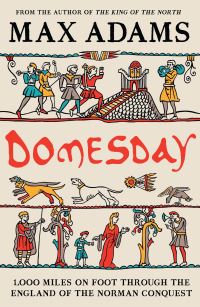
A fascinating journey through the landscapes and communities of the Domesday Book from the author of King in the North
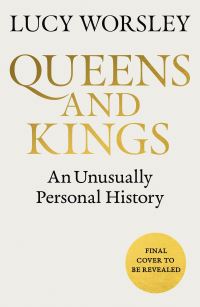
No one has lived and breathed the monarchy quite like Lucy Worsley. For over twenty years, she worked as Chief Curator in some of Britain’s most splendid palaces – and now she is ready to throw open the doors and welcome us in. In this book, Lucy takes us on a journey through some of our most turbulent and significant moments in history. From the Council Chamber in which Henry VIII decided to break from the Pope to lunch with the late Queen Elizabeth II at Buckingham Palace, from encounters with the Tower of London’s Ravenmaster to the depths of Queen Victoria’s wardrobe, Lucy shares how she grew to know the queens and kings, courtiers and servants who lived in these buildings before her. She traces their footsteps through the corridors and cloisters, the courtyards and kitchens and breathes new life into moments of great joy and consequence – as well as tales of intrigue which lurked in the shadows of regal splendour.
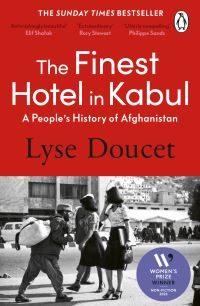
In 1969, the luxury Hotel Inter-Continental Kabul opened its doors: a glistening white box, high on a hill, that reflected Afghanistan’s hopes of becoming a modern country, connected to the world. Lyse Doucet first checked into the Inter-Continental on Christmas Eve 1988. In the decades since, she has witnessed a Soviet evacuation, a devastating civil war, the US invasion, and the rise, fall and rise of the Taliban, all from within its increasingly battered walls. The Inter-Con has never closed its doors. Now, she weaves together the experiences of the Afghans who have kept the hotel running to craft a richly immersive history of their country. It is the story of Hazrat, the septuagenarian housekeeper who still holds fast to his Inter-Continental training from the hotel’s 1970s glory days – an era of haute cuisine and high fashion, when Afghanistan was a kingdom and Kabul was the ‘Paris of Central Asia’.
From a leading scholar of Palestine-Israel, a brief, essential history of the besieged strip of land, revealing the roots of the current crisis.
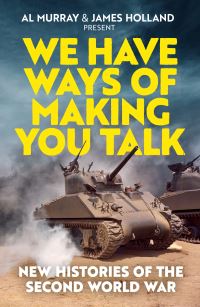
This volume will trace the darkest hours of the miracle that was Dunkirk, follow arctic convoys in the North Cape, consider the destruction of Hamburg, and unpick the only thing that ever really frightened Churchill. Like their hugely successful podcast – ‘We Have Ways of Making You Talk’ – this book will delve into the forgotten, hidden and little explained aspects of the war. At once entertaining and illuminating, this is the perfect book for fans of World War II history.