Showing 1–16 of 173 resultsSorted by latest
-
£10.99
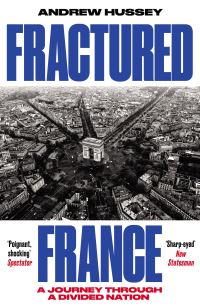
The French have always loved to protest, to strike, to take to the streets in rebellion against the state or the status quo. But in the last few years, the level of anger and violence has taken many by surprise and the atmosphere has changed. The voices of hostility are not only from the extreme far-right, but from the ordinary French who feel excluded from the closed circle of wealth and privilege within the prospering cities. In this work, Andrew Hussey uncovers the past and present of the culture of the working class in France, a culture invisible to most tourists and ignored by the metropolitan classes.
-
£14.99
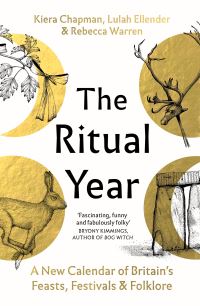
In this revelatory and beautifully illustrated guide to a living tradition of rites and rituals, we journey through some of the gatherings that shape our year, challenge our understanding of the past, and give pattern and meaning to communities across Britain today.
-
£12.99
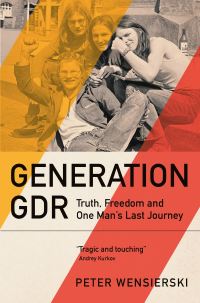
A gripping account of East Germany in the late ’70s and early ’80s, and of one man’s fated struggle for freedom.
-
£25.00
An authoritative life of Harold II, the king who died at the Battle of Hastings in 1066Harold Godwinson is renowned as the king who lost England to the invading William the Conqueror in 1066. Infamous legends, invented by the Victorians, surround his life, corrupting our idea of him. But who was the real Harold II?In this major new biography, Tom Licence reveals the truth behind the nineteenth-century myths. Moving from Harold’s childhood and his adventures as an earl in Edward the Confessor’s court, to his nine-month reign and the bloody battles at its end, Licence rewrites the story of his life at every turn. We see Harold’s rupture with his family, his cultivation of alliances, and his political interventions at home and overseas. He seized the throne as a skilled political leader who was the prime candidate to unite a realm divided by rebellion. And, when war came to English shores, Harold managed the conflict as well as any command
-
£10.99
Bestselling historian and social media sensation Alice Loxton embarks on an epic walk, retracing the funeral route of England's most forgotten Queen and uncovering historical secrets along the way.
-
£14.99
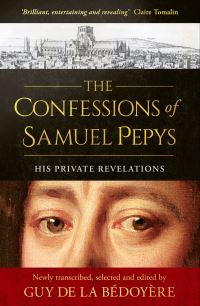
A collection of the most personal aspects of Samuel Pepys’ diaries, to celebrate the 200th anniversary of their publication.
-
£10.99
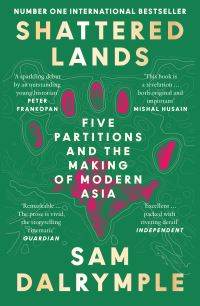
** THE INTERNATIONAL BESTSELLER **
ORWELL PRIZE FOR POLITICAL WRITING FINALIST 2026
A Best Book of the Year in the Financial Times, The Week, Spectator, BBC History Magazine, NPR, History Today, Waterstones and Daunts
‘A sparkling debut by an outstanding young historian’ PETER FRANKOPAN
-
£30.00
For thousands of years, humans have looked to the sky to make sense of the world. Long before astronomy became a formal discipline, observations of the Sun, Moon, planets and stars shaped calendars, navigation and systems of belief across many cultures. This book traces this global history, examining how societies developed the concepts and methods that allowed humanity to interpret the cosmos. It book uses infographics and maps to show how people throughout history have understood the universe and to consider what the future of space exploration might hold.
-
£30.00
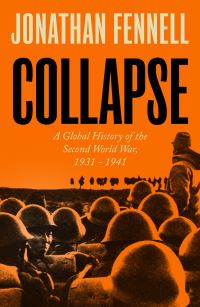
Between 1931 and 1949, a series of crises broke out that threatened collective security, world order and the internal cohesion of states across the globe. At the heart of these crises was a world war that shook the foundations of global power, a watershed moment in the history of the 20th Century. ‘Collapse’ is the first volume of an authoritative trilogy that tells the story of the Second World War through this international lens, covering theatres of war in multiple continents and analysing worldwide trends. Through new sources in 14 languages and from over 50 archives across the world, Professor Jonathan Fennell examines the first part of this ‘long war’, from 1931-1942, and explores what it really meant to live through this violent time. Using an innovative approach which explores the personal alongside the political, the global alongside the local, he shows how a world that many considered civilised collapsed into barbarity.
-
£30.00
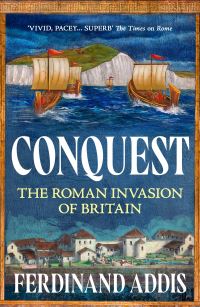
An epic, visceral history of the Romans in Britain, from Caesar's first invasion attempt in 55 BC to the fall of the Roman empire
-
£22.00
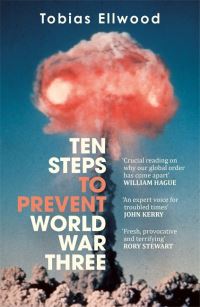
We are in a cold war, but one unlike anything we’ve seen before. Influence, ignorance and ideology have been weaponised, with USA and China fighting on the global battleground to push their rival visions of the future. The world is splintering into two competing spheres of influence and it’s no exaggeration to say that we are potentially looking down the barrel of a gun towards global armageddon. Western leaders can no longer be complacent or passive, allowing foreign actors chip away at our political infrastructure and national security. The stakes could not be higher, but there is a path towards a brighter future. ‘Ten Steps to Prevent World War Three’ draws on a blend of big ideas, personal narrative, lessons from history and geopolitical insights to uncover the mindset and strategies that can build a peaceful global future.
-
£25.00
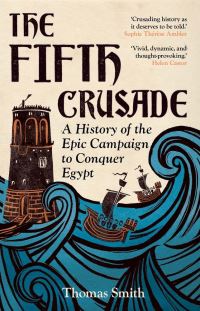
In 1217, the crusader states were in a highly fragile condition. The Fourth Crusade had failed, and Jerusalem had not been recovered. The crusaders now set their sights on Egypt. If the breadbasket of the Mediterranean could be conquered, long-term Christian control of the Holy Land could be ensured. Led by the rulers of Hungary and Austria, and backed by the Knights Templar and Hospitaller, the Fifth Crusade was launched. Thomas Smith tells the gripping story of the crusade for Egypt. Looking at a wide range of Christian and Muslim sources, Smith sheds new light on the brutal reality of medieval combat on land and water.
-
£12.99
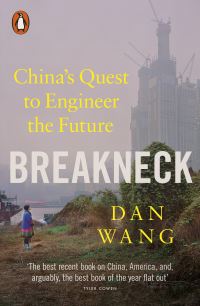
America used to pride itself on ambition. Today, it looks stuck. Meanwhile, China has been busy building the future. Over the past six years, technology analyst Dan Wang lived through China’s astonishing, messy progress and the dissolution of its relationship to the West. In ‘Breakneck’, Wang offers a new framework for understanding China – which helps us to see global geopolitics more clearly too.
-
£12.99
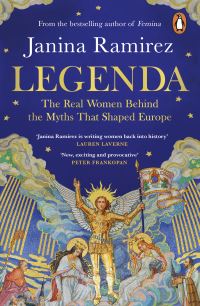
Bestselling historian Professor Janina Ramirez peels back the layers of time to reveal how the identities of women have been co-opted by those intent on crafting national identities. Their names are well-known, and summaries of their achievements have been recited in classrooms for decades, but medieval women like Joan of Arc, Lady Godiva and Isabella of Castile have been misrepresented, their stories twisted and weaponised. Meanwhile, ground-breaking 18th and 19th-century women who blazed a trail through revolutionary Europe have been forgotten, their legacies too easily dismissed or ignored. Questioning established narratives and searching for the real women behind the legends, Ramirez interrogates what defines a nation and who gets to build it, shining a light on how history is so often hijacked to serve the ideological and political interests of the present.
-
£22.00
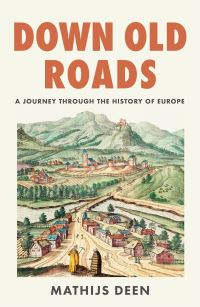
For a million years people have been travelling throughout Europe, from the mysterious homo antecessor who left his footprints on the coast of England to travellers on the motorways of today. Under every footstep lies an older one, under every paved road a donkey trail or wagon rut, under every footpath the prints of a hunter or his prey. And yet the long, nation-spanning roads of Europe don’t hold a special place in the imaginations and identities of its residents. No classic songs have been written about the E8, the way Americans have written about Route 66. Are Europeans too attached to their own home patch? Or have they too often seen armies marching towards them along those roads? Eager to answer that question, Mathijs Deen goes in search of the warriors, refugees, bandits, pilgrims, fortune-seekers, conquerors and racers who advanced into history along the roads of Europe.
-
£14.99
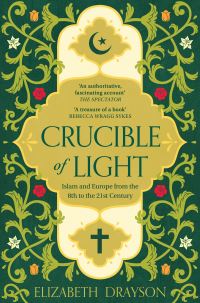
An ambitious, revisionist and wide-ranging account of the centuries-old relationship between Islam and Europe, from the Moorish invasion of Spain to the present, for readers of Peter Frankopan, Mary Beard and William Dalrymple.

 Legenda