“A Day in the Life of a Gladiator” has been added to your basket.
View basket
Showing 1–12 of 148 resultsSorted by latest
-
£25.00
A respected historian of the British Empire closes the chasm between how the British see themselves and how they are actually seen abroad. The United Kingdom is a country that evokes strong opinions but frequently escapes rigorous definition. Seen from the outside, it is a wildly contradictory place. One of the world’s strongest economies, where inequality is rampant. Famous for its pageantry and traditions, but selective about remembering its imperial past. By diving into its many paradoxes, Helene von Bismarck reveals why the political debate in – and, internationally, about – the United Kingdom has for years been driven by people who talk past, rather than with, each other. This title explores and challenges the way the British see themselves, their political and constitutional system and their role in the world – encouraging readers to leave our echo chambers and look through new eyes at this complex and sometimes bewildering countr
-
£16.99
The greatest empire in Western history – told as never been told before. Rome is often remembered for its spectacular collapse. But for over two thousand years – through civil wars, plagues, invasions, and religious upheaval – the Roman state survived, adapted, and reinvented itself. From a muddy settlement on the banks of the Tiber to the glittering court of Constantinople, this is the untold story of a civilisation that endured. Acclaimed historian Edward J. Watts tells a truly complete history of Rome in all its epic sweep: the Punic Wars, the fall of the republic, the coming of Christianity, Alaric’s sack of Rome, the rise of Islam and the onslaught of the Crusaders who would bring about the empire’s end.
-
£9.99
An entertaining and accessible introduction to the fascinating world of Greek and Roman history, covering the people, events, art and mythology that have shaped the Western world.
-
£12.99
There are fewer than 5000 people who can genuinely claim to be members of the British aristocracy, and yet they loom large in the popular consciousness. We’re fascinated by their houses and estates, their lives and loves, their foibles and eccentricities. And we entertain the strong suspicion that, while they may be fellow citizens, they are very far from being people like us. In this book, Eleanor Doughty draws on her unparalleled access to a bewildering range of dukes, duchesses, earls and others to create a vivid picture of who they are and how they tick.
-
£12.99
Newfoundland, 1919. Buffeted by winds, an unwieldy aircraft – made mainly from wood and stiff linen – struggled to take off from the North American island’s rocky slopes. Cramped side by side in its open cockpit were two men, freezing cold and barely able to move but resolute. They had a dream: to be the first in human history to fly, non-stop, across the Atlantic Ocean. But there were three other teams competing against them, and as the waves raged a few miles below, memories of wartime crashes resurfaced. Mining letters, diaries and evocative unpublished photographs, David Rooney’s deeply researched account of the audacious contest shows how it was the airmen’s thrilling wartime experiences that ultimately led them to the ‘Big Hop’, and brought old friends together for one more daring adventure.
-
£12.99
Dressed in armour and clutching a bloody sword, the Roman gladiator is the most iconic figure of the ancient world. Both fascinating and repulsive to us now, he was in his own time a deeply controversial character, by turns hated and idealized – and always at the heart of Roman culture. But what did he really mean to the Romans? What did they see in the gladiator and the spectacle of the games? And what does he reveal to us today about the Roman way of life? Brilliantly written and meticulously researched, this book tells the stories of the gladiators and those who observed them – from grand emperors to lowly slaves – illuminating and analysing the all-consuming passion of the Roman Empire for the spectacle of mortal combat. In doing so, it reveals Roman ideas about everything from freedom and servitude to sex and desire, from courage and cowardice to death and the afterlife.
-
£12.99
The global powerhouse that is the United States of America is younger even than the British Museum, Guinness and the flushing toilet. In 2026 it celebrates its 250th birthday. How did this vast land, long inhabited by diverse indigenous cultures, come to be dominated by English speakers? How has it grappled with the stark contradictions between its ideals of liberty and the grim reality of genocide and slavery? This extraordinary collection of fifty distinct states has weathered immense – and recent – challenges, including a Civil War that was still raging as the first London Underground station opened. How did this melting pot of peoples and ideas not only endure but rise to dominate global politics, commerce, culture and warfare? What insights does this rich history offer about an increasingly divided nation – and the world that moves to its rhythm?
-
£12.99
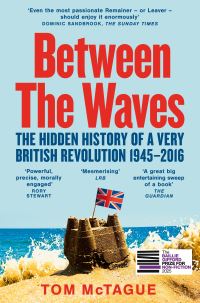
A gripping, persuasive and authoritative account of Britain's tumultuous relationship with Europe.
-
£30.00
The acclaimed historian of Russia offers his compelling analysis of a dramatic turning point in recent Russian history: the August Coup of 1991.
-
£22.00
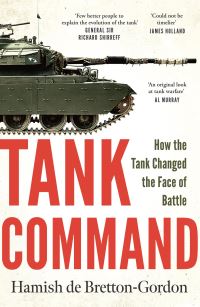
Who would have thought that steel boxes with guns would endure as the stalwart of the battlefield for over a hundred years? For all the new trickery and wizardry of the modern fight, the tank’s ability to pack a huge punch at up to 3000 metres, protected by steel, ceramics and now, electronics, is still the most reliable and durable weapon in the military toolbox. In this book, former tank commander Hamish de Bretton-Gordon OBE offers a unique and timely exploration of the evolution of the tank, on and off the battlefield. Written in close collaboration with the world-renowned Tank Museum, it brings the thrill of hardware together with the sweep of history, telling the tank’s origin story on the battlefields of World War I, charting its primacy during World War II, and analysing its critical role in modern warfare, whether in the Gulf (where Hamish served) or on the new Ukrainian and Russian front lines.
-
£22.00
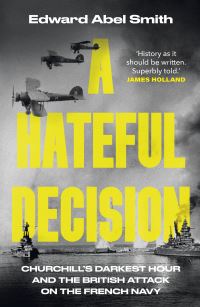
Summer, 1940. Winston Churchill watches in horror as France falls to the Germans in just six weeks, completing the Nazi conquest of mainland Europe. He faces an urgent question: what will happen to France’s mighty navy? Under German control it presents a major threat to Great Britain, and could mark a point of no return. With the Nazis closing in and time running out, Churchill ordered Operation Catapult. By the end of one of the most agonising but necessary military operations of the war, a large part of the French navy would be destroyed and nearly 1,300 French sailors would be dead, a number which would haunt all involved for the rest of their lives. Based on extensive new archival research, rediscovered eyewitness accounts and reflections from the private papers of the key protagonists, ‘A Hateful Decision’ tells the full story of the British attack on the French navy at Mers el Kébir, on 3 July 1940.
-
£12.99
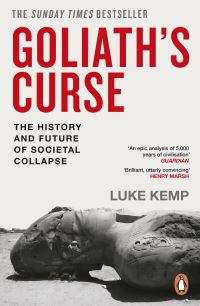
A new history of humanity told through the lens of collapse from Neanderthals to AI, and what it means for our uncertain future.

 The Big Hop