“Beasts From Before the Dinosaurs” has been added to your basket.
View basket
“The Story of the Bayeux Tapestry” has been added to your basket.
View basket
Showing 17–32 of 173 resultsSorted by latest
-
£12.99
Political intrigue and treachery, heroism and brutal violence victory and defeat – all this is depicted in the Bayeux Tapestry, an epic account of one of the pivotal episodes in English history embroidered on a strip of linen. Famously, it shows the stricken Anglo-Saxon king Harold dying on the battlefield of Hastings in 1066 amid a shower of arrows, as axes clash, spears fly and fallen warriors are trampled beneath charging hooves. However, there is much more to this remarkable historical and artistic treasure, which tells its tale with an intensity and immediacy that speak to our modern world, almost 1,000 years after its creation. David Musgrove and Michael Lewis skilfully lead us through the full story of the Tapestry and the history it relates, providing illuminating insight into a world of fascinating details that might otherwise be overlooked or their significance missed.
-
£25.00
The Lifesavers were a small number of men and women who during WW2 were at the forefront of global progress in saving lives through collecting, preserving and courageously delivering blood – trailblazers whose work was then adopted around the world. This tiny and short-lived service (1939-45) created ground-breaking advances to improve survival rates with an impact comparable to the discovery of penicillin. In this compelling story from historian Roderick Bailey, we meet the nurses who built and tapped the bank of volunteer donors (1.5m registered by the end of the war); the unsung technicians responsible for storing, preserving and moving the blood; and the specialist medical officers who risked their lives in traversing battlefields across the globe to give transfusions.
-
£12.99
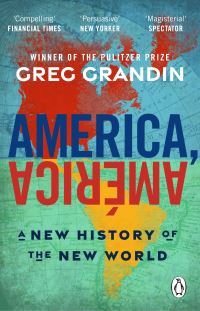
From a Pulitzer Prize-winning historian comes a definitive history of the Western hemisphere, a sweeping five-century narrative of North and South America that redefines our understanding of both continents. The story of the United States’ unique sense of itself was forged facing south – no less than Latin America’s was indelibly stamped by the looming colossus to the north. In this reinterpretation of the New World, Greg Grandin reveals how the Americas emerged from constant, turbulent engagement with each other, shedding new light on well-known historical figures like Bartolomé de las Casas, Simón Bolívar and Woodrow Wilson, as well as lesser-known actors such as the Venezuelan Francisco de Miranda, who almost lost his head in the French Revolution and conspired with Alexander Hamilton to free America from Spain.
-
£25.00
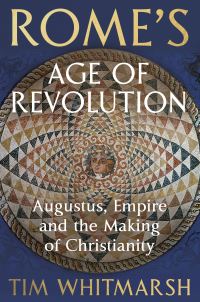
How did Christianity, starting out as a minor offshoot of Judaism, grow into an international faith that shaped the world as we know it? ‘Rome’s Age of Revolution’ corrects the triumphalist narrative that the Christian message was so persuasive, and indeed superior, that people converted in huge numbers, abandoning their pagan beliefs, thereby turning a small persecuted sect into the state religion of the Roman Empire. Tim Whitmarsh shows that Christianity would never have succeeded if it had not taken advantage of the infrastructure and culture of the Roman Empire; in turn the new religion was indelibly shaped and transformed by Roman beliefs and ideas, especially those circulating in the Greek-speaking, or Hellenistic, eastern parts of the empire. This radical transformation, Tim argues, can only be described as a revolution. The consequences are with us to this day.
-
£35.00
The Wise and Their Works celebrates the 175th anniversary of the Great Exhibition in 2026.The men who inspired the Great Exhibition of 1851 – Henry Cole, Sir Robert Peel and above all Prince Albert himself – were at the centre of an extraordinary combination of manufacturing, commercial skill and political vision which made Victorian Britain an unparalleled success story.In this celebratory book, A. N. Wilson examines the legacy they left behind: their idealistic beliefs about free trade, decency and parliamentary democracy, and their ultimate vision of the human race at peace with prosperity spreading, while poverty and warfare were consigned to history. While their loftier ambitions may not have come to pass, these enterprising men did leave behind a little known but hugely influential organisation, the Royal Commission for the Exhibition of 1851, which still supports industry, science and art in the UK.Skillfully delving into this ri
-
£25.00
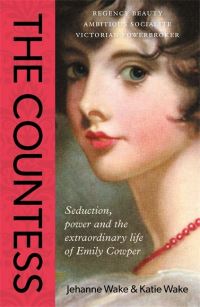
Emily, Countess Cowper – born Hon. Emily Lamb – was a dazzling, ambitious force in Regency society. Raised amid the glamour and scandal of high society, with Georgiana, Duchess of Devonshire, as her godmother and Lord Byron among her admirers, she thrived in a world of duels and intrigue. After her marriage to Earl Cowper faltered, she embarked on notable affairs, eventually marrying the charismatic Lord Palmerston. More than a society beauty, Emily wielded formidable political influence, helping engineer the premierships of her brother, Lord Melbourne, and Palmerston. In Downing Street she acted as adviser, speechwriter and strategist for the Whig cause, championing reform from women’s rights to abolition. A real-life inspiration for Bridgerton’s Cressida Cowper, Emily became one of the most powerful women in England – shaping history from behind the scenes.
-
£12.99
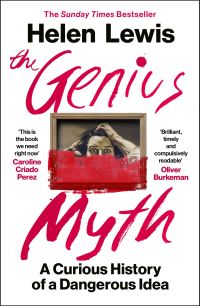
The tortured poet. The rebellious scientist. The monstrous artist. The tech disruptor. You can tell what a society values by who it labels as a genius. You can also tell who it excludes, who it enables, and what it is prepared to tolerate. Taking us from the Renaissance Florence of Leonardo da Vinci to the Floridian rocket launches of Elon Musk’s SpaceX, Helen Lewis unravels a word that we all use – without really questioning what it means. Along the way, she uncovers the secret of the Beatles’ success, asks how biographers should solve the Austen Problem, and reveals why Stephen Hawking thought IQ tests were for losers (before taking one herself). And she asks if the modern idea of genius – a class of special people – is distorting our view of the world.
-
£11.99
A concise, readable and thoroughly revised overview of Cuba, written by Cubans for anyone interested in quickly understanding the island country’s turbulent history. It covers the pre-Hispanic period, through Cuba’s struggle to maintain the revolution in the years following the collapse of the Soviet Union, to the period after Fidel Castro’s decision to step down from office, to the 2014 opening to Cuba by the Obama Administration, the retirement of Raul Castro and his replacement as president in 2018 by Miguel Diaz Canal, and finally to the reversal of Washington’s engagement with Cuba under President Trump.
-
£25.00
A respected historian of the British Empire closes the chasm between how the British see themselves and how they are actually seen abroad. The United Kingdom is a country that evokes strong opinions but frequently escapes rigorous definition. Seen from the outside, it is a wildly contradictory place. One of the world’s strongest economies, where inequality is rampant. Famous for its pageantry and traditions, but selective about remembering its imperial past. By diving into its many paradoxes, Helene von Bismarck reveals why the political debate in – and, internationally, about – the United Kingdom has for years been driven by people who talk past, rather than with, each other. This title explores and challenges the way the British see themselves, their political and constitutional system and their role in the world – encouraging readers to leave our echo chambers and look through new eyes at this complex and sometimes bewildering countr
-
£16.99
The greatest empire in Western history – told as never been told before. Rome is often remembered for its spectacular collapse. But for over two thousand years – through civil wars, plagues, invasions, and religious upheaval – the Roman state survived, adapted, and reinvented itself. From a muddy settlement on the banks of the Tiber to the glittering court of Constantinople, this is the untold story of a civilisation that endured. Acclaimed historian Edward J. Watts tells a truly complete history of Rome in all its epic sweep: the Punic Wars, the fall of the republic, the coming of Christianity, Alaric’s sack of Rome, the rise of Islam and the onslaught of the Crusaders who would bring about the empire’s end.
-
£9.99
An entertaining and accessible introduction to the fascinating world of Greek and Roman history, covering the people, events, art and mythology that have shaped the Western world.
-
£12.99
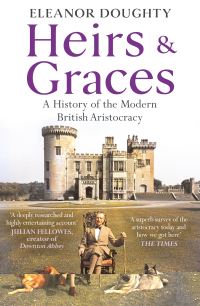
There are fewer than 5000 people who can genuinely claim to be members of the British aristocracy, and yet they loom large in the popular consciousness. We’re fascinated by their houses and estates, their lives and loves, their foibles and eccentricities. And we entertain the strong suspicion that, while they may be fellow citizens, they are very far from being people like us. In this book, Eleanor Doughty draws on her unparalleled access to a bewildering range of dukes, duchesses, earls and others to create a vivid picture of who they are and how they tick.
-
£12.99
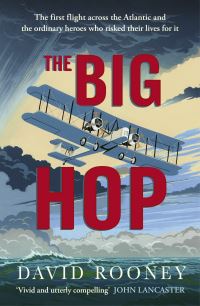
Newfoundland, 1919. Buffeted by winds, an unwieldy aircraft – made mainly from wood and stiff linen – struggled to take off from the North American island’s rocky slopes. Cramped side by side in its open cockpit were two men, freezing cold and barely able to move but resolute. They had a dream: to be the first in human history to fly, non-stop, across the Atlantic Ocean. But there were three other teams competing against them, and as the waves raged a few miles below, memories of wartime crashes resurfaced. Mining letters, diaries and evocative unpublished photographs, David Rooney’s deeply researched account of the audacious contest shows how it was the airmen’s thrilling wartime experiences that ultimately led them to the ‘Big Hop’, and brought old friends together for one more daring adventure.
-
£12.99
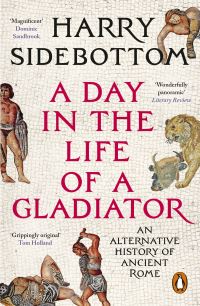
Dressed in armour and clutching a bloody sword, the Roman gladiator is the most iconic figure of the ancient world. Both fascinating and repulsive to us now, he was in his own time a deeply controversial character, by turns hated and idealized – and always at the heart of Roman culture. But what did he really mean to the Romans? What did they see in the gladiator and the spectacle of the games? And what does he reveal to us today about the Roman way of life? Brilliantly written and meticulously researched, this book tells the stories of the gladiators and those who observed them – from grand emperors to lowly slaves – illuminating and analysing the all-consuming passion of the Roman Empire for the spectacle of mortal combat. In doing so, it reveals Roman ideas about everything from freedom and servitude to sex and desire, from courage and cowardice to death and the afterlife.
-
£12.99
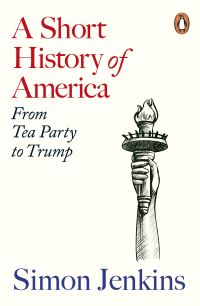
The global powerhouse that is the United States of America is younger even than the British Museum, Guinness and the flushing toilet. In 2026 it celebrates its 250th birthday. How did this vast land, long inhabited by diverse indigenous cultures, come to be dominated by English speakers? How has it grappled with the stark contradictions between its ideals of liberty and the grim reality of genocide and slavery? This extraordinary collection of fifty distinct states has weathered immense – and recent – challenges, including a Civil War that was still raging as the first London Underground station opened. How did this melting pot of peoples and ideas not only endure but rise to dominate global politics, commerce, culture and warfare? What insights does this rich history offer about an increasingly divided nation – and the world that moves to its rhythm?
-
£12.99
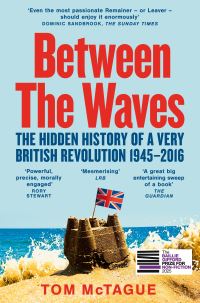
A gripping, persuasive and authoritative account of Britain's tumultuous relationship with Europe.

 Beasts From Before the Dinosaurs