“Dad’s Army” has been added to your basket.
View basket
Showing 13–24 of 148 resultsSorted by latest
-
£12.99
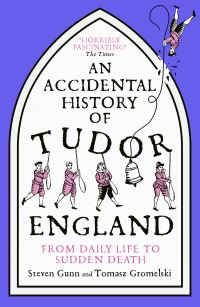
A new history of the Tudor world, told by uncovering ordinary people’s grizzly fatal accidents. There is untold history of Tudor England – the history of the several million subjects of their famous kings and queens. What did ordinary people do all day, in their homes, their work, their leisure and travel? This title explores the history of everyday life, and everyday death. Here we learn that fatal accidents were much more likely to take place during the agricultural peak season, with cart crashes, dangerous harvesting techniques, horse tramplings and windmill manglings all as major causes.
-
£12.99
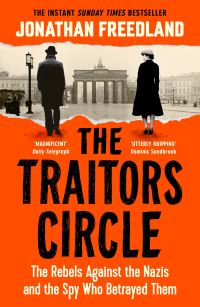
Berlin, 1943. A group of high-society anti-Nazi dissenters meet for a tea party one late summer afternoon. They do not know that, sitting around the table, is someone poised to betray them all to the Gestapo – revealing their secret to the Nazis’ most ruthless detective. They form a circle of unlikely rebels, drawn from the German elite: two countesses, a diplomat, an intelligence officer, an ambassador’s widow and a pioneering headmistress. Meeting in the shadows, rescuing Jews or plotting for a future Germany freed from the Führer’s rule, what unites them is a shared loathing of the Nazis, a refusal to bow to Hitler and the courage to perform perilous acts of resistance. Or so they believe. How did a group of brave, principled rebels, who had successfully defied Adolf Hitler for more than a decade, come to fall into such a lethal trap?
-
£12.99
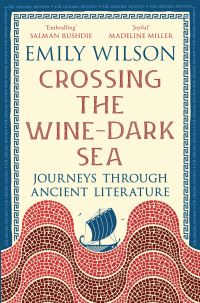
How do we give old words new voices? What must a translator lose – and might she gain – when she moves between languages, bringing ancient stories to modern life? Reflecting on the inspiration, interpretation and (mis)appropriation of words from Antiquity to today, Emily Wilson invites us to explore the translator’s art and mind – and gives a wholly fresh insight into the joys and quandaries of her own work. From Athenian comedy and Rome’s love of Greek culture to Han Kang’s novels, Cardi B’s lyrics and the discoveries she made whilst translating Homer, this is a playful and fascinating voyage into the promise, possibility and constant renewal of our founding classical culture.
-
£10.99
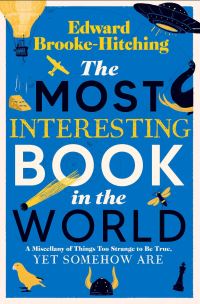
A miscellany of things too strange to be true, yet somehow are, by former BBC QI Elf turned bestselling author, Edward Brooke-Hitching.
-
£12.99
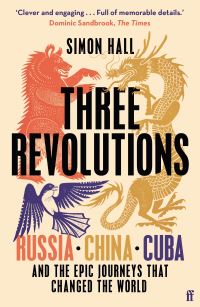
From the streets of Petrograd during the heady autumn of 1917 to Mao’s stunning victory in October 1949, and Fidel’s triumphant arrival in Havana, in January 1959, the history of the twentieth century was transformed in dramatic and profound ways by the Russian, Chinese and Cuban revolutions. Here, the stories of these epoch-defining events are told together.
-
£10.99
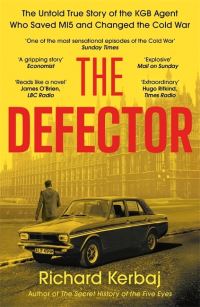
‘The Defector’ is the untold account of how, in 1971, the defection of a KGB saboteur in London led to the expulsion of more than a hundred Soviet ‘diplomats’ from the UK. Drawing on newly declassified intelligence documents and dozens of interviews with spymasters, the book tells a startling story of a Soviet mission to plant fake Kremlin agents within British and American intelligence services, the paranoia that ensued, and how the actions of a genuine turncoat, the former KGB officer Oleg Lyalin, and the secrets he revealed resulted to one of the most dramatic and pivotal moments in the Cold War.
-
£25.00
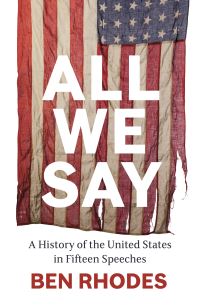
At a time when what it means to be an American is a matter of intense debate and division, Ben Rhodes – author and former presidential speechwriter – offers rare insight into the gap between who we say we are, and who we want to be. He offers a vital account of 15 speeches and orators – from Benjamin Franklin to Barack Obama – that tells the story of the United States as a battle over what it means to be an American.
-
£22.00
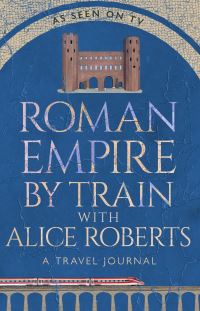
Professor Alice Roberts travels two thousand miles by train in search of a greater understanding of the Roman Empire for Channel 4’s popular TV series The Roman Empire by Train with Alice Roberts. This book delivers more depth and context than the TV series possibly can, using four broad narrative strands. Alice explores what everyday life was like for ordinary citizens of the Roman Empire and reveals the extraordinary developments in technology, law, lifestyle, politics, health and education that remain to this day and how these fed into the birth, expansion and collapse of the empire. She also shares her experiences from the journey itself, including her drawings and personal anecdotes.
-
£12.99
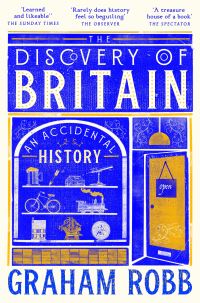
A hugely original tour of Great Britain by acclaimed historian Graham Robb, taking a fresh look at the people, places and events which have – for better or worse – shaped a nation.
-
£22.00
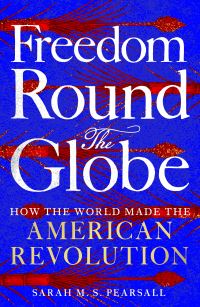
A sweeping, epic and beautifully written new history of the American Revolution that resituates its origins in a global context; published to coincide with the Revolution’s 250th anniversary
-
£16.99
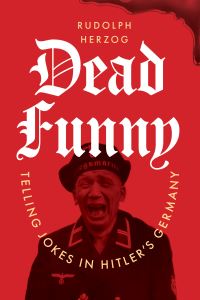
Hitler and Goring are standing on top of the Berlin radio tower. Hitler says he wants to do something to put a smile on the Berliners’ faces. Goring says, ‘Why don’t you jump?’ When a woman working in a factory told this joke to a colleague in Germany in 1943, she was arrested by the Nazis and sentenced to death by guillotine – it didn’t matter that her husband was a good German soldier who died in battle. In this groundbreaking work of history, Rudolph Herzog takes up such stories to show how widespread humour was during the Third Reich. It’s a fascinating and frightening history: from the suppression of the anti-Nazi cabaret scene of the 1930s, to jokes made at the expense of the Nazis during WWII, to the collections of ‘whispered jokes’ that were published in the immediate aftermath of the war. Herzog argues that jokes provide a hitherto missing chapter of WWII history. The jokes show that not all Germans were hypnotized by Nazi prop
-
£22.00
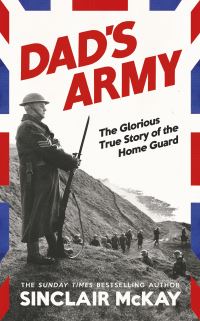
With the threat of invasion from Hitler’s forces looming large in 1940, British men of all ages and backgrounds assembled under the banner of the Home Guard. At its height, this voluntary force, much later nicknamed ‘Dad’s Army’, was made up of almost two million volunteers prepared to defend every corner of the kingdom. Numerous notable figures were involved including George Orwell, A.A. Milne, and C.S. Lewis; many women took part too, including in the Women’s Home Defence Force, which was formed in 1941. Sunday Times bestselling author Sinclair McKay tells the remarkable story of these courageous, highly trained and often pioneering men and women through original archival research, vivid storytelling and insights into the beloved television comedy that has shaped the national memory of the Home Guard.

 Dad's Army