-
Sorry, "Living peacefully" was not added to cart because it has reached the maximum backorder limit. (0 available).
Showing 1–12 of 93 resultsSorted by latest
-
£12.99
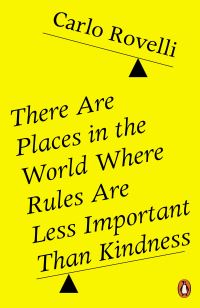
One of the most inspiring and counter-intuitive thinkers of our age, the author of ‘Seven Brief Lessons on Physics’, transforms the way we think about the world with his reflections on science, history, and humanity. In this collection of writings, the logbook of an intelligence always on the move, Carlo Rovelli follows his curiosity and invites us on a voyage through science, history, philosophy, and politics.
-
£25.00
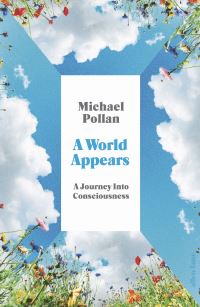
How does it feel to be you with your own personal feelings, thoughts and experiences? Every one of us is intimately familiar with consciousness, but no one knows how – or why – it came to be that three pounds of grey matter can generate a subjective point of view. The early 1990s marked the birth of a new science of consciousness, based on the assumption that the phenomenon could be explained in terms of brain activity, but that effort is faltering, and wilder ideas, such as panpsychism, are now getting a hearing. Indeed, there is now reason to doubt that ‘objective science’ as we have known it since Galileo has the right tools to plumb first-person experience. This title takes Michael Pollan from the laboratories where scientists are searching for the neural correlates of consciousness to encounters with philosophers and novelists and Buddhist monks, whom he finds have just as much to teach us about consciousness, if not more.
-
£16.99
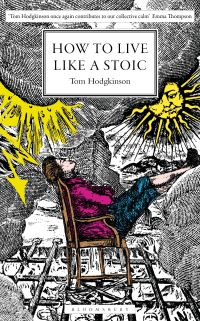
There’s more to Stoicism than shrugging your shoulders and getting on with it, as Tom Hodgkinson discovers in this witty and enlightening book.
-
£14.99
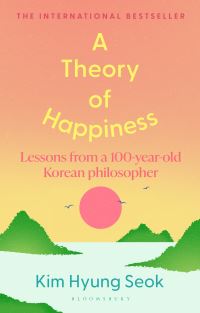
This Korean bestseller from a 105-year-old professor – known as the grandfather of Korean philosophy – shows us how we can curate our own happiness from within, sharing his philosophical wisdom from a life long-lived as well as key teachings from ancient Korean philosophy.
-
£10.99
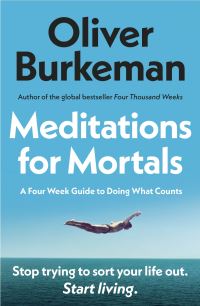
‘Meditations for Mortals’ takes us on a liberating journey towards a more meaningful life – one that begins not with fantasies of the ideal existence, but with the reality in which we actually find ourselves. Designed as a four-week ‘retreat of the mind’, it offers daily wisdom, solace and inspiration to aid a saner, freer, and more enchantment-filled way of living.
-
£10.99
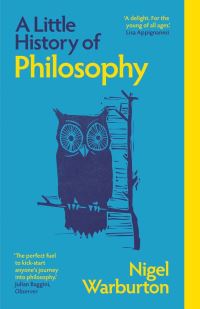
Nigel Warburton guides the reader on a chronological tour of the major ideas in the history of philosophy.
-
£11.99
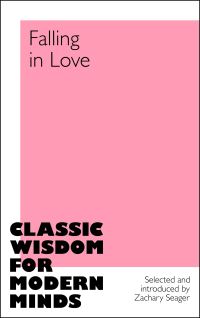
Discover wisdom from our greatest writers and philosophers to help you tackle life’s big questions.
-
£11.99
Discover the wisdom of our greatest writers and philosophers to help you tackle life’s big questions.
-
£11.99
Discover wisdom from our greatest writers and philosophers to help you tackle life’s big questions.
-
£11.99
Discover wisdom from our greatest writers and philosophers, wisdom to help change the way you perceive and live your life.
-
£22.00
The human brain faces a set of dilemmas every day: how to achieve coherence from fragmented sensory inputs and how to attain connection with other people in an increasingly atomized and isolating world. Ideologies offer a shortcut, providing easy answers, scripts to follow, and a sense of shared identity. Whether our ideologies are far-right, far-left, nationalist, religious, or even progressive, they simplify our understanding and give us organizing frameworks through which to act and interact with others. But ideologies come at a cost: demanding conformity and suppressing individuality through rigid rules, repetitive rituals, and intolerance. Once ideologies grip our minds, they fundamentally transform us, making us less sensitive and adaptable. Drawing on her groundbreaking research, Dr Leor Zmigrod uncovers the hidden mechanisms driving our beliefs and behaviours.
-
£22.00
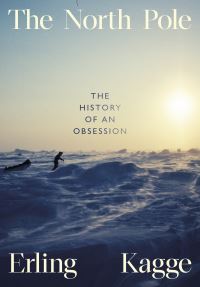
Throughout recorded human time, few places on Earth have inspired as much fascination as the North Pole. This is an otherworldly place with no latitude and no longitude, a place where the sun rises and stays aloft for six months before setting, plunging the expanse of ice and water into darkness for half a year. Long before we ever journeyed to the North Pole, human beings have wondered what the northernmost point of our planet might be like. It became densely mythologised by writers, thinkers, historians and philosophers across civilisations. Perhaps it was the actual garden of Eden? Or the sunny land of the Hyperboreans, as Herodotus surmised? Only recently did we get to the North Pole – fending off scurvy, polar bears and frostbite – to report on its strange wonders.