“The World in Turmoil” has been added to your basket.
View basket
Showing 1–12 of 27 resultsSorted by latest
-
£11.99
Now more than ever, might is right – or so today’s strongman leaders would have us believe. In this era of conflict and souring historical alliances, how will the world’s nations co-exist and survive? ‘The World in Turmoil’ untangles the complex threads of geopolitics that both bind us and threaten to tear us apart. From military might to soft power and from empires to rogue states, John Andrews takes the long view of the factors that influence relations between countries, complete with a jargon-busting A-Z of key terms and concepts to help us navigate the changing landscape. He offers a clear-sighted analysis of the themes and trends governing global politics – and why we ignore them at our peril.
-
£8.99
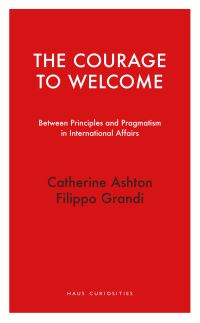
Filippo Grandi reflects on a decade as UN High Commissioner for Refugees, exploring the right to asylum in a divided world. Alongside Catherine Ashton, he advocates for international cooperation and a pragmatic, principled approach to displacement.
-
£25.00
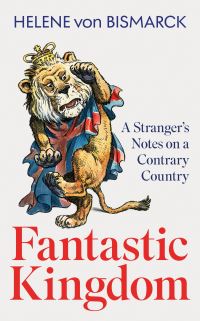
A respected historian of the British Empire closes the chasm between how the British see themselves and how they are actually seen abroad. The United Kingdom is a country that evokes strong opinions but frequently escapes rigorous definition. Seen from the outside, it is a wildly contradictory place. One of the world’s strongest economies, where inequality is rampant. Famous for its pageantry and traditions, but selective about remembering its imperial past. By diving into its many paradoxes, Helene von Bismarck reveals why the political debate in – and, internationally, about – the United Kingdom has for years been driven by people who talk past, rather than with, each other. This title explores and challenges the way the British see themselves, their political and constitutional system and their role in the world – encouraging readers to leave our echo chambers and look through new eyes at this complex and sometimes bewildering countr
-
£25.00
Video games are the world’s largest entertainment medium: they are played by billions of people, across all age demographics, and they generate hundreds of billions of dollars of revenue every year. But video games are more than an entertainment product – they are an ecosystem that connects billions of people across the globe. Video games create spaces where people talk, share ideas and build identities that bleed into our reality. And whilst democracies have underestimated the potential for influence in this space, others have seized the opportunity. Supported by the insights of dozens of politicians, academics and industry experts, it’s the vital guide to understanding this new frontier for political influence, and what democracies must do to protect play and harness its immense power before this essential battle for digital influence is lost for good.
-
£12.99
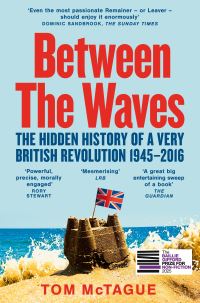
A gripping, persuasive and authoritative account of Britain's tumultuous relationship with Europe.
-
£10.99
Help save the world without being that person
-
£25.00
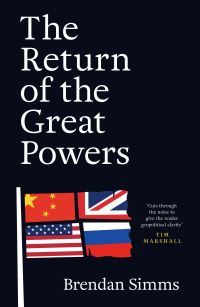
From the dawn of the modern era to the end of the Cold War, global history was defined by rivalries between great powers. In the West, this meant the struggle for supremacy in Europe and the Americas, while in the East, it encompassed those vying for control over the successor states to Genghis Khan’s empire. Between 1989 and the year 2000, great power rivalry temporarily gave way to globalization, with liberal democracy on the march and national chauvinism seemingly in retreat. But events of the past decade have made one thing abundantly clear: the great powers are back. In this work, renowned historian Brendan Simms offers a history of the rise, fall, and return of the great powers in our time. He shows that over the past ten years or so, the major global actors have already resumed making decisions based on geopolitical rather than global economic considerations.
-
£12.99
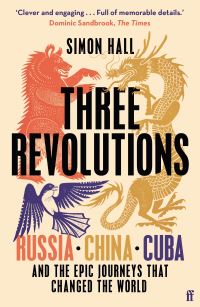
From the streets of Petrograd during the heady autumn of 1917 to Mao’s stunning victory in October 1949, and Fidel’s triumphant arrival in Havana, in January 1959, the history of the twentieth century was transformed in dramatic and profound ways by the Russian, Chinese and Cuban revolutions. Here, the stories of these epoch-defining events are told together.
-
£25.00
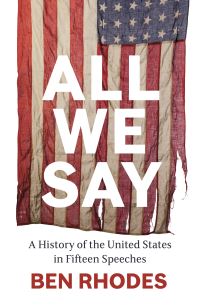
At a time when what it means to be an American is a matter of intense debate and division, Ben Rhodes – author and former presidential speechwriter – offers rare insight into the gap between who we say we are, and who we want to be. He offers a vital account of 15 speeches and orators – from Benjamin Franklin to Barack Obama – that tells the story of the United States as a battle over what it means to be an American.
-
£12.99
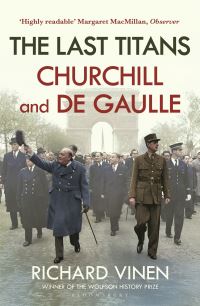
A compelling dual biography of Winston Churchill and Charles de Gaulle that shines new light on two of the greatest figures of the twentieth century.
-
£22.00
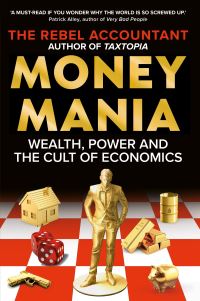
An illuminating and often hilarious exposé of the dubious world of the people whose job is to tell us that the world of money can be predicted with almost scientific accuracy – when the truth is that it fails again and again. And that from the Greeks onwards, Economics has long been driven by vested interests, reckless predictions and at times a staggering lack of common sense. The Rebel Accountant strips away the complexities and gives us the lowdown on why everything you thought about the world of Economics is not only wrong, but is has been responsible for some of the greatest fails of all time. This is MONEYMANIA.
-
£10.99
‘A curious-minded and subtle intervention in the politics of the countryside’ Sunday Times
'Galbraith spent three years investigating the truth about rural Britain and how we treat it. Uncommon Ground is the brilliant result' Daily Telegraph
'Very funny. Acutely observed. An attempt to look beyond the usual clichés of country life' Observer

 The World in Turmoil