“Ancient Britain for Modern Folk” has been added to your basket.
View basket
Showing 1–12 of 338 resultsSorted by latest
-
£30.00
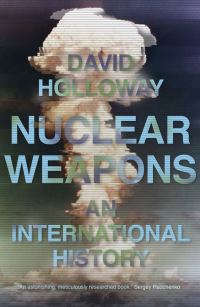
How should we deal with nuclear weapons? The discovery of nuclear fission fundamentally changed the world order. Its power was harnessed, nuclear bombs invented, and the cities of Hiroshima and Nagasaki were destroyed. In recurring international crises and calls for arms control, the threat of nuclear war has hung over humanity ever since. David Holloway traces how these weapons shaped the last century, from the US-Soviet arms race to the rivalry between India and Pakistan. Deterrence and intimidation, alliances and war plans, international treaties and organizations have all played their role. At the centre were political leaders – among them Truman, Kennedy, and Reagan, as well as Stalin, Khrushchev, and Gorbachev – who all had their fingers on the nuclear button.
-
£12.99
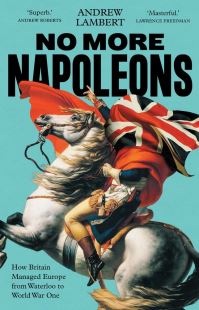
Lambert argues for a dynamic new understanding of the 19th century, showing how British policymakers shaped a stable European system that it could balance from offshore. Through judicious deployment of naval power against continental forces, and the defence strategy of statesmen such as the Duke of Wellington, Britain ensured that no single European state could rise to pose a threat, rebuilt its economy, and established naval and trade dominance across the globe. This is the remarkable story of how Britain kept a whole continent in check – until the final collapse of this delicately balanced order at the outset of World War One.
-
£12.99
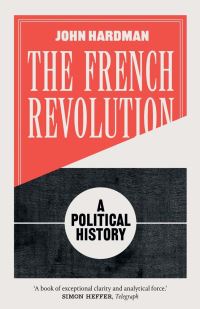
In 1786, France’s ancien régime was functioning as usual. Its alliance with the victorious American colonies had restored its diplomatic prestige, the economy seemed to be flourishing, and internal politics seemed quiet. But just a few short years later, the dynasty which had ruled France for over 800 years was swept away. What happened to cause such devastating change to the long-established political structure? John Hardman traces the political history of the French Revolution, from its origins to its aftermath. Hardman argues that the nature of ancien régime politics, the mismanagement of the fiscal crisis, and a new generation of young, overly confident politicians brought the Bourbon monarchy’s apparatus crashing down.
-
£25.00
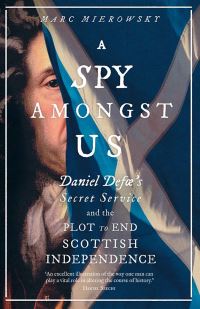
The true story of Daniel Defoe and the dirty tricks which helped bring Scotland into union with England In 1706, Edinburgh was on the brink of a popular uprising. Men and women took to the streets to protest the planned union with England, fearing the end of Scottish sovereignty. But unbeknownst to the mob, a spy was in their midst?the English writer Daniel Defoe, now bankrupt and thrice pilloried, had turned a government agent. Marc Mierowsky tells the dramatic story of Defoe and his fellow spies as they sabotaged the Scottish independence movement from the inside. Together they disseminated propaganda and built a network of operatives from London to the upper Highlands, providing the English government with up-to-the-minute intelligence and monitoring its adversaries’ every move. Through the lives of Defoe and his ring, their handlers, and opponents, Mierowsky guides us through this shadowy underworld of espionage and pro
-
£22.00
Here is a deeply researched biography of the new (smiley) face of tennis. A global star who has achieved more than Novak Djokovic, Rafael Nadal and Roger Federer did by this stage of their careers. At just 19 years old, Carlos Alcaraz won the US Open and became the youngest ever men’s world number one. At only 21, he already had four Grand Slam titles. For Alcaraz, everything – from his charm to his star power to his tennis mojo – starts with a smile. But there is a more complex character behind the smile. One who grew up in modest circumstances in a small village in Murcia in southern Spain. Mark Hodgkinson talks to those who know Alcaraz best to provide a fascinating insight into a showman with ambitions of becoming the GOAT, the greatest of all time.
-
£12.99
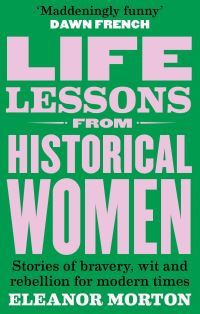
Eleanor Morton celebrates the ordinary women whose decisions and accomplishments in their everyday lives resonate with us today. Taking inspiration from the thriving self-help genre, Morton reasons that the greatest lessons can be taken from the female forebears who have come before – women whose actions inspire purpose, creativity and rebellion.
-
£10.99
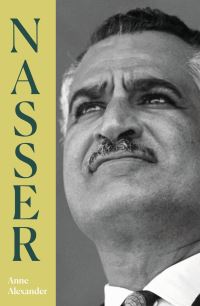
Anne Alexander describes the life of Gamal Abdel-Nasser (1918-1970), father of modern, independent Egypt and an icon of Arab nationalism. In the 1950s he was a key figure in the Free Officers revolutionary organization. He is remembered for standing up to the British in the Suez Crisis and building the Aswan Dam.
-
£25.00
In this work, Gareth Williams tells the remarkable story of the forgotten British scientists who enabled the Manhattan Project to create the atomic bomb.
-
£25.00
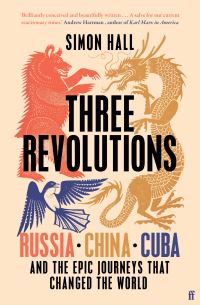
From the streets of Petrograd during the heady autumn of 1917, to Mao’s stunning victory in October 1949, and Fidel’s triumphant arrival in Havana, in January 1959, the history of the twentieth century was transformed in dramatic and profound ways by the Russian, Chinese and Cuban revolutions. Here, the stories of these epoch-defining events are told together.
-
£25.00
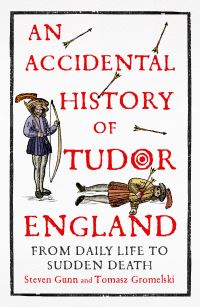
A new history of the Tudor world, told by uncovering ordinary people’s grizzly fatal accidents. There is untold history of Tudor England – the history of the several million subjects of their famous kings and queens. What did ordinary people do all day, in their homes, their work, their leisure and travel? This title explores the history of everyday life, and everyday death. Here we learn that fatal accidents were much more likely to take place during the agricultural peak season, with cart crashes, dangerous harvesting techniques, horse tramplings and windmill manglings all as major causes.
-
£22.00
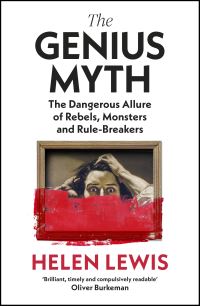
The tortured poet. The rebellious scientist. The monstrous artist. The tech disruptor. You can tell what a society values by who it labels as a genius. You can also tell who it excludes, who it enables, and what it is prepared to tolerate. Taking us from the Renaissance Florence of Leonardo da Vinci to the Floridian rocket launches of Elon Musk’s SpaceX, Helen Lewis unravels a word that we all use – without really questioning what it means. Along the way, she uncovers the secret of the Beatles’ success, asks how biographers should solve the Austen Problem, and reveals why Stephen Hawking thought IQ tests were for losers (before taking one herself). And she asks if the modern idea of genius – a class of special people – is distorting our view of the world.
-
£14.95
In this increasingly globalised, modernised, interconnected world, what can we learn from the first temples and burial sites built by our ancestors? This handbook brings some of the muddier, forgotten aspects of our shared history to life, offering a compelling insight into the origins of British cultural identity and a reminder of our deep-rooted connection to the earth.

 For the Love of Dogs: 20 Individual Notecards and Envelopes
  Ella Bella Ballerina & Cinderella