Showing 17–32 of 51 resultsSorted by latest
-
£25.00
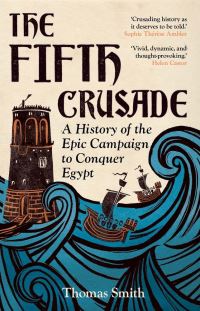
In 1217, the crusader states were in a highly fragile condition. The Fourth Crusade had failed, and Jerusalem had not been recovered. The crusaders now set their sights on Egypt. If the breadbasket of the Mediterranean could be conquered, long-term Christian control of the Holy Land could be ensured. Led by the rulers of Hungary and Austria, and backed by the Knights Templar and Hospitaller, the Fifth Crusade was launched. Thomas Smith tells the gripping story of the crusade for Egypt. Looking at a wide range of Christian and Muslim sources, Smith sheds new light on the brutal reality of medieval combat on land and water.
-
£14.99
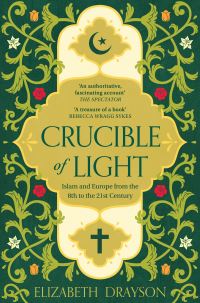
An ambitious, revisionist and wide-ranging account of the centuries-old relationship between Islam and Europe, from the Moorish invasion of Spain to the present, for readers of Peter Frankopan, Mary Beard and William Dalrymple.
-
£12.99
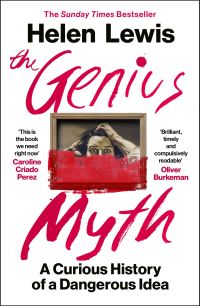
The tortured poet. The rebellious scientist. The monstrous artist. The tech disruptor. You can tell what a society values by who it labels as a genius. You can also tell who it excludes, who it enables, and what it is prepared to tolerate. Taking us from the Renaissance Florence of Leonardo da Vinci to the Floridian rocket launches of Elon Musk’s SpaceX, Helen Lewis unravels a word that we all use – without really questioning what it means. Along the way, she uncovers the secret of the Beatles’ success, asks how biographers should solve the Austen Problem, and reveals why Stephen Hawking thought IQ tests were for losers (before taking one herself). And she asks if the modern idea of genius – a class of special people – is distorting our view of the world.
-
£11.99
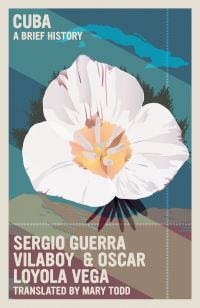
A concise, readable and thoroughly revised overview of Cuba, written by Cubans for anyone interested in quickly understanding the island country’s turbulent history. It covers the pre-Hispanic period, through Cuba’s struggle to maintain the revolution in the years following the collapse of the Soviet Union, to the period after Fidel Castro’s decision to step down from office, to the 2014 opening to Cuba by the Obama Administration, the retirement of Raul Castro and his replacement as president in 2018 by Miguel Diaz Canal, and finally to the reversal of Washington’s engagement with Cuba under President Trump.
-
£12.99
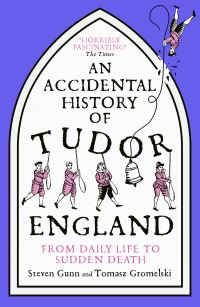
A new history of the Tudor world, told by uncovering ordinary people’s grizzly fatal accidents. There is untold history of Tudor England – the history of the several million subjects of their famous kings and queens. What did ordinary people do all day, in their homes, their work, their leisure and travel? This title explores the history of everyday life, and everyday death. Here we learn that fatal accidents were much more likely to take place during the agricultural peak season, with cart crashes, dangerous harvesting techniques, horse tramplings and windmill manglings all as major causes.
-
£12.99
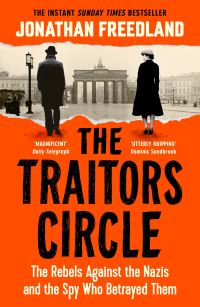
Berlin, 1943. A group of high-society anti-Nazi dissenters meet for a tea party one late summer afternoon. They do not know that, sitting around the table, is someone poised to betray them all to the Gestapo – revealing their secret to the Nazis’ most ruthless detective. They form a circle of unlikely rebels, drawn from the German elite: two countesses, a diplomat, an intelligence officer, an ambassador’s widow and a pioneering headmistress. Meeting in the shadows, rescuing Jews or plotting for a future Germany freed from the Führer’s rule, what unites them is a shared loathing of the Nazis, a refusal to bow to Hitler and the courage to perform perilous acts of resistance. Or so they believe. How did a group of brave, principled rebels, who had successfully defied Adolf Hitler for more than a decade, come to fall into such a lethal trap?
-
£12.99
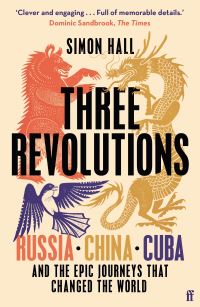
From the streets of Petrograd during the heady autumn of 1917 to Mao’s stunning victory in October 1949, and Fidel’s triumphant arrival in Havana, in January 1959, the history of the twentieth century was transformed in dramatic and profound ways by the Russian, Chinese and Cuban revolutions. Here, the stories of these epoch-defining events are told together.
-
£12.99
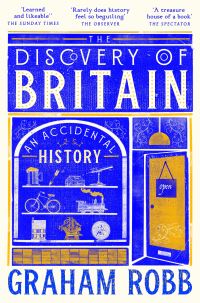
A hugely original tour of Great Britain by acclaimed historian Graham Robb, taking a fresh look at the people, places and events which have – for better or worse – shaped a nation.
-
£16.99
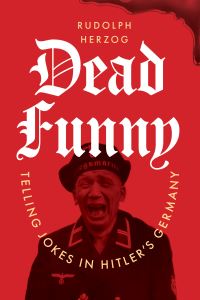
Hitler and Goring are standing on top of the Berlin radio tower. Hitler says he wants to do something to put a smile on the Berliners’ faces. Goring says, ‘Why don’t you jump?’ When a woman working in a factory told this joke to a colleague in Germany in 1943, she was arrested by the Nazis and sentenced to death by guillotine – it didn’t matter that her husband was a good German soldier who died in battle. In this groundbreaking work of history, Rudolph Herzog takes up such stories to show how widespread humour was during the Third Reich. It’s a fascinating and frightening history: from the suppression of the anti-Nazi cabaret scene of the 1930s, to jokes made at the expense of the Nazis during WWII, to the collections of ‘whispered jokes’ that were published in the immediate aftermath of the war. Herzog argues that jokes provide a hitherto missing chapter of WWII history. The jokes show that not all Germans were hypnotized by Nazi prop
-
£25.00
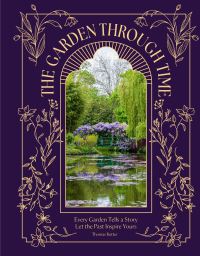
Step into a Persian paradise, wander through a Mughal masterpiece or lose yourself in Monet’s blooming haven at Giverny – ‘The Garden Through Time’ brings 45 extraordinary gardens to life in a beautifully illustrated journey across the world and through the centuries. From peaceful medieval cloisters to imaginative modern spaces like New York’s High Line, each garden offers inspiration and ideas you can adapt at home, whether you have a sprawling garden or just a few pots on a balcony. With stunning artwork and accessible, thoughtful tips throughout, this book blends the joy of discovery with practical insight. It’s a celebration of the garden in all its forms – ideal for anyone looking to reimagine their outdoor space or simply explore the beauty of gardens from their own armchair.
-
£25.00
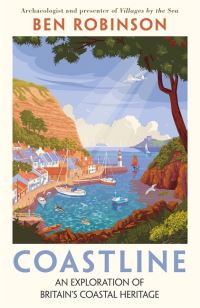
From prehistory to the modern era, our coastline had shaped Britain, not only physically but socially, economically and culturally. Far from being at the margins of national interests, the coast has been at the heart of the British people’s most important endeavours and central to era-defining national events. For thousands of years the coastline has been both Britain’s frontier and its connection to the wider world. Exploring key coastal themes throughout British history and introducing some of the most significant, intriguing and quirky places that express the pivotal role our coastal heritage has played, archaeologist and presenter Ben Robinson looks to our coastline to tell not only the stories of our past, but also of our present.
-
£25.00
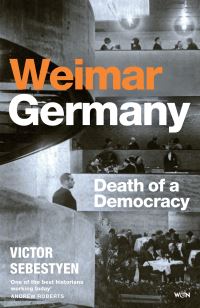
The Weimar Republic was Germany’s postwar experiment with democracy, and a time of unprecedented cultural, intellectual and artistic freedom. Berlin was at the cutting edge of quantum physics and psychoanalysis; its nightlife showcased grand opera and dissolute cabaret. Bauhaus architecture and modernist painting flourished, and it rivalled Hollywood as a capital of film. But beneath the glamour was a deeply polarised society of extremes plagued by economic disasters, populist leaders fuelling culture wars, and an uneasy political settlement that would soon spawn the horrors of Nazism. Covering 15 years from the end of the First World War to Hitler’s appointment as Chancellor in 1933, this book tells the definitive story of Germany’s interwar republic and descent into fascism.
-
£16.99
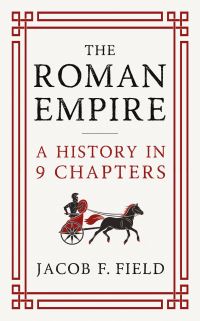
For over five centuries, the Roman Empire ruled much of Europe, North Africa and the Middle East. It produced some of history’s greatest orators and statesmen, as well as some of its most debauched and corrupt tyrants. Shaping world affairs, the Roman Empire advanced economics, trade, archaeology and culture, but did so through conquest, bloodshed and enslavement of its enemies. This was the Roman way: vae victis, ‘woe to the conquered’. In this book, historian Jacob F. Field tells the entire story of Imperial Rome. Beginning with Julius Caesar first laying the foundations for the Empire right up to the collapse of Rome’s power, follow the journey of the Empire’s rise to unprecedented heights and learn what caused it to eventually fall. This accessible and entertaining history tells the stories of the greatest triumphs and most catastrophic disasters, the battles that defined the era, and what it was like to live under the Romans.
-
£16.99
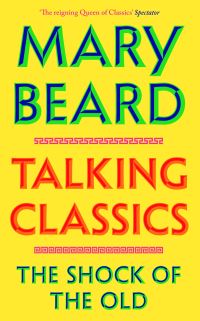
Mary Beard points to the surprising connections between antiquity and the present. From revolutionaries to dictators, Bob Dylan to Beyoncé, she joins forces with the varied modern characters who have been transfixed by the ancient world. It’s not compulsory, she argues, to be excited by antiquity, but it’s a shame not to be. After half a century teaching and studying classics, she fills the book with lively stories, curious facts and some good gossip. This book explains why the deep past does really affect us all.
-
£28.00
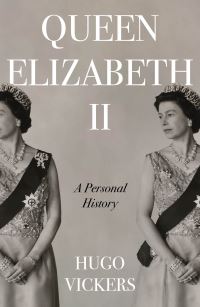
Queen Elizabeth II occupies a unique place in the hearts of her people. She was elegant, self-contained, and enigmatic. After a supremely happy childhood, gravitas descended with the death of her beloved grandfather and after the Abdication she accepted her destiny. When she was 21 in 1947, she made a promise to serve and kept it for a remarkable 75 years. She was steadfast and conciliatory and presided calmly over decades of change, political upheaval and family tragedy. Tommy Lascelles described her as ‘the most remarkable woman’ he had ever met. This biography is based on sixty years of close observation and research, and uses never-before-seen sources and personal recollections to illuminate her life as never before.
-
£14.99
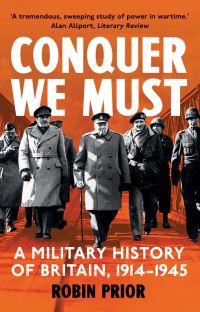
The First and Second World Wars were separated by a mere two decades, making the period 1914-1945 an unprecedentedly intense and violent era of history. But how did Britain develop its complex military strategy during these wars, and how were decisions made by those at the top? Robin Prior examines the influence politicians had on military operations, in the first history to assess both world wars together. Drawing uniquely on both military and political archives and previously unexamined sources Prior explores the fraught relationships between civilian and military leaders: from Lloyd George’s remarkably interventionist stance on military tactics during the First World War to Churchill’s near-constant arguments with American leaders during the Second.