“Ancient Greece in 50 Monuments” has been added to your basket.
View basket
Showing 1–16 of 38 resultsSorted by latest
-
£10.99
You may think about the Roman Empire every day, but I bet you rarely think about the plebs. The plebs were the commoners, the general populace and lower social classes, and as such their feelings, thoughts and voices are seldom captured in the sources. Most books about Ancient Rome treat the plebs as irrelevant ‘lowlifes’, which is indeed how they were viewed by the patricians at the centre of the existing popular histories. ‘Plebs Romana’ is a history of Ancient Rome to centre the class of people who made up the empire’s majority. A 700-year story that begins with the founding of the Roman Republic, historian Peter Jones traces the rise of the plebs, from being a powerless group to a political match for the ‘patrician’ elite.
-
£25.00
The figure of a goddess who represents both love and war can be found in cultures across the ancient world. These societies were all polytheistic, and all worshipped such deities as Venus, Freya, and the Morrigan. What was it about this model of divine femininity that ancient people in Europe and the Near East found so attractive? In this vivid account, Ronald Hutton traces the history of eight key goddesses in ancient societies. Looking at the Sumerian Inanna, ancient Greek Aphrodite, and Egyptian Hathor, amongst others, Hutton compares the characters of these female deities and examines how and why such a figure reoccurred so often. Ranging from Mesopotamia, Syria, and Palestine to western Europe, this fascinating story provides a deeper understanding of two of the most powerful and intractable human impulses – love and war.
-
£30.00
An arresting visual tour of the great sites of ancient Greece, told through its city states and the monuments they built to endure through the ages. ‘We have raised … monuments that those alive today look on with wonder, as those in generations still to come will wonder, too.’ More than 2,000 years later, the words uttered by the Athenian politician Pericles have been proven correct many times over. Ancient Greece continues to captivate, and its monuments still inspire awe. But what is it that makes something ‘Greek’? Exploring ancient Greece through its monuments – from the Parthenon in Athens to the sanctuary of Apollo at Delphi and the Temple of Zeus at Olympia – classicist David Stuttard reveals the values that united the disparate Greek world and made their mark on history. New digital reconstructions bring ancient Greece to life via buildings and monuments that still survive and can be visited today.
-
£14.99
Historian Bettany Hughes unearths the stories of a civilisation through seven of its most precious treasures, revealing the people, power and beliefs that shaped the Nile’s enduring world. Her thrilling journey of discovery explores the secrets and splendour of the Great Pyramid of Giza, the Sphinx, Cleopatra’s secret island of Philae, Hatshepsut’s temple at Deir el-Bahari, Tutankhamen’s tomb, the underwater city at Alexandria, and the most beautiful mummy in the world. Drawing on her own vivid first-hand encounters at each site, Hughes brings to life the splendour, drama and humanity of ancient Egypt as never before.
-
£12.99
Socrates is revered as a man who spoke truth to power. Yet his death in 399 BC was the first time in recorded history that a democratic government condemned a person to death for their beliefs. His death was a potent symbol of free speech, and Socrates’ fate has haunted Western thought ever since – a guiding influence on Plato, John Stuart Mills, Nietzsche and Martin Luther King. In this incisive survey of philosophy and politics, renowned classicist and translator Emily Wilson unravels ancient philosophy’s most enduring – and hardest – questions: why did ancient Athens execute its leading intellectual? How do democracies deal with dissent? And can our own society allow for total freedom of speech and thought?
-
£20.00
We all know what it means to be ‘stoical’: to have a stiff upper lip, to hide or suppress one’s emotions, to be indifferent to the outside world. Many people might reasonably think that this doesn’t sound like a good way to live. Who would want to feel nothing? But what exactly is the difference between being ‘stoic’ and being a ‘Stoic’? Are Stoics just naïve optimists? And is Stoicism really only for men? This book offers an invigorating corrective to one of philosophy’s most popular and most misunderstood traditions. Here philosopher John Sellars debunks all the major myths and misconceptions foisted on Stoicism by critics – and sometimes admirers too – and firmly puts them to rest. With vivid examples and fresh interpretations of ancient Stoics, from Marcus Aurelius to Epictetus to Seneca, Sellars shows why Stoicism is not only perennially relevant but essential for navigating the complexities of modern life.
-
£14.99
Take a journey through Ancient Greece and delve deep into its mythology in this compendium of tales. From the heroes of Athens and Sparta to Orpheus and Persephone in the Underworld, take a magical illustrated journey through the Mediterranean to learn about the places where each story took place.
-
£20.00
Ancient Rome retold through the lives of ordinary people.
-
£22.00
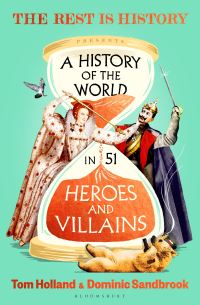
The multiple Sunday Times bestselling brand and creators of the #1 podcast sensation return with a hilarious deep dive into history's biggest heroes and most infamous villains
-
£25.00
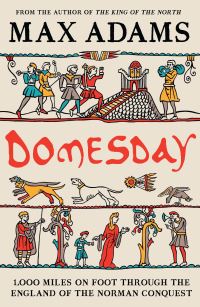
A fascinating journey through the landscapes and communities of the Domesday Book from the author of King in the North
-
£8.99
It’s your LUCKY day! You’ve stumbled across an ancient treasure chest in your school that was buried THOUSANDS of years ago by a child living in ancient Egypt. And the chest is packed with 20 strange and curious items that tell us so much about their life, such as: the OLDEST cheese in the world; a special lunch box shaped like a DUCK; slippers worn by the YOUNGEST ever Pharaoh; MAGICAL spells written on ancient tombs! Unpack the treasure chest and discover the objects that a child just like YOU was using thousands of years ago. You’ll uncover fascinating facts and true tales about their school, family life, clothes, games, favourite snacks and so much more.
-
£30.00
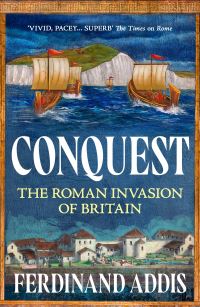
An epic, visceral history of the Romans in Britain, from Caesar's first invasion attempt in 55 BC to the fall of the Roman empire
-
£12.99
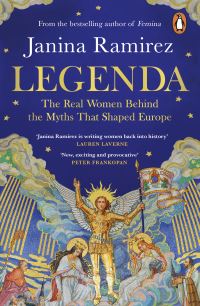
Bestselling historian Professor Janina Ramirez peels back the layers of time to reveal how the identities of women have been co-opted by those intent on crafting national identities. Their names are well-known, and summaries of their achievements have been recited in classrooms for decades, but medieval women like Joan of Arc, Lady Godiva and Isabella of Castile have been misrepresented, their stories twisted and weaponised. Meanwhile, ground-breaking 18th and 19th-century women who blazed a trail through revolutionary Europe have been forgotten, their legacies too easily dismissed or ignored. Questioning established narratives and searching for the real women behind the legends, Ramirez interrogates what defines a nation and who gets to build it, shining a light on how history is so often hijacked to serve the ideological and political interests of the present.
-
£25.00
How did Christianity, starting out as a minor offshoot of Judaism, grow into an international faith that shaped the world as we know it? ‘Rome’s Age of Revolution’ corrects the triumphalist narrative that the Christian message was so persuasive, and indeed superior, that people converted in huge numbers, abandoning their pagan beliefs, thereby turning a small persecuted sect into the state religion of the Roman Empire. Tim Whitmarsh shows that Christianity would never have succeeded if it had not taken advantage of the infrastructure and culture of the Roman Empire; in turn the new religion was indelibly shaped and transformed by Roman beliefs and ideas, especially those circulating in the Greek-speaking, or Hellenistic, eastern parts of the empire. This radical transformation, Tim argues, can only be described as a revolution. The consequences are with us to this day.
-
£16.99
The greatest empire in Western history – told as never been told before. Rome is often remembered for its spectacular collapse. But for over two thousand years – through civil wars, plagues, invasions, and religious upheaval – the Roman state survived, adapted, and reinvented itself. From a muddy settlement on the banks of the Tiber to the glittering court of Constantinople, this is the untold story of a civilisation that endured. Acclaimed historian Edward J. Watts tells a truly complete history of Rome in all its epic sweep: the Punic Wars, the fall of the republic, the coming of Christianity, Alaric’s sack of Rome, the rise of Islam and the onslaught of the Crusaders who would bring about the empire’s end.
-
£9.99
An entertaining and accessible introduction to the fascinating world of Greek and Roman history, covering the people, events, art and mythology that have shaped the Western world.

 Still Life