Showing 17–32 of 38 resultsSorted by latest
-
£12.99
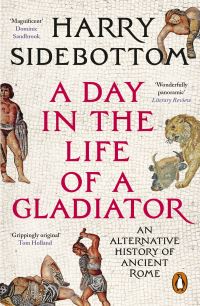
Dressed in armour and clutching a bloody sword, the Roman gladiator is the most iconic figure of the ancient world. Both fascinating and repulsive to us now, he was in his own time a deeply controversial character, by turns hated and idealized – and always at the heart of Roman culture. But what did he really mean to the Romans? What did they see in the gladiator and the spectacle of the games? And what does he reveal to us today about the Roman way of life? Brilliantly written and meticulously researched, this book tells the stories of the gladiators and those who observed them – from grand emperors to lowly slaves – illuminating and analysing the all-consuming passion of the Roman Empire for the spectacle of mortal combat. In doing so, it reveals Roman ideas about everything from freedom and servitude to sex and desire, from courage and cowardice to death and the afterlife.
-
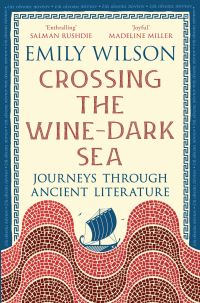
£12.99
How do we give old words new voices? What must a translator lose – and might she gain – when she moves between languages, bringing ancient stories to modern life? Reflecting on the inspiration, interpretation and (mis)appropriation of words from Antiquity to today, Emily Wilson invites us to explore the translator’s art and mind – and gives a wholly fresh insight into the joys and quandaries of her own work. From Athenian comedy and Rome’s love of Greek culture to Han Kang’s novels, Cardi B’s lyrics and the discoveries she made whilst translating Homer, this is a playful and fascinating voyage into the promise, possibility and constant renewal of our founding classical culture.
-
£25.00
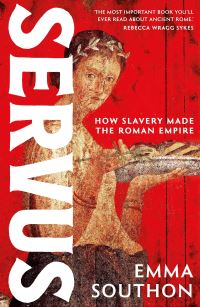
We associate the Romans with majesty and greatness: we marvel at their straight roads and innovative underfloor heating, at the dominance of their army and navy, at the grandeur of their palaces and temples. But the Romans were also enslavers. They built an empire on the backs of millions of people snatched from their homes in the aftermath of war, kidnapped from the streets, sold into slavery as punishment or, simply, born enslaved. ‘Servus’ takes us into the invisible spaces of the Roman world, where millions of enslaved lives were unwillingly dedicated to the perpetuation of the empire that owned them.
-
£25.00
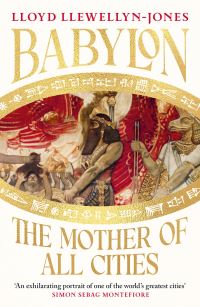
Babylon often appears more myth than history. Purportedly the site of the Hanging Gardens and the Tower of Babel, its infamous presence in the Bible has made it a byword for sinful decadence. But Babylon was a real place teeming with life, a bustling mega-city on the Euphrates where schoolteachers, artisans, priests, slaves, prostitutes and soldiers rubbed shoulders in maze-like streets and busy marketplaces. The city was home to some extraordinary rulers, from Hammurabi the great lawgiver to Nebuchadnezzar II, the conqueror-king, under whose reign the city glistened in gold and lapis lazuli. In this book, Lloyd Llewellyn-Jones brings the city vividly to life, tracing its foundation through to its world domination, and subsequent decline, fall and ruin into dust.
-
£12.99
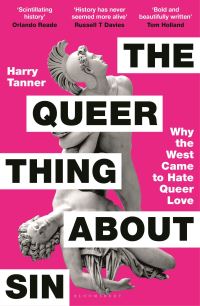
A gripping new journey through ancient history, uncovering the origins of homophobia and the untold stories of those who dared to love.
-
£10.99
*A GUARDIAN, NEW STATESMAN, PROSPECT AND WATERSTONES BEST BOOK OF 2025*
'The fascinating story of ancient words … new revelations await' The Guardian
'A magisterial feat' New Scientist
________________________________
-
£12.99
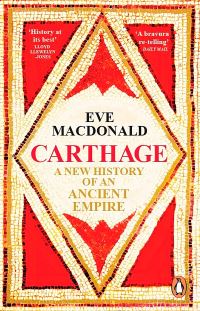
Carthage was a power that dominated the western Mediterranean for almost six centuries before its fall to Rome. The history of the realm and its Carthaginians was subsumed by their conquerors and, along the way, the story of the real Carthage was lost. In this landmark new history, Eve MacDonald tells the essential story of the lost culture of Carthage and of its forgotten people, using archaeological analysis to uncover the history behind the legend. A journey that takes us the Phoenician Levant of the early Iron Age to the Atlantic and all along the coast of Africa, the book puts the city and the story of North Africa once again at the centre of Mediterranean history. Reclaimed from the Romans, this is the Carthaginian version of the tale, revealing to us that, without Carthage, there would be no Rome.
-
£30.00
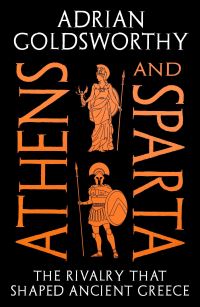
A dramatic exploration of two opposing cities, examining the politics, war and extremes of human behaviour in the ancient world.
-
£9.99
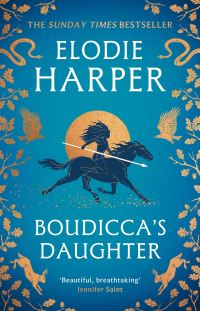
A dazzling new standalone novel set in the Roman world about the daughter of one of Britain’s most powerful heroines, from the author of the Sunday Times bestselling Wolf Den Trilogy.
-
£22.00
We all know how the people of Pompeii died. But what about how they lived?
__________
-
£16.99
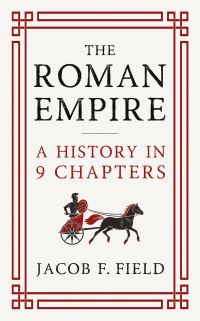
For over five centuries, the Roman Empire ruled much of Europe, North Africa and the Middle East. It produced some of history’s greatest orators and statesmen, as well as some of its most debauched and corrupt tyrants. Shaping world affairs, the Roman Empire advanced economics, trade, archaeology and culture, but did so through conquest, bloodshed and enslavement of its enemies. This was the Roman way: vae victis, ‘woe to the conquered’. In this book, historian Jacob F. Field tells the entire story of Imperial Rome. Beginning with Julius Caesar first laying the foundations for the Empire right up to the collapse of Rome’s power, follow the journey of the Empire’s rise to unprecedented heights and learn what caused it to eventually fall. This accessible and entertaining history tells the stories of the greatest triumphs and most catastrophic disasters, the battles that defined the era, and what it was like to live under the Romans.
-
£16.99
Mary Beard points to the surprising connections between antiquity and the present. From revolutionaries to dictators, Bob Dylan to Beyoncé, she joins forces with the varied modern characters who have been transfixed by the ancient world. It’s not compulsory, she argues, to be excited by antiquity, but it’s a shame not to be. After half a century teaching and studying classics, she fills the book with lively stories, curious facts and some good gossip. This book explains why the deep past does really affect us all.
-
£10.99
The ancient Roman empire was the supreme arena, and to rule as a Caesar was to stand as an actor upon the great stage of the world. No biographies invite us into the lives of the Caesars more vividly or intimately than those by Gaius Suetonius Tranquillus, written from the centre of Rome and power, in the early 2nd century AD. That Rome lives more vividly in people’s imagination than any other ancient empire owes an inordinate amount to Suetonius. Now award-winning author and translator Tom Holland brings us even closer with this translation. Giving a deeper understanding of the personal lives of Rome’s first emperors, and of how they swayed the fates of millions, ‘The Lives of the Caesars’ provides an immersive experience of a time and culture at once familiar and utterly alien to our own.
-
£25.00
In 410 CE, Roman rule of Britain collapsed, bringing a centuries-long occupation to an end. A century later, Britain was dividing into two areas with contrasting cultures, an expansive ‘Anglo-Saxon’ south and east, and a shrinking Celtic west and north. How did this transition happen? And why did the customs of the Germanic incomers prevail in England, unlike elsewhere in Europe? In this deeply researched account, Nicholas J. Higham addresses these difficult questions head on. Higham draws on archaeological evidence and contemporary literature, including the writings of Gildas, to reconsider the accepted narrative.
-
£12.99
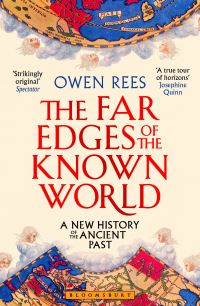
What was it like to live on the edges of ancient empires, at the boundaries of the known world? In this bold revisionist history of the ancient world, Owen Rees shifts our focus from the centres of Greece and Rome to the lively, long-ignored societies on the borders.
-
£12.99
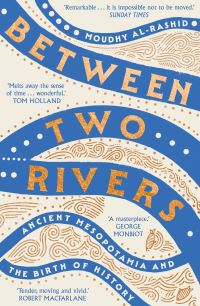
In ancient times, the vast area that stretches across what is now modern-day Iraq and Syria saw the rise and fall of epic civilizations who built the foundations of our world today. It was in this region, which we call Mesopotamia, that history was written down for the very first time. With startling modernity, the people of Mesopotamia left behind hundreds of thousands of fragments of their everyday lives. Immortalised in clay and stone are intimate details from 4000 years ago. We find accounts of an enslaved person negotiating their freedom, a dog’s paw prints as it accidentally stepped into fresh clay, a parent desperately trying to soothe a baby with a lullaby, and countless receipts for beer. Historian Dr Moudhy Al-Rashid examines what these people chose to preserve in their own words about their lives, creating the first historical records and allowing us to brush hands with them thousands of years later.