Showing 1–12 of 1318 resultsSorted by latest
-
£45.00
The word ‘samurai’ stands for ideals of courage, honour, self-sacrifice and loyalty. Yet much of the common understanding is imaginative fiction. This book explores the concept from medieval reality, through early modern changes, to today’s hugely varied popular culture, challenging preconceptions and exploding myths.The figure of the samurai is unique in its global intelligibility, read both as a symbol of Japan and as a universal icon of the virtuous and fearless warrior.Published to accompany a major exhibition at the British Museum, this is the first book to explore the centuries-long trajectory of the samurai through objects from international collections. It discusses the historical origins of the samurai warrior class in the civil wars of the medieval period and examines the stories they told of their own achievements. From the early 1600s, with the establishment of peace, the samurai became an official class fulfilling a bureauc
-
£12.99
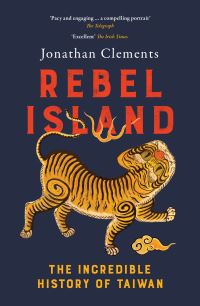
An essential guide to Taiwan’s past and present, providing invaluable context at a time of escalating tension over its future.
-
£22.00
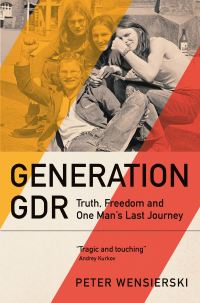
A gripping account of East Germany in the late ’70s and early ’80s, and of one man’s fated struggle for freedom.
-
£25.00
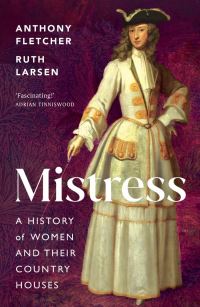
An insightful, hugely engaging new history of elite women and the country house from the sixteenth to the twentieth century Grand houses can be found across the countryside of England and Wales. From the Stuart and Georgian periods to the Edwardian and Victorian, these buildings were once home to the aristocratic families of the nation. But what was life like for the mistresses of these great houses? How much power and influence did they really have? Anthony Fletcher and Ruth M. Larsen explore the lives of country house mistresses. Focusing on eighteen women, and spanning five centuries, they look at the ways in which elite women not only shaped the house, household, and family, but also had an impact on society, culture, and politics within their estates and beyond.
-
£22.00
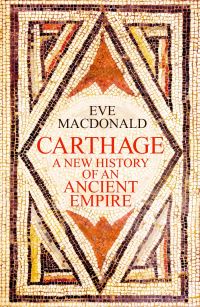
Carthage was a power that dominated the western Mediterranean for almost six centuries before its fall to Rome. The history of the realm and its Carthaginians was subsumed by their conquerors and, along the way, the story of the real Carthage was lost. In this landmark new history, Eve MacDonald tells the essential story of the lost culture of Carthage and of its forgotten people, using archaeological analysis to uncover the history behind the legend. A journey that takes us the Phoenician Levant of the early Iron Age to the Atlantic and all along the coast of Africa, the book puts the city and the story of North Africa once again at the centre of Mediterranean history. Reclaimed from the Romans, this is the Carthaginian version of the tale, revealing to us that, without Carthage, there would be no Rome.
-
£25.00
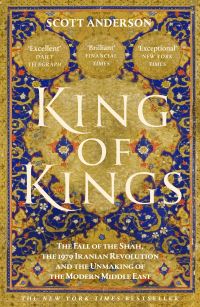
Before the revolution, the Shah of Iran seemed invincible. The world watched in awe as he commanded a huge army and oversaw an economy awash with billions of dollars of oil revenues. The regime’s secret police had crushed communist opposition and the Shah appeared to have bought off the conservative Muslim clergy inside the country. On the international stage, Iran had become an invaluable ally to the West during the Cold War. But village streets spoke of a different country – people derided the Shah as an American lackey and blamed him for economic inequality, for spending recklessly on lavish parties and for ignoring the Muslim majority. When a volcanic religious revolution erupted, led by Ayatollah Khomeini, the Shah was forced into exile. How did it all go so wrong? This book reveals how the Iranian Revolution was as world-shattering an event as the French and Russian revolutions, and how its repercussions are still felt today.
-
£12.99
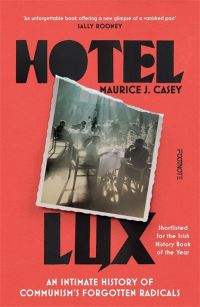
‘Hotel Lux’ follows Irish radical May O’Callaghan and her friends, three revolutionary families brought together by their vision for a communist future and their time spent in the Comintern’s Moscow living quarters, the Hotel Lux. Historian Maurice Casey reveals the connections and disconnections of a group of forgotten communist activists whose lives collided in 1920s Moscow: a brilliant Irish translator, a maverick author, the rebel daughters of an East London Jewish family, and a family of determined German anti-fascists.
-
£22.00
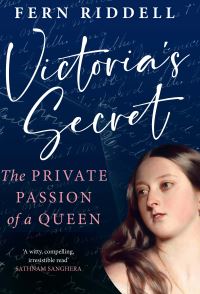
From the moment John Brown arrived as a servant to Queen Victoria’s household, he became known across the land as her loyal companion, her fierce protector, and her right-hand man, their friendship immortalised in print and later on-screen. But what if there was more to their relationship than we know? And what has history been hiding from us? In this provocative exploration of Victoria’s emotional world, and her passionate midlife, historian Fern Riddell re-examines everything we thought we knew about one of Britain’s most iconic women.
-
£10.99
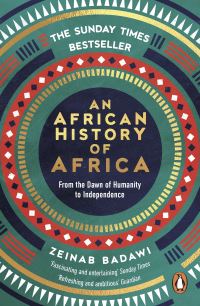
For too long, Africa’s history has been neglected. Dominated by western narratives of slavery and colonialism, its past has been fragmented, overlooked and denied its rightful place in our global story. Now, Zeinab Badawi guides us through Africa’s spectacular history, from the origins of humanity, through ancient civilisations and medieval empires with powerful queens and kings, to the miseries of conquest and the elation of independence. Seeking out occluded histories from across the continent, meeting with countless historians, anthropologists, archaeologists and local storytellers, and travelling through more than thirty countries, Badawi weaves together a fascinating new account of Africa: an epic, sweeping history of the oldest inhabited continent on the planet, told through the voices of Africans themselves.
-
£25.00
A new history of humanity told through the lens of collapse, from Neanderthals to AI, and what it means for our uncertain future.
-
£10.99
Anne Alexander describes the life of Gamal Abdel-Nasser (1918-1970), father of modern, independent Egypt and an icon of Arab nationalism. In the 1950s he was a key figure in the Free Officers revolutionary organization. He is remembered for standing up to the British in the Suez Crisis and building the Aswan Dam.
-
£10.99
This is a heart-stopping countdown narrative recreating the liberation of Paris in 1944, one of the great and most dramatic hinge moments of WW2. When the Germans marched in and the lamps went out in the City of Light the millions who loved Paris mourned. Liberation, four years later, triggered an explosion of joy and relief. It was the party of the century and everybody who was anybody was there. General Charles de Gaulle seized the moment to create an instant legend that would take its place alongside the great moments in French history. After years of oppression and humiliation Parisians had risen to reclaim their city and drive out the forces of darkness – or so the story went. This account of the liberation, packed with revelation, tells the story of those heady days of suspense, danger, exhilaration – and vengeance – through the eyes of a range of participants.

 7-Ingredient Mediterranean