-
Sorry, "A cage went in search of a bird" was not added to cart because it has reached the maximum backorder limit. (0 available).
Showing 1–12 of 102 resultsSorted by latest
-
£9.99
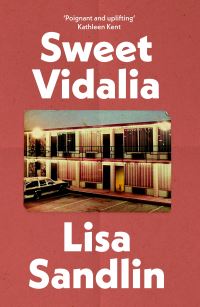
As Eliza sits at her husband’s funeral, still stunned by the suddenness of his death, she discovers a lie that turns her life upside down. Almost overwhelmed by the dawning understanding that she has known nothing true about her life, Eliza can’t see a way forward at first. How should she come to terms with all that has been a lie? How can she live with herself? But Eliza has a core of resourceful steel that does not let her down and an innate emotional generosity that she clings to, faced with an almost overwhelming sense of bitterness. Signing up to business classes so she can make a living, she moves into a hotel, the Sweet Vidalia, filled with people facing their own challenges. As she gathers new friends and new possibilities open up before her, Eliza finds it isn’t so simple to leave the past behind.
-
£20.00
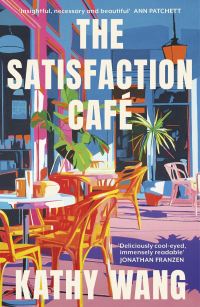
Joan Liang’s life is a series of surprising developments: she never thought she would leave Taiwan (and for all places, California), nor did she expect her first marriage to implode – especially as quickly and spectacularly as it did. She definitely did not expect to fall in love with an older, wealthy American and become his fourth wife and mother to his youngest children. Through all this she asks herself the question familiar to so many of us: what are we living for? And are we ever truly satisfied?
-
£10.99
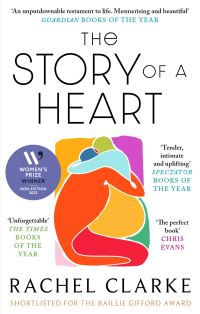
The first of our organs to form, the last to die, the heart is both a simple pump and the symbol of all that makes us human: as long as it continues to beat, we hope. One summer day, nine-year-old Keira suffered catastrophic injuries in a car accident. Though her brain and the rest of her body began to shut down, her heart continued to beat. In an act of extraordinary generosity, Keira’s parents and siblings agreed that she would have wanted to be an organ donor. Meanwhile nine-year-old Max had been hospitalised for nearly a year with a virus that was causing his young heart to fail. When Max’s parents received the call they had been hoping for, they knew it came at a terrible cost to another family. This is the unforgettable story of how one family’s grief transformed into a lifesaving gift.
-
£25.00
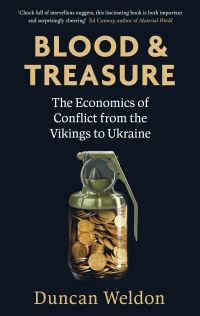
Wars are expensive, both in human terms and monetary ones. Since at least the 1640s, in the aftermath of the British Civil Wars, the phrase ‘blood and treasure’ has sought to encapsulate these costs.Two economic notions, in particular, feature in this book: incentives and institutions. A rational look at incentives explains even the most seemingly irrational behaviour – and few things are as irrational as war. This book examines why Genghis Khan should be regarded as the father of globalisation, how New World gold and silver kept Spain poor, why some economists think of witch trials as a form of ‘non-price competition’, how pirate captains were pioneers of effective HR techniques, how handing out medals hurt the Luftwaffe in the Second World War and why economic theories helped to create a tragedy in Vietnam.
-
£10.99
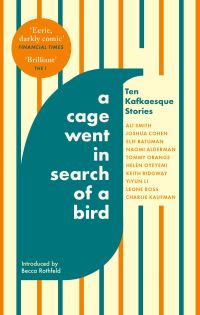
Franz Kafka is widely regarded as one of the greatest and most enigmatic geniuses of European literature. What happens when his idiosyncratic imagination meets some of the greatest literary minds writing in English across the globe today? From a future society who ask their AI servants to construct a giant tower to reach God; to a flat hunt that descends into a comically absurd bureaucratic nightmare; to a population experiencing a wave of unbearable, contagious panic attacks, these ten specially commissioned stories are by turns mind-bending, funny, unsettling and haunting. Inspired by a twentieth-century visionary, they speak powerfully to the strangeness of being alive today.
-
£18.99
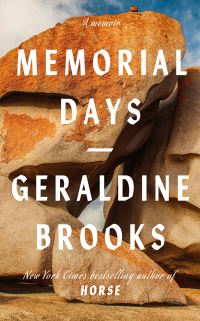
Many cultural and religious traditions expect those who are grieving to step away from the world. In contemporary life, we are more often met with red tape and to-do lists. This is exactly what happened to Geraldine Brooks when her partner of more than three decades, Tony Horwitz – just sixty years old and, to her knowledge, vigorous and healthy – collapsed and died on a Washington, D.C. sidewalk. After spending their early years together in conflict zones as foreign correspondents, Geraldine and Tony settled down to raise two boys on Martha’s Vineyard. The life they built was one of meaningful work, good humor, and tenderness, as they spent their days writing and their evenings cooking family dinners or watching the sun set with friends at Lambert’s Cove. But all of this came to an abrupt end when, on Memorial Day 2019, Geraldine received the phone call we all dread.
-
£20.00
One night in 1931 William Wallace was handed a phone message at his chess club from a Mr Qualtrough, asking him to meet at an address to discuss some work. Wallace caught a tram from the home he shared with his wife, Julia, to the address which turned out, after Wallace had consulted passers-by and even a policeman, to not exist. On returning home two hours later he found his wife beaten to death in the parlour. The elaborate nature of his alibi pointed to Wallace as the culprit. He was arrested and tried, found guilty of murder and sentenced to hang, but the next month the Court of Criminal Appeal sensationally overturned the verdict and he walked free. The killer was never found. 15 years on, the inspector who worked the case is considering it once more. Speculation continues to be rife over the true killer’s identity.
-
£25.00
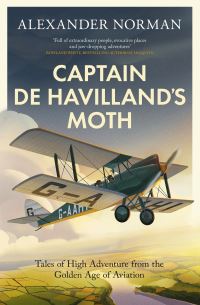
The first flight of the DH60 Moth marked the beginning of a craze for flying that gripped a war-weary world for more than a decade. The most successful aircraft of its era, it was the one in which people had the greatest adventures. And it was the Moth which showed that flying was safe, practical and, potentially, open to all. True, many early Mothists were uber-privileged. The Prince of Wales had one, as did his brother, the Duke of Gloucester. Beryl Markham, who had affairs with both, learned to fly in a Moth. Other enthusiasts included Philip Sassoon, one of the richest commoners in the land. In this story, as entertaining as it is extraordinary, the reader is introduced to an astonishing cast of characters whose courage, determination and eccentricity is shown in the light of what it is actually like to fly these remarkable aeroplanes.
-
£22.00
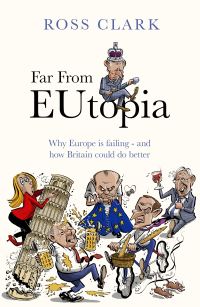
In 2020, after three and a half years of bitter negotiations, Britain left the European Union. For some it was a day of freedom, for others a tragedy which would leave Britain isolated and poorer. Vote Brexit, the Remain campaign warned us, and it would be an act of self-harm. The economy would collapse, sending prices and unemployment soaring. Meanwhile, in contrast to xenophobic, inward-looking Britain, the EU would soar ahead without us. But is that really what has happened? Ross Clark reveals just how badly the EU is doing – and how in many ways Britain is doing better. Since Brexit, for example, the UK economy has grown faster than Germany’s. In spite of inflation which followed the pandemic and the invasion of Ukraine, Britain has the lowest food prices in Europe. The air is cleaner than in many countries.
-
£14.99
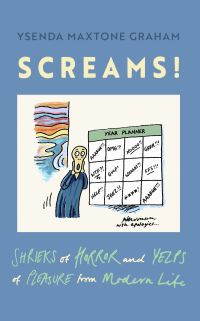
A gently humorous take on the modern world – from the pitfalls of knicker-envy to the weaponising of email sign-offs.
-
£20.00
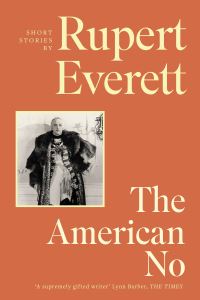
In Rupert Everett’s first, glorious collection of stories, he takes us on an exhilarating journey with a cast of extraordinary characters. A blackly humorous story of a chaotic and emotional funeral in Paris. Oscar Wilde’s last night in Paris, vividly evocative, unflinching and elegiac. A middle-aged Russian countess who confronts sex and age in a Cotswold teashop. The ferociously unforgiving life of an LA talent agency and the unexpected twist that launches a completely different kind of career. The deathbed confession of a woman who left home for 1850s India, never to return. A story of emigration, love and grief. And a beautifully evocative and touching portrayal of Proust’s creative life and his childhood.
-
£25.00
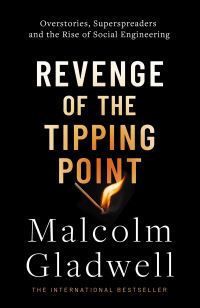
Twenty-five years after the publication of his groundbreaking first book, Malcolm Gladwell returns with a brand new volume that reframes the lessons of ‘The Tipping Point’ in a startling and revealing light. Why in the late 1980s and early ’90s did Los Angeles become the bank robbery capital of the world? What is the Magic Third and what does it have to do with racial equity? What do big cats and clusters of teen suicides have in common? These are just some of the questions Malcolm Gladwell addresses in this work, which revisits the phenomenon of epidemics and examines the ways in which we have learned to tinker with and shape the spread of ideas, viruses, and trends – sometimes with great success, sometimes with disastrous consequences.