Goliath’s Curse
£25.00A new history of humanity told through the lens of collapse, from Neanderthals to AI, and what it means for our uncertain future.
Showing 1–12 of 24 resultsSorted by latest
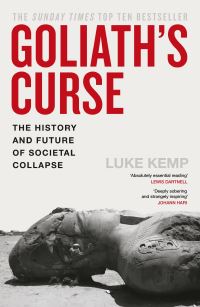
A new history of humanity told through the lens of collapse, from Neanderthals to AI, and what it means for our uncertain future.
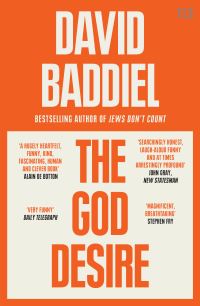
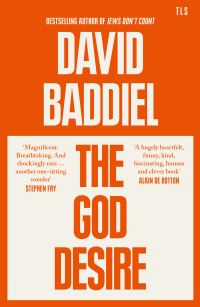
David Baddiel would love there to be a God. He has spent a lot of time fantasising about how much better life would be if there actually was such a thing as a Superhero Dad who chased off Death. Unfortunately for him, there isn’t. Or at least, that is Baddiel’s view in this book, which argues that it is indeed the very intensity of his, and everyone else’s, desire for God to exist that proves His non-existence. Anything so deeply wished – for we will, considers Baddiel, make real. The admission of his own divine yearnings makes for a book that is more vulnerable – and more understanding of the value and power of religion – than most atheist polemics.
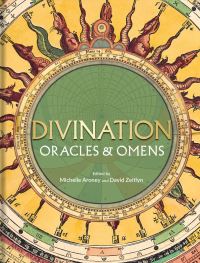
A spellbinding collection of twenty-four divinatory techniques from around the world exploring our need to appeal to powers beyond our realm for prediction and clarification.
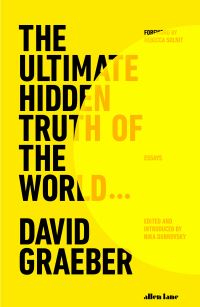
Drawn from more than two decades of pathbreaking writing, this book features the iconic and bestselling David Graeber’s most important essays and interviews.

Former social media executives tell us that the system is an addiction-machine. We are users, waiting for our next hit as we like, comment and share. We write to the machine as individuals, but it responds by aggregating our fantasies, desires and frailties into data, and returning them to us as a commodity experience. Through journalism, psychoanalytic reflection and insights from users, developers, security experts and others, Seymour probes the human side of the machine, asking what we’re getting out of it, and what we’re getting into.
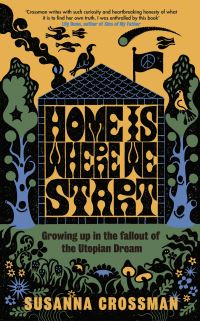
In the turbulent late seventies, six-year-old Susanna Crossman moved with her mother and siblings from a suburban terrace to a crumbling mansion deep in the English countryside. They would share their new home with over fifty other residents from all over the world, armed with worn paperbacks on ecology, Marx and radical feminism, drawn together by utopian dreams of remaking the world. They did not leave for fifteen years. While the adults adopted new names and liberated themselves from domestic roles, the kids ran free. In the community, nobody was too young to discuss nuclear war and children learned not to expect wiped noses or regular bedtimes. In this memoir, Crossman asks what happens to children who are raised as the product of social experiments and explores how growing up estranged from the outside world shapes her as a parent today.
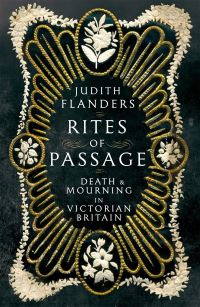
A forensic history of dying, death, and mourning in Victorian Britain by the acclaimed historian Judith Flanders, bestselling author of The Victorian House.
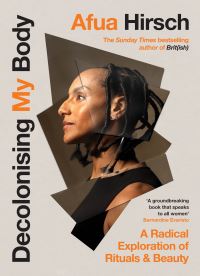
Upon getting her first tattoo at 40 years old, award-winning journalist Afua Hirsch embarked on a journey to reclaim her body from the colonial ideas of purity, adornment and ageing she – and many of us – absorbed while growing up. Informed by research from around the world, Afua examines at how individual and collective notions of what is beautiful are constructed or stripped away from us. Through personal anecdotes, interviews from beauty experts, practitioners and service users, she explores the global history of skin, hair and body modification rituals and how it has affected how we see ourselves. These insights and discoveries will empower readers to reconnect with their cultures of origin, better understand the link between beauty and politics, and liberate themselves from mainstream beauty standards that aren’t serving them.
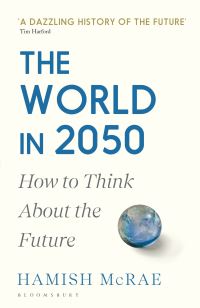
A bold and illuminating vision of the future, from one of Europe’s foremost speakers on global trends in economics, business and society. What will the world look like in 2050? How will complex forces of change – demography, the environment, finance, technology and ideas about governance – affect our global society? And how, with so many unknowns, should we think about the future? One of Europe’s foremost voices on global trends in economics, business and society, Hamish McRae takes us on an exhilarating journey through the next thirty years.
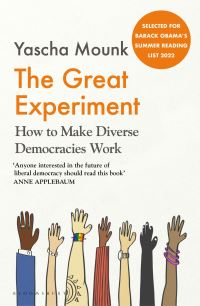
One of our most important political thinkers looks to the greatest challenge of our time: how to live together equally and peacefully in diverse democracies. It’s easy to be pessimistic about the fate of democracy in multi-ethnic societies. At the end of the Second World War, fewer than one in twenty-five people living in the UK were born abroad; now it is one in seven. The history of humankind is a story of us versus them, and the project of diverse democracies is a relatively new one – it is, in other words, a great experiment. How do identity groups with different ideologies and beliefs live together? Is it possible to embark on a democracy with shared values if our values are at odds? Yascha Mounk argues that group identity is both deeply rooted and malleable.
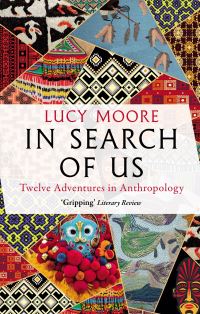
In the late 19th century when non-European societies were seen merely as ‘living fossils’ offering an insight into how civilisation had evolved, anthropology was a thriving area of study. But, by the middle of the 20th century, it was difficult to think about ideas of ‘savages’ and otherness when ‘civilised’ man had wreaked such devastation across two world wars, and field work was to be displaced by sociology and the study of all human society. By focusing on thirteen key European and American figures in this field, Lucy Moore tells the story of the brief flowering of anthropology as a quasi-scientific area of study, and about the men and women whose observations of the ‘other’ were unwittingly to come to bear on attitudes about race, gender equality, sexual liberation, parenting and tolerance in ways they had never anticipated.
Notifications