“The Charisma Myth” has been added to your basket.
View basket
Showing all 9 resultsSorted by latest
-
£11.99
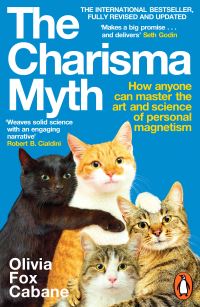
What if charisma could be taught? What you’ll find here is practical magic: unique knowledge, drawn from a variety of sciences, revealing what charisma really is and how it works. You’ll get both the insights and the techniques you need to apply this knowledge. The world will become your lab, and every person you meet, a chance to experiment. ‘The Charisma Myth’ is a mix of fun stories, sound science, and practical tools. Cabane takes a scientific approach to a heretofore mystical topic, covering what charisma actually is, how it is learned, what its side effects are, and how to handle them.
-
£12.99
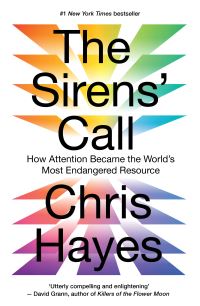
A Barack Obama Summer Reading Pick 2025 From New York Times bestselling author and television and podcast host, a powerful, wide-angle reckoning with how the assault from attention capitalism on our minds and our hearts has reordered our politics and the very fabric of our society. We all feel it — the distraction, the loss of focus, the addictive focus on the wrong things for too long. We bump into the zombies on their phones in the street, and sometimes they’re us. We stare in pity at the four people at the table in the restaurant, all on their phones, and then we feel the buzz in our pocket. Something has changed utterly: for most of human history, the boundary between public and private has been clear, at least in theory. Now, as Chris Hayes writes, ‘With the help of a few tech firms, we basically tore it down in about a decade.’ Hayes argues that we are in the midst of an epoch-defining transition: attention has become a com
-
£11.99
Do you avoid people who are strongly against immigration? Or strongly for trans rights? Against abortion? For drug legalisation? We might like to think that we’re tolerant, but many of us struggle to engage with people whose opinions differ strongly from our own – even if they might have something useful to contribute to the debate. That means we’re falling victim to what behavioural scientist Professor Paul Dolan defines as Beliefism – discrimination against those with different beliefs to us. Drawing on the evidence from across the social sciences, Dolan shows how easy it is for us to divide ourselves into opposing camps – and how harmful that can be. Using the central metaphor of the duck-rabbit illusion – where the same image can be viewed as one animal or the other – the book shows that looking at an issue from only one perspective can lead to bad decisions and unnecessary conflict.
-
£12.99
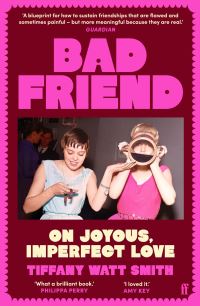
Move over idealised BFFs, glossy gal pals and indestructible work wives. Meet the bad friends. The dangerously romantic school girls of the 1900s. The office gossips of the 1930s. The mum cliques of the 1950s. The angry activists of the 1970s. The coven – women who choose to live together in old age – of the present day. These ‘bad’ friends broke the rules about femininity they didn’t write. Their relationships were controlled, patrolled and judged too intimate, too consuming and in some cases, too powerful. In this history of women’s friendship, celebrated cultural historian Tiffany Watt Smith reckons with the ways we understand this complex and vital connection. She takes us from Japan to the Ivory Coast, The Mindy Project to Zadie Smith’s Swing Time, from prisons to film sets to hospital wards and elder communities, untangling the assumptions about good and bad friends we live by.
-
£11.99
In the last few decades, our capacity to see problems has sharpened while our ability to solve them has diminished. Progress requires the ability to see promise rather than just peril in the creation of new ideas and projects, and an instinct to design systems and institutions that make building possible. In a book exploring how we can move from a liberalism that not only protects and preserves but also builds, Klein and Thompson trace the political, economic, and cultural barriers to progress and how we can adopt a mindset directed toward abundance, and not scarcity, to overcome them.
-
£10.99
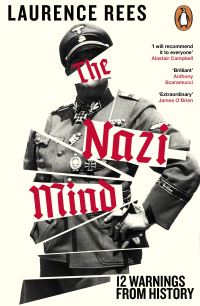
How could the Nazis have committed the crimes they did? Why did commandants of concentration and death camps willingly – often enthusiastically – oversee mass murder? How could ordinary Germans have tolerated the removal of the Jews? In this book, Laurence Rees combines history and the latest research in psychology to help answer some of the most perplexing questions surrounding the Second World War and the Holocaust. Ultimately, he delves into the darkness to explain how and why these people were capable of committing the worst crime in the history of the world. Rees traces the rise and eventual fall of the Nazis through the lens of ‘twelve warnings’ – whilst also highlighting signs to look out for in present day leaders who, for example, take control of the media, propound conspiracy theories, and talk about ‘them’ against ‘us’.
-
£12.99
After more than a decade of stability or improvement, the mental health of adolescents in many countries around the world deteriorated suddenly in the early 2010s. Why have rates of depression, anxiety, self-harm and suicide risen so sharply, more than doubling in many cases? In this book, Social Psychologist Jonathan Haidt argues that the decline of free-play in childhood and the rise of smartphone usage among adolescents are the twin sources of increased mental distress among teenagers. Haidt delves into the latest psychological and biological research to show how, between 2010 and 2015, childhood and adolescence got rewired.
-
£9.99
Frantz Fanon’s seminal text was immediately acclaimed as a classic of black liberationalist writing. Fanon’s descriptions of the feelings of inadequacy and dependence experienced by people of colour in a white world, ‘the crippled colonial mentalities of the oppressed’, are as salient and as compelling as ever.
-
£10.99
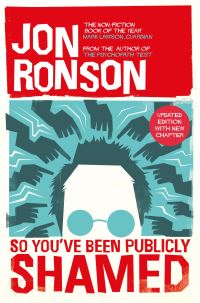
From the Sunday Times top ten bestselling author of The Psychopath Test, a brilliant and hilarious book exploring the consequences of public shaming.
 The Charisma Myth