“Monsterland” has been added to your basket.
View basket
Showing all 16 resultsSorted by latest
-
£10.99
Monsters, in all their terrifying glory, have preoccupied humans since we began telling stories. But where did these stories come from? In this book, Nicholas Jubber goes on a journey to discover more about the monsters we’ve invented, lurking in the dark and the wild places of the earth – giants, dragons, ogres, zombies, ghosts, demons – all with one thing in common: their ability to terrify. His far-ranging adventure takes him across the world. He sits on the thrones of giants in Cornwall, visits the shrine of a beheaded ogre near Kyoto, travels to an 18th-century Balkan vampire’s forest dwelling, and paddles among the shapeshifters of the Louisiana bayous. On his travels, he discovers that the stories of the people and places that birthed them are just as fascinating as the creatures themselves.
-
£25.00
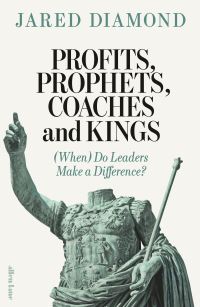
We often read history as the biographies of ‘great men’ who shaped the world. But are leaders, whichever field they are in, really that influential? Should CEOs be given large bonuses when a company performs well? Why, when a political leader is assassinated, is their successor as likely to improve as damage a country? When do we know if firing a coach has changed the fortunes of the team? Historian and bestselling author Jared Diamond argues that leaders are neither heroic exceptions nor products of circumstance. Looking at four difference spheres: history, business, sport and religion, Diamond asks under which conditions is a leader most likely to make a difference and why. Drawing on the life and career of iconic leaders, Diamond shows us how leadership effectiveness is determined by a range of complex interrelated factors, from resources to geography, culture to technology.
-
£12.99
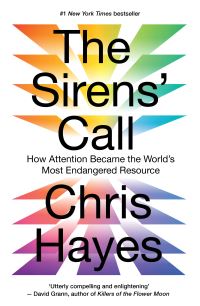
A Barack Obama Summer Reading Pick 2025 From New York Times bestselling author and television and podcast host, a powerful, wide-angle reckoning with how the assault from attention capitalism on our minds and our hearts has reordered our politics and the very fabric of our society. We all feel it — the distraction, the loss of focus, the addictive focus on the wrong things for too long. We bump into the zombies on their phones in the street, and sometimes they’re us. We stare in pity at the four people at the table in the restaurant, all on their phones, and then we feel the buzz in our pocket. Something has changed utterly: for most of human history, the boundary between public and private has been clear, at least in theory. Now, as Chris Hayes writes, ‘With the help of a few tech firms, we basically tore it down in about a decade.’ Hayes argues that we are in the midst of an epoch-defining transition: attention has become a com
-
£22.00
What free speech really means is hotly contested. Is it increasingly under attack in our democracies; or is it being weaponized by the powerful? These debates don’t just happen in the news: they divide families, strain relationships. This is because, anthropologist Matei Candea shows, arguments about free speech are not just about abstract principles: they question what it means to be a good person, to have empathy and courage. They involve fears for the future and longings for the past – and they demand that you pick a side, right now! Deploying the power of anthropology, this book outlines three visions of free speech – Reason, or civil rational debate; Carnival, or the right to be outrageous; and Honour, the duty to stand by one’s word. Sometimes supporting each other and sometimes at odds, they entail very different understandings of what language is and does, of what it means to be free.
-
£12.99
There are fewer than 5000 people who can genuinely claim to be members of the British aristocracy, and yet they loom large in the popular consciousness. We’re fascinated by their houses and estates, their lives and loves, their foibles and eccentricities. And we entertain the strong suspicion that, while they may be fellow citizens, they are very far from being people like us. In this book, Eleanor Doughty draws on her unparalleled access to a bewildering range of dukes, duchesses, earls and others to create a vivid picture of who they are and how they tick.
-
£12.99
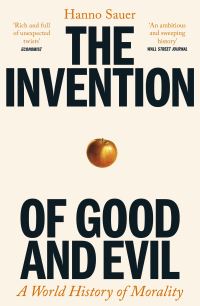
For almost five million years, humans have been locked in a relationship with morality, inventing and reinventing the concepts of ‘Good’ and ‘Evil’, and weaving them into our cities, laws and customs. Morality is often associated with restraint and coercion; restriction and sacrifice; inquisition, confession and a guilty conscience. Joyless and claustrophobic, it is a device used to shames us into compliance. This impression is not entirely incorrect, but it is certainly incomplete. Using our past as a basis for a new understanding of our future, Hanno Sauer traces humanity’s fundamental moral transformations from our earliest ancestors through to the present day, when it seems we have never disagreed more over what it means to be good. Our current political disagreements may feel like the end of the world, but where will the evolution of morality take us next?
-
£10.99
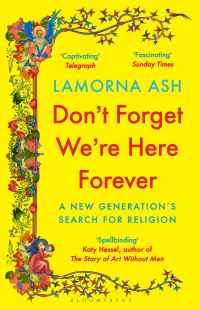
With glowing compassion and luminous prose, Lamorna Ash (‘a new star of non-fiction’ William Dalrymple) explores why young people in Britain today are turning to faith in an age of uncertainty.
-
£22.00
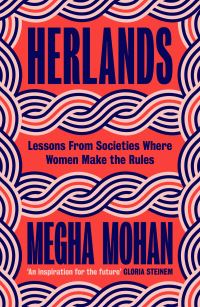
A landmark exploration of women-led communities worldwide and what they can teach us about new ways to live, think and govern, from BBC global correspondent Megha Mohan.
-
£25.00
When Tom Feiling moved to Tokyo as a student in the early nineties, Japan was a beacon of the future: a rising superpower, a technology giant, a global symbol of prosperity, civility and success. When he returned 24 years later, the country was still a sign of things to come – but, he began to realize, it was no longer a beacon. It was a warning. This is a unique account of contemporary Japan, which travels from the quiet of its furthest flung villages to the aspiration and dynamism of its cities. It tells the story of how, from the mid-seventies onwards, Japanese society unknowingly embarked on a vast, silent process of transformation that is still unfolding today.
-
£22.00
We tend to think that everything important comes from the centre: from big cities, from established orthodoxies in the sciences and the arts, from the Establishment in all its forms. We think this because the centre tells us it is so, but it’s a lie. It is only at the edges that we think, innovate and thrive. This book travels to the frontiers of human culture and consciousness; to the edges of continents, of evolution, of artistic and political movements, and life itself: from a rocky precipice in the Peloponnese where the first human set foot in Europe to an ancient Egyptian temple where monotheism was invented; from St Francis, kissing lepers to the giant bird-eating mice of St Kilda.
-
£12.95
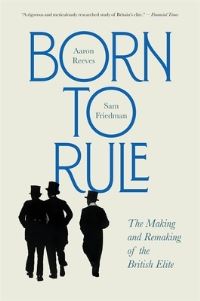
This data-rich sociological study uses everything from census figures to Who’s Who to analyze how, over 125 years, the British elite have used status, elite education, and powerful social networks to shape politics and cultural values. But what happens when elites begin to change-in what they look like, value, and how they position themselves?
-
£12.99
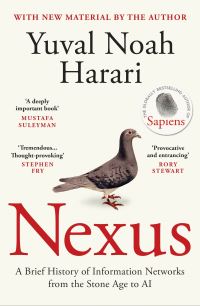
For the last 100,000 years, humans have accumulated enormous power. But despite all our discoveries, inventions and conquests, we now find ourselves in an existential crisis. The world is on the verge of ecological collapse. Misinformation abounds. And we are rushing headlong into the age of AI – a new information network that threatens to annihilate us. If we are so wise, why are we so self-destructive? ‘Nexus’ considers how the flow of information has shaped us, and our world. Taking us from the Stone Age through the Bible, early modern witch-hunts, Stalinism, Nazism and the resurgence of populism today, Yuval Noah Harari asks us to consider the complex relationship between information and truth, bureaucracy and mythology, wisdom and power. He explores how different societies and political systems have wielded information to achieve their goals, for good and ill.
-
£22.00
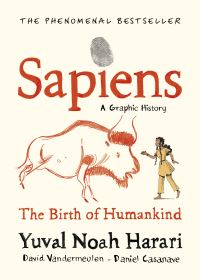
One hundred thousand years ago, at least six different species of humans inhabited Earth. Yet today there is only one-homo sapiens. What happened to the others? And what may happen to us? In this first volume of the full-colour illustrated adaptation of his groundbreaking book, renowned historian Yuval Harari tells the story of humankind’s creation and evolution, exploring the ways in which biology and history have defined us and enhanced our understanding of what it means to be ‘human’.
-
£11.99
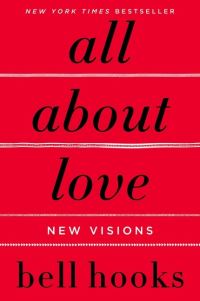
bell hooks challenges assumptions about love in her new book, and argues that love is not romanticism, nor is it narcissism, but that it is the will to nurture our and others’ spiritual growth, whether within families, relationships or with friends.
-
£12.99
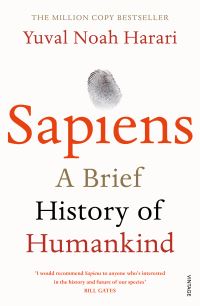
100,000 years ago, at least six human species inhabited the earth. Today there is just one. Us. How did our species succeed in the battle for dominance? Why did our foraging ancestors come together to create cities and kingdoms? How did we come to believe in gods, nations and human rights; to trust money, books and laws; and to be enslaved by bureaucracy, timetables and consumerism? And what will our world be like in the millennia to come? Bold, wide-ranging and provocative, ‘Sapiens’ challenges everything we thought we knew about being human: our thoughts, our actions, our power … and our future.
 Monsterland