Homesick
£12.99What – and who – is a city for?

Showing all 13 resultsSorted by latest


As the middle Jaeger brother, Dallas was often lost in the shuffle growing up. As a man, he’s prideful of his community on the wrong side of the tracks – Sanoa Bay – and aggressively protective of his land and his inner circle. He’s hungry and ready for a fight. Callum Ames has a reputation in St. Carmen, the affluent neighbourhood abutting Sanoa Bay. The hottest. The most popular. Rich. Powerful. Strong. The one all the women want. After four years away, he’s back, but for all his bravado, he’s got one major secret: he only looks at Dallas Jaeger. Summer is storm season on the coast. Heat, wind, rain, lockdown and curfew. As Dallas and Callum engage, out for each other’s blood, they can’t stop the consuming fire between them and the outcome they already see coming. The storm of the century.
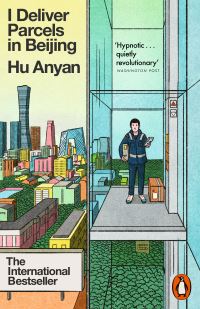
In the twenty years following Hu AnYan’s high school graduation, he has held nineteen different jobs. He’s been a convenience store clerk, a bicycle salesman, a security guard and a delivery driver (among many other things). He moves from city to city in China, slipping away any time the work gets too punishing or the bosses too bossy, carrying with him nothing but his copies of Chekhov and Carver. ‘I Deliver Parcels in Beijing’ is Hu’s account of his life as a low-wage labourer working to live, not living to work.
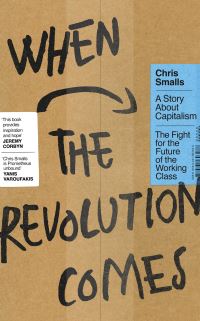
In the early days of the Covid pandemic, warehouse worker Chris Smalls and his colleagues continued showing up as the rest of the world was shutting down. A dedicated and experienced Amazon employee, increasingly frustrated by the inner workings of the retail giant, Smalls had already felt himself reaching breaking point. So when co-workers around him began falling ill, and with no assurances of safety coming from those at the top, he made the only choice left available to him. He staged a walkout with friend Derrick Palmer, eventually finding himself on the picket line without a job. This book is the riveting inside story of how a young Black man from Hackensack, NJ with little-to-no resources led a scrappy band of Staten Island warehouse workers in an improbable fight against Amazon – and won.
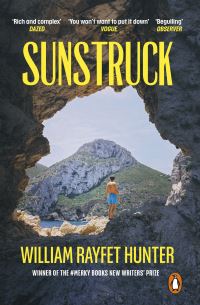
It’s summer and a young man walks through the gates of a luxurious mansion in the south of France. At the dinner table, the Blakes are waiting for him: Annie, the family matriarch and world-famous singer, her inscrutable husband David and their children, Dot, aloof and rebellious, Lily, the man’s carefree university friend, and their enigmatic older brother Felix. Between sun-drenched days spent lounging by the pool and nights blurring into endless, opulent parties far from the reality of life in London, a restless attraction grows between Felix and the man. The possibility to be part of a family – and an entire world – in which he doesn’t belong is suddenly within reach. But the idyllic haze of the summer slowly fades as they return to the city. While the man struggles with his troubled past and the challenges of navigating Felix’s world as a black, working-class person, Felix is tormented by demons of his own.

There are fewer than 5000 people who can genuinely claim to be members of the British aristocracy, and yet they loom large in the popular consciousness. We’re fascinated by their houses and estates, their lives and loves, their foibles and eccentricities. And we entertain the strong suspicion that, while they may be fellow citizens, they are very far from being people like us. In this book, Eleanor Doughty draws on her unparalleled access to a bewildering range of dukes, duchesses, earls and others to create a vivid picture of who they are and how they tick.

In this work, Geoff Dyer reflects on his childhood and what it means to come of age in England in the 60s and 70s, in a country shaped by the aftermath of the Second World War but accelerating towards change. He was born in Cheltenham in the late fifties, the only child of a dinner lady and a planning engineer. Raised in a working-class area, Geoff and his mates found much joy recreating battles with their beloved Tommy guns, kicking a beachball around until its untimely death, and collecting anything and everything they could find; football cards, conkers and Action Man figures. When Geoff passes his 11-plus exams he gets in to a Cheltenham Grammar School, a school which drastically changes the trajectory of his life.
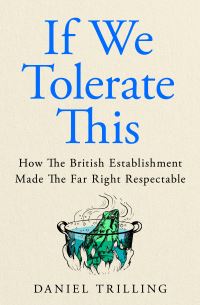
A short, illuminating book on the rise of the far right in modern Britain, and what we can do to stop it.
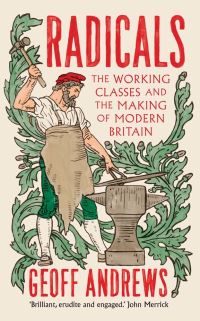
The political Left in Britain rose out of the Industrial Revolution, as the working classes emerged as the leading force in the call for social change. Their contributions extended widely to political representation, the birth of the Labour Party and women’s suffrage, the autodidact tradition in adult education, and Britain’s literary culture. Throughout subsequent decades, the working classes remained central to the British radical tradition. Geoff Andrews traces the history of the Left and the Labour Party through the ideas of leading thinkers, writers, educationalists, trade unionists, and politicians. Ranging from the Workers Educational Association to the General Strike and the Women’s Liberation Movement, Andrews uncovers the voices of key figures.
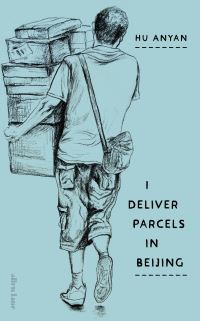
In the twenty years following Hu AnYan’s high school graduation, he has held nineteen different jobs. He’s been a convenience store clerk, a bicycle salesman, a security guard and a delivery driver (among many other things). He moves from city to city in China, slipping away any time the work gets too punishing or the bosses too bossy, carrying with him nothing but his copies of Chekhov and Carver. ‘I Deliver Parcels in Beijing’ is Hu’s account of his life as a low-wage labourer working to live, not living to work.
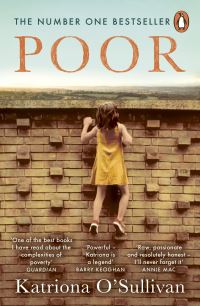
As the middle of five kids growing up in dire poverty, the odds were low on Katriona O’Sullivan making anything of her life. When she became a mother at 15 and ended up homeless, what followed were five years of barely coping. This is the extraordinary story – moving, funny, brave, and sometimes startling – of how Katriona turned her life around. How the seeds of self-belief planted by teachers in childhood stayed with her. How she found mentors whose encouragement revitalised those seeds in adulthood, leading her to become an award-winning academic whose work challenges barriers to education. Poor is not only Katriona’s story, but is also her impassioned argument for the importance of looking out for our kids’ futures. Of giving them hope, practical support and meaningful opportunities.

There is nothing quite as beautiful as an English country house in summer. And there has never been a summer quite like that Indian summer between the two world wars, a period of gentle decline in which the sun set slowly on the British Empire and the shadows lengthened on the lawns of a thousand stately homes. Real life in the country house during the 1920s and 1930s was not always so sunny. By turns opulent and ordinary, noble and vicious, its shadows were darker. In ‘The Long Weekend’, Adrian Tinniswood uncovers the truth about a world half-forgotten, draped in myth and hidden behind stiff upper lips and film-star smiles.