Showing 25–36 of 287 resultsSorted by latest
-
£25.00
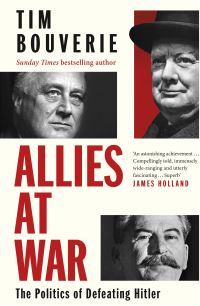
After the fall of France in June 1940, only Britain stood between Hitler and total victory. Desperate for allies, Winston Churchill did everything he could to bring the United States into the conflict, drive the Soviet Union and Nazi Germany apart and persuade neutral countries to resist German domination. By 1942, after the German invasion of Russia and the Japanese attack on Pearl Harbor, the British-Soviet-American alliance was in place. Yet it was an improbable and incongruous coalition, divided by ideology and politics and riven with mistrust and deceit. Churchill, Roosevelt and Stalin were partners in the fight to defeat Hitler, yet they were also rivals who disagreed on strategy, imperialism and the future of liberated Europe. Only by looking at their points of conflict, as well as of co-operation, are we able to understand the course of the war and world that developed in its aftermath.
-
£25.00
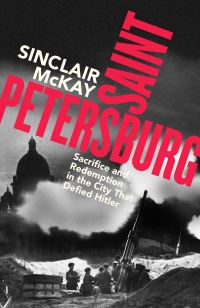
Built by slave labour in the early years of the 18th century, Saint Petersburg was Peter the Great’s so-called ‘window on to Europe’, a city that would outdo all of Europe in its splendour. But a window works both ways, and as bestselling historian Sinclair McKay writes, St Petersburg has always been a city that has drawn Westerners who wanted to see into Russia. It is also a city where much has happened. It was St Petersburg until 1917, Petrograd after the revolution, Leningrad after Lenin’s death in 1924, and St Petersburg once again from 1991. This biography of a city stretches from Peter the Great to Vladimir Putin, who was born and made in St Petersburg. Based on first-hand and many unpublished accounts from figures from all walks of life, this masterpiece reveals the story of the city told from the perspective of the people who lived there.
-
£9.99
During the long years of the Second World War, tea remained the cornerstone of British hospitality, drunk and enjoyed by civilians and members of the armed forces alike.
-
£25.00
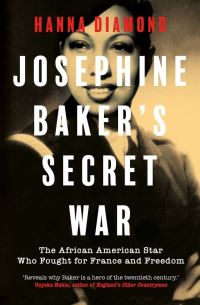
Before the Second World War, Josephine Baker (1906-1975) was one of the most famous performers in the world. She made her name dancing on the Parisian stage, but when war broke out she decided not to return to America. Instead, Baker turned spy for the French Secret Services. In this engaging, deeply researched study, Hanna Diamond tells the full story of Baker’s actions for the French and Allied powers in World War Two. Drawing on previously unseen material, Diamond reveals the vital role Baker played throughout the war, from counterintelligence work for the Allied landings in North Africa to serving in the French Air Force in 1944-45.
-
£16.99
Joe Dunthorne had always wanted to write about his great-grandfather, Siegfried: an eccentric scientist who invented radioactive toothpaste and a Jewish refugee from the Nazis who returned to Germany under cover of the Berlin Olympics to pull off a heist on his own home. The only problem was that Siegfried had already written the book of his life – an unpublished, two-thousand page memoir so dry and rambling that none of his living descendants had managed to read it. And, as it turned out when Joe finally read the manuscript himself, it told a very different story from the one he thought he knew. Thus begins a mystery which stretches across the twentieth century and around the world, from Berlin to Ankara, New York, Glasgow and eventually London – a mystery about the production of something much more sinister than toothpaste.
-
£22.00
In 1943, German SS officers in charge of Auschwitz-Birkenau ordered that an orchestra should be formed among the female prisoners. While still living amid the most brutal and dehumanising of circumstances, they were also made to give weekly concerts for Nazi officers, and individual members were sometimes summoned to give solo performances of an officer’s favourite piece of music. What role could music play in a death camp? What was the effect on those women who owed their survival to their participation in a Nazi propaganda project? And how did it feel to be forced to provide solace to the perpetrators of a genocide that claimed the lives of their family and friends? Award-winning historian Anne Sebba traces these tangled questions of deep moral complexity with sensitivity and care.
-
£8.99
We didn’t mean to change the past. Now we have to win the war.
A stunning ‘what if?’ story by a bestselling author about two groups of 12-year-olds – one in World War Two, one in the present day.
-
£12.99
The Allied liberation of Nazi-occupied Europe is one of the most widely recognised events of modern history. The assault phase, Operation Neptune, began with the D-Day landings in Normandy – one of the most complex amphibious operations in history, involving 7000 ships and nearly 200,000 men. But despite this immense effort, the wider naval campaign has been broadly forgotten. Nick Hewitt draws on fascinating new material to describe the violent sea battle which mirrored the fighting on land, and the complex campaign at sea which enabled the Allied assault. Aboard ships ranging from frail plywood landing craft to sleek destroyers, sailors were active combatants in the operation of June 1944, and had worked tirelessly to secure the Seine Bay in the months preceding it. Hewitt recounts these sailors’ stories and shows how, without their efforts, D-Day would have failed.
-
£30.00
The revelatory true story of the long-forgotten POW camps for German soldiers erected in hundreds of small U.S. towns during World War II, and the secret Nazi killings that ensnared fifteen brave American POWs in a high-stakes showdown.
-
£10.99
In the summer of 1941, Hitler ruled Europe from the Atlantic to the Black Sea. Britain was struggling to combat the Nazi propaganda machine, which crowed victory and smeared its enemies. But inside Germany, there was one notable voice of dissent from the very heart of the military machine: Der Chef, a German whose radio broadcasts skilfully questioned Nazi doctrine. But what audiences didn’t know was that Der Chef was a fiction, a character created by the British propagandist Sefton Delmer. This is the incredible true story of the complex and largely overlooked significance of Delmer’s role.
-
£25.00
In the closing months of the Second World War hundreds of thousands of Japanese, mostly civilians, died in a final outburst of violence from the air. American planes were beginning to run low on plausible targets when it was decided to use two atomic weapons in a final, terrible flourish to try to end the war. Richard Overy’s book rethinks how we should regard this last stage of the war and the role of the bombing. He explores the way in which the willingness to kill civilians and destroy cities became normalized in the course of a horrific war as moral concerns were blunted and scientists, airmen, and politicians followed a strategy of mass destruction they would never have endorsed before the war began.
-
£25.00
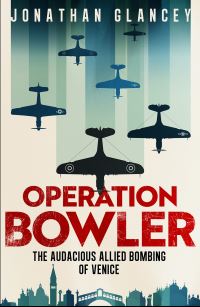
The thrilling true story behind the Allies’ mission to take back Venice from the Germans – and save its artistic and architectural treasures.