Showing 17–32 of 38 resultsSorted by latest
-
£10.99
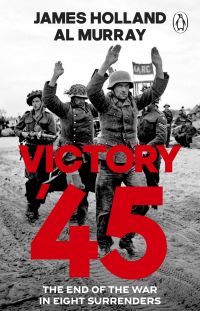
From the Italian Alps to northern Germany, to London, New York Washington and Tokyo, ‘Victory ’45’ tells the story of the extraordinary summer when the greatest conflagration the world had ever known finally came to an end after six surrenders that heralded the Allied victory. Comprised of eight chapters based around each of those surrenders and the victory celebrations which followed, it is rich in character and human drama with revealing stories and perspectives behind the end of the war not yet told before. Each chapter follows the viewpoints of a number of key characters as they traverse these world-changing events – from ordinary servicemen and women and civilians to generals and political leaders.
-
£10.99
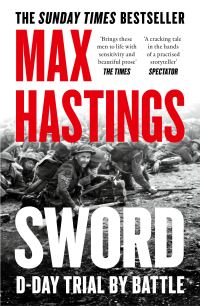
THE SUNDAY TIMES BESTSELLER
A Times and Waterstones Book of the Year
‘The messy, dirty, bloody reality of Operation Overlord comes alive in Sword, Hastings’s portrait of the individual soldiers who risked their lives on the beaches of Normandy. He brings these men to life with sensitivity and beautiful prose' THE TIMES
-
£12.99
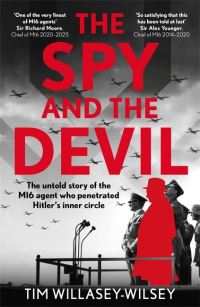
This is the forgotten tale of MI6’s top spy in Nazi Germany and his bid to stop the Second World War. In the world of espionage, where the accounts of renowned spies often dominate the narrative, this is a rare gem – an untold story of a completely unknown spy. Baron William de Ropp, a Baltic German aristocrat, wasn’t just any ordinary spy; he was MI6’s top-secret agent in Nazi Germany from 1931 to 1939, managing to escape Berlin just before war broke out. This unsung hero had direct access to Adolf Hitler and an inside track on the Nazi regime. His reports, shrouded in secrecy, had the power to shape British policy toward Germany in a pivotal period of history. ‘The Spy and the Devil’ is a riveting tale of espionage, intrigue, and the untold impact of one man’s secret mission on the course of history.
-
£22.00
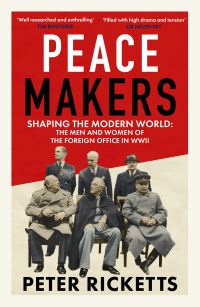
Combining vivid storytelling with fresh research, Peace Makers explores how Britain’s diplomats played a vital and unsung part in victory in WWII while also laying the foundations for post-war peace, and how the war transformed the Foreign Office, sweeping away the barriers which had kept women out of top jobs.
-
£25.00
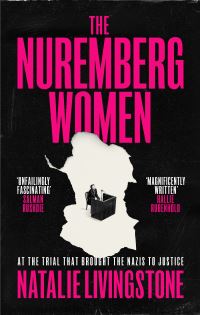
The most famous trial of the twentieth century – told through the eyes of the women history forgot. In November 1945, the world turned its gaze to Nuremberg. Inside a courtroom built by and for men, justice was being sought for crimes almost beyond comprehension. The spotlight fell on Nazi leaders, Allied prosecutors and military judges – but in the shadows, women were recording, interpreting, witnessing, painting, testifying. Yet their names were often missing from the headlines. Eighty years on, this book finally returns them to the centre of the story. The work follows eight extraordinary figures: a young Soviet interpreter balancing political survival with truth-telling; a British painter capturing justice in oils; a French resistance fighter who survived Auschwitz to confront her persecutors; a Hungarian countess hosting both Nazis and survivors in a single house.
-
£12.99
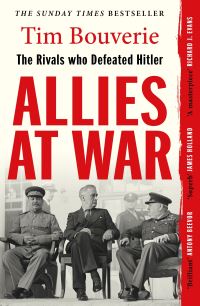
After the fall of France in June 1940, only Britain stood between Hitler and total victory. Desperate for allies, Winston Churchill did everything he could to bring the United States into the conflict, drive the Soviet Union and Nazi Germany apart and persuade neutral countries to resist German domination. By 1942, after the German invasion of Russia and the Japanese attack on Pearl Harbor, the British-Soviet-American alliance was in place. Yet it was an improbable and incongruous coalition, divided by ideology and politics and riven with mistrust and deceit. Churchill, Roosevelt and Stalin were partners in the fight to defeat Hitler, yet they were also rivals who disagreed on strategy, imperialism and the future of liberated Europe. Only by looking at their points of conflict, as well as of co-operation, are we able to understand the course of the war and world that developed in its aftermath.
-
£10.99
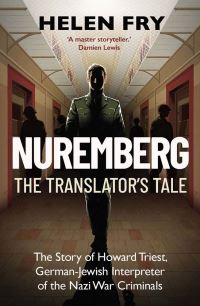
The compelling story of the only German-Jewish translator to work with the psychiatrists in Nuremberg prison
-
£22.00
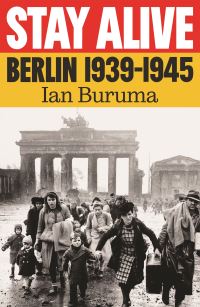
In 1939, when Ian Buruma’s epic opens, Berlin has been under Nazi rule for six years, and its 4.3 million people have made their accommodations to the regime, more or less. When war broke out with Poland in September, what was most striking at first was how little changed. Unless you were Jewish. Then life, already hard, was soon to get unfathomably worse. By 1943, with the German defeat at Stalingrad, ordinary life in Berlin would acquire an increasingly desperate cast. The last three years of the war in Berlin are truly a descent into hell, with a deranged regime in desperate free fall, an increasingly relentless pounding from Allied bombers, and the mounting dread of the approaching Soviet army. And by war’s end Berlin’s population had fallen by almost half. Among the people trying to stay alive in the city was Ian Buruma’s own father, a prisoner conscripted into forced labour in the war economy along with 400,000 other imported work
-
£25.00
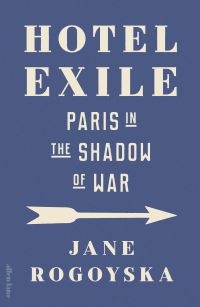
The Hotel Lutetia is a Paris institution, the only ‘grand’ hotel on the city’s bohemian Left Bank. Ever since it opened, it has served as a meeting place for artists, musicians and politicians. Andre Gide took his lunch here, James Joyce lived in one of its rooms, Picasso and Matisse were regular guests. It has a darker history, too. During one short period, it became a focus for some of the most dramatic and terrible events in recent history. In the 1930s the Hotel Lutetia attracted intellectuals and political activists, forced to flee their homes when Hitler came to power, who met here with the hope of forming an alternative government. But when war came, Paris was occupied, and the hotel became the headquarters of the German military intelligence service – and the centre of their operation to root out enemies of the Reich.
-
£12.99
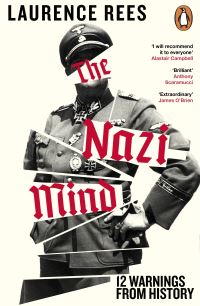
How could the Nazis have committed the crimes they did? Why did commandants of concentration and death camps willingly – often enthusiastically – oversee mass murder? How could ordinary Germans have tolerated the removal of the Jews? In this book, Laurence Rees combines history and the latest research in psychology to help answer some of the most perplexing questions surrounding the Second World War and the Holocaust. Ultimately, he delves into the darkness to explain how and why these people were capable of committing the worst crime in the history of the world. Rees traces the rise and eventual fall of the Nazis through the lens of ‘twelve warnings’ – whilst also highlighting signs to look out for in present day leaders who, for example, take control of the media, propound conspiracy theories, and talk about ‘them’ against ‘us’.
-
£12.99
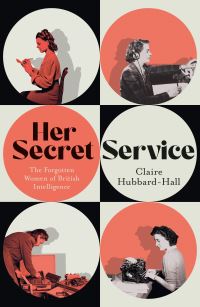
Since the inception of the Secret Service Bureau back in 1909, women have worked at the very heart of British secret intelligence – yet their contributions have been all but written out of history. Now, drawing on private and previously-classified documents, leading historian Claire Hubbard-Hall brings their gripping true stories to life. From encoding orders and decrypting enemy messages to penning propaganda and infiltrating organisations, the women of British intelligence played a pivotal role in both the First and Second World Wars. Prepare to meet the true custodians of Britain’s military secrets.
-
£25.00
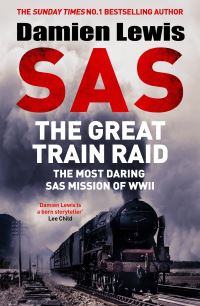
So secret was this mission, the SAS seizure of a train to raid deep into enemy territory to liberate a concentration camp, that it wasn’t until 1968 – 27 years after the formation of the SAS – that a short mention of it was made in the Rover and Wizard annual, under the headline ‘Who Dares Wins’. No further published record exists. Best-selling author Damien Lewis has unearthed the full incredible story from long-hidden files and first hand-testimony, his latest elite forces narrative delivering a scintillating tale of bravery, daring and determination which simply beggars belief.
-
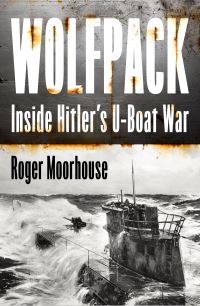
£25.00
A Times and Waterstones Book of the Year
‘A superb work of history’ JAMES HOLLAND
‘A thrilling account from a master of Second World War history’ DAN SNOW
A landmark history of the U-Boat war told through the experiences and recollections of the U-Boat crews themselves.
-
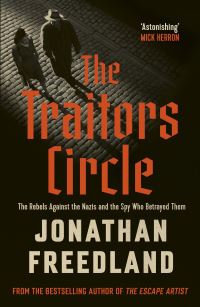
£25.00
Berlin, 1943. A group of high-society anti-Nazi dissenters meet for a tea party one late summer afternoon. They do not know that, sitting around the table, is someone poised to betray them all to the Gestapo – revealing their secret to the Nazis’ most ruthless detective. They form a circle of unlikely rebels, drawn from the German elite: two countesses, a diplomat, an intelligence officer, an ambassador’s widow and a pioneering headmistress. Meeting in the shadows, rescuing Jews or plotting for a future Germany freed from the Führer’s rule, what unites them is a shared loathing of the Nazis, a refusal to bow to Hitler and the courage to perform perilous acts of resistance. Or so they believe. How did a group of brave, principled rebels, who had successfully defied Adolf Hitler for more than a decade, come to fall into such a lethal trap?
-
£14.99
Why did so many Germans take part in the crimes of Nazi Germany? How did they come to support Hitler and follow him almost to the very end? For too long, the Nazis have been presented as little more than psychopaths or criminals. In his book, historian Richard J. Evans makes use of a mass of recently unearthed new evidence to strip away the veneer of myth and legend from the faces of the Third Reich and present a more realistic view of Nazi perpetrators as human beings who were disturbingly like us.
-
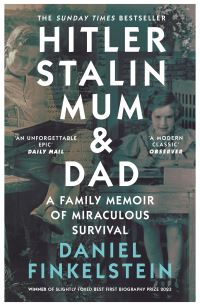
£10.99
THE INSTANT SUNDAY TIMES BESTSELLER
‘Epic, moving and important’ ROBERT HARRIS
‘I’m not sure I’ve ever come across quite such a revelatory account of the Holocaust and yet despite the horror and the sadness it’s also a ‘memoir of miraculous survival’. I can’t recommend it enough’ ANTHONY HOROWITZ