Plunder
£25.00The last weeks of World War II on the Western Front in Europe witnessed extraordinary scenes of heroism, horror, melodrama and pathos.

Showing 1–16 of 34 resultsSorted by latest
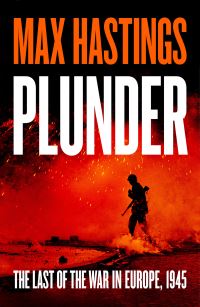
The last weeks of World War II on the Western Front in Europe witnessed extraordinary scenes of heroism, horror, melodrama and pathos.
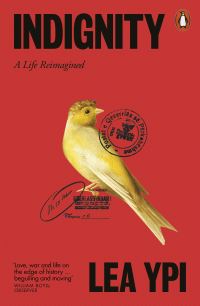
When Lea Ypi discovers that a photo of her grandmother, Leman honeymooning in the Italian Alps in 1941 has been posted by a stranger on social media, she is faced with deeply unsettling questions. Growing up, she had been told all records of her grandmother’s youth were destroyed ‘when the police came and took everything’ in the early days of communism in Albania. But there Leman was with her husband, Asllan Ypi: glamorous newlyweds while World War II was raging in the background. What follows is a thrilling reimagining of the past as we are transported to the vanished world of Ottoman aristocracy in Salonica, the making of modern Greece and Albania, a global financial crisis, the horrors of war and the dawn of communism in the Balkans, through secret police archives and muddied memories. While investigating the truth about her family, Ypi grapples with uncertainty. Who is the real Leman Ypi?

An extraordinary chronicle of the Nazi destruction of Jewish Vienna, from the bestselling author of Former People.
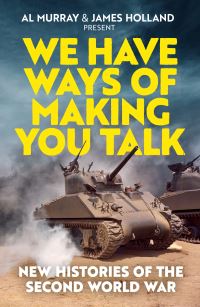
This volume will trace the darkest hours of the miracle that was Dunkirk, follow arctic convoys in the North Cape, consider the destruction of Hamburg, and unpick the only thing that ever really frightened Churchill. Like their hugely successful podcast – ‘We Have Ways of Making You Talk’ – this book will delve into the forgotten, hidden and little explained aspects of the war. At once entertaining and illuminating, this is the perfect book for fans of World War II history.
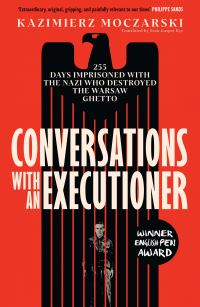
Warsaw, 1949: freedom fighter and journalist, Kazimierz Moczarski is horrified to find himself locked up in a cell with the notorious Nazi official responsible for the destruction of the Warsaw Ghetto, and the death of over 50,000 people: Jürgen Stroop. This is the extraordinary insight into the mind of one of history’s most brutal war criminals.
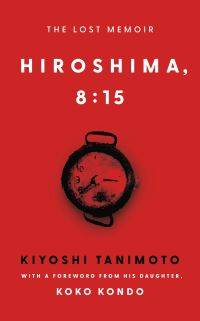
The whole city was covered with dark clouds, and conflagrations were breaking out in various directions. Could all of this have happened at once? It was then that black drops of rain, as big as blackberries, began to fall – rain caused by the atomic bomb. I wondered what had happened to my home and church. With a pale face, I ran down the Koi highway. When the atomic bomb fell on Hiroshima at 8.15am on 6 August 1945, Methodist minister Kiyoshi Tanimoto was just beginning his day with the usual bowl of soybean and rice bran porridge. Unbeknownst to him at that moment, the aftermath that will unfold before him over days and weeks is full of horror, but through his courageous determination to save his family, church and city from total devastation, Tanimoto would become internationally recognised as a hero of Hiroshima.
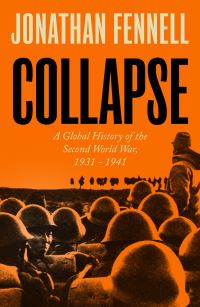
Between 1931 and 1949, a series of crises broke out that threatened collective security, world order and the internal cohesion of states across the globe. At the heart of these crises was a world war that shook the foundations of global power, a watershed moment in the history of the 20th Century. ‘Collapse’ is the first volume of an authoritative trilogy that tells the story of the Second World War through this international lens, covering theatres of war in multiple continents and analysing worldwide trends. Through new sources in 14 languages and from over 50 archives across the world, Professor Jonathan Fennell examines the first part of this ‘long war’, from 1931-1942, and explores what it really meant to live through this violent time. Using an innovative approach which explores the personal alongside the political, the global alongside the local, he shows how a world that many considered civilised collapsed into barbarity.

The Lifesavers were a small number of men and women who during WW2 were at the forefront of global progress in saving lives through collecting, preserving and courageously delivering blood – trailblazers whose work was then adopted around the world. This tiny and short-lived service (1939-45) created ground-breaking advances to improve survival rates with an impact comparable to the discovery of penicillin. In this compelling story from historian Roderick Bailey, we meet the nurses who built and tapped the bank of volunteer donors (1.5m registered by the end of the war); the unsung technicians responsible for storing, preserving and moving the blood; and the specialist medical officers who risked their lives in traversing battlefields across the globe to give transfusions.
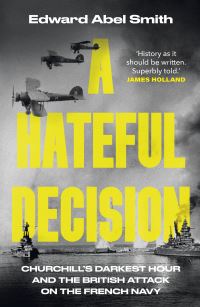
Summer, 1940. Winston Churchill watches in horror as France falls to the Germans in just six weeks, completing the Nazi conquest of mainland Europe. He faces an urgent question: what will happen to France’s mighty navy? Under German control it presents a major threat to Great Britain, and could mark a point of no return. With the Nazis closing in and time running out, Churchill ordered Operation Catapult. By the end of one of the most agonising but necessary military operations of the war, a large part of the French navy would be destroyed and nearly 1,300 French sailors would be dead, a number which would haunt all involved for the rest of their lives. Based on extensive new archival research, rediscovered eyewitness accounts and reflections from the private papers of the key protagonists, ‘A Hateful Decision’ tells the full story of the British attack on the French navy at Mers el Kébir, on 3 July 1940.
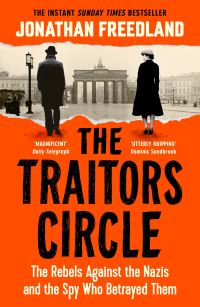
Berlin, 1943. A group of high-society anti-Nazi dissenters meet for a tea party one late summer afternoon. They do not know that, sitting around the table, is someone poised to betray them all to the Gestapo – revealing their secret to the Nazis’ most ruthless detective. They form a circle of unlikely rebels, drawn from the German elite: two countesses, a diplomat, an intelligence officer, an ambassador’s widow and a pioneering headmistress. Meeting in the shadows, rescuing Jews or plotting for a future Germany freed from the Führer’s rule, what unites them is a shared loathing of the Nazis, a refusal to bow to Hitler and the courage to perform perilous acts of resistance. Or so they believe. How did a group of brave, principled rebels, who had successfully defied Adolf Hitler for more than a decade, come to fall into such a lethal trap?
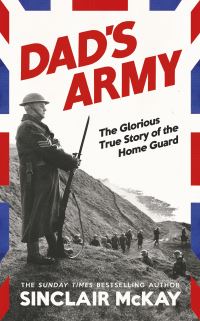
With the threat of invasion from Hitler’s forces looming large in 1940, British men of all ages and backgrounds assembled under the banner of the Home Guard. At its height, this voluntary force, much later nicknamed ‘Dad’s Army’, was made up of almost two million volunteers prepared to defend every corner of the kingdom. Numerous notable figures were involved including George Orwell, A.A. Milne, and C.S. Lewis; many women took part too, including in the Women’s Home Defence Force, which was formed in 1941. Sunday Times bestselling author Sinclair McKay tells the remarkable story of these courageous, highly trained and often pioneering men and women through original archival research, vivid storytelling and insights into the beloved television comedy that has shaped the national memory of the Home Guard.
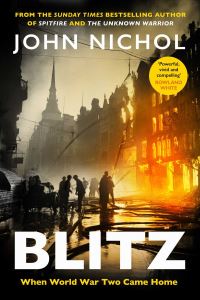
From the Sunday Times bestselling author of Spitfire and The Unknown Warrior, Blitz is a searing account of a nation at war, told through the eyes of those who endured the onslaught.

Weimar looms large in German history: a crucible of democracy and dictatorship. This ancient town nestled in the heart of the country was home to some of Europe’s greatest thinkers, Goethe and Schiller, Liszt and Nietzsche among them. It gave its name to the ambitious Weimar Republic crafted in the aftermath of the First World War. But it was also where fascism took hold. Where Bauhaus architects first experimented with new ways of living, Buchenwald was dug out of a beech forest. This book shows us a town and its people on the edge of catastrophe. Drawing on a wealth of new archival research, historian Katja Hoyer takes us from 1919 to 1939 as she tells the stories of the men and women who lived through the new republic and Hitler’s regime. We encounter a vividly drawn cast of characters, from bookbinder Carl Weirich and hotel owners Rosa and Arthur Schmidt, to Friedrich Nietzsche’s sister Elisabeth.
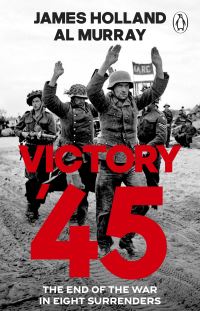
From the Italian Alps to northern Germany, to London, New York Washington and Tokyo, ‘Victory ’45’ tells the story of the extraordinary summer when the greatest conflagration the world had ever known finally came to an end after six surrenders that heralded the Allied victory. Comprised of eight chapters based around each of those surrenders and the victory celebrations which followed, it is rich in character and human drama with revealing stories and perspectives behind the end of the war not yet told before. Each chapter follows the viewpoints of a number of key characters as they traverse these world-changing events – from ordinary servicemen and women and civilians to generals and political leaders.
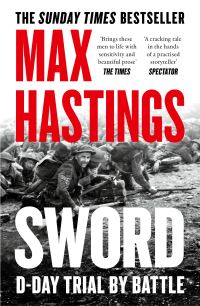
THE SUNDAY TIMES BESTSELLER
A Times and Waterstones Book of the Year
‘The messy, dirty, bloody reality of Operation Overlord comes alive in Sword, Hastings’s portrait of the individual soldiers who risked their lives on the beaches of Normandy. He brings these men to life with sensitivity and beautiful prose' THE TIMES
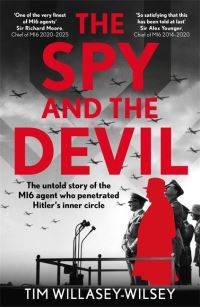
This is the forgotten tale of MI6’s top spy in Nazi Germany and his bid to stop the Second World War. In the world of espionage, where the accounts of renowned spies often dominate the narrative, this is a rare gem – an untold story of a completely unknown spy. Baron William de Ropp, a Baltic German aristocrat, wasn’t just any ordinary spy; he was MI6’s top-secret agent in Nazi Germany from 1931 to 1939, managing to escape Berlin just before war broke out. This unsung hero had direct access to Adolf Hitler and an inside track on the Nazi regime. His reports, shrouded in secrecy, had the power to shape British policy toward Germany in a pivotal period of history. ‘The Spy and the Devil’ is a riveting tale of espionage, intrigue, and the untold impact of one man’s secret mission on the course of history.
No products in the basket.