Showing 193–204 of 287 resultsSorted by latest
-
£16.99
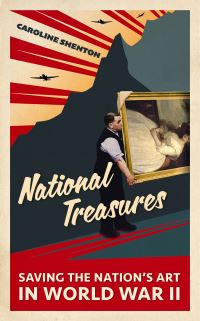
As Hitler prepared to invade Poland during the sweltering summer of 1939, men and women from across London’s museums, galleries and archives formulated ingenious plans to send the nation’s highest prized objects to safety. Using stately homes, tube tunnels, slate mines, castles, prisons, stone quarries and even their own homes, a dedicated bunch of unlikely misfits packed up the nation’s greatest treasures and, in a race against time, dispatched them throughout the country on a series of top-secret wartime adventures. ‘National Treasures’ highlights a moment from our history when an unlikely coalition of mild-mannered civil servants, social oddballs and metropolitan aesthetes became the front line in the heritage war against Hitler.
-
£10.99
The Navy almost finished the career of Britain’s greatest wartime leader. As a young minister responsible for the senior service from 1911, Churchill ruffled feathers and gave scant regard for the feelings of the admirals. When disaster struck in the First World War, it was the navy that led to his political downfall. But when he returned to power after years in the wilderness, the Royal Navy welcomed him with the cry, ‘Winston is back!’ From that point onwards, the successful pursuit of the war at sea remained his primary consideration. Within a few days of his return to the Admiralty, Churchill received a friendly overture from President Roosevelt, and there began a steady communication and friendship between the self-styled ‘Former Naval Person’ and the President of the United States, their differences subordinated in the pursuit of one shared goal: winning the war.
-
£20.00
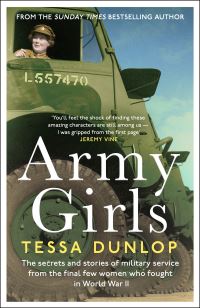
They were female soldiers in a war Britain wanted to fight without conscripting women. It was a vain hope, by December 1941 for the first time in British history women were called up and a generation of girls came of age in khaki, serving king and country. Barbara trained to drive army-style in giant trucks and Grace swapped her servant’s pinafore for battledress and a steel hat, Martha turned down officer status for action on a gun-site and Olivia won the Croix de Guerre in France. Commemorating the 80th anniversary of conscription for women, this book captures remarkable stories from the last surviving veterans who served in Britain’s female army and brings to life a pivotal moment in British history. Precious memories and letters are entwined in a rich narrative that travels back in time and sheds new light on being young, female and at war.
-
£30.00
Britain and Germany were at war for almost six long years. For prolonged periods of time – from September 1940 to May 1941, and again from December 1943 to March 1945 – London was under sustained, sometimes unrelenting, aerial bombardment by night and by day. Throughout the war, London was the nation’s front line, and the capital and its people bore the brunt of the nation’s suffering. Yet if the bombing defined the era for those who lived through it, the months of terror were outnumbered by those spent knitting together the skein of daily life at work, in the home, on the allotment, in the cinema or theatre and, not least, standing in those interminable queues for daily necessities that were such a feature of London’s war. Jerry White has unearthed what actually happened during those years, getting close up to the daily lives of ordinary people, telling the story through their own voices.
-
£25.00
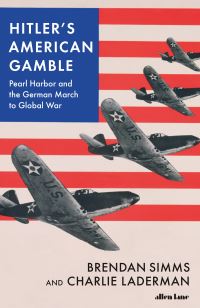
This work dramatises the extraordinarily compressed and terrifying period between the surprise Japanese attack on Pearl Harbor and Hitler’s declaration of war on the United States. These five days transformed much of the world and have shaped our own experience ever since. Simms and Laderman’s aim in the book is to show how this agonising period had no inevitability about it and that innumerable outcomes were possible. Key leaders around the world were taking decisions with often poor and confused information, under overwhelming pressure and knowing that they could be facing personal and national disaster. And yet, there were also long-standing assumptions that shaped these decisions, both consciously and unconsciously.
-
£12.99
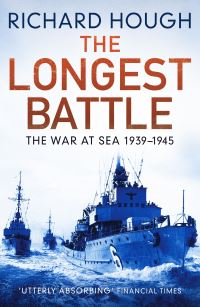
Written by Richard Hough, a well known naval historian, this book provides a compelling history of the Second World War at sea. Hough’s own account is interspersed with personal accounts from those who took part.
-
£20.00
On the moonless night of 18 August 1942 a flotilla pushes out into the flat water of the Channel. They are to seize the German-held port of Dieppe and hold it for at least 24 hours, showing the Soviets the Allies were serious about a second front and to get experience ahead of a full-scale invasion.But confidence turned to carnage with nearly two thirds of the attackers dead, wounded or captured. Operation Jubilee – the Royal Air Force’s biggest battle since 1940 – has drama from start to finish, human folly and tragedy in spades and a fast, tight narrative with heroes at every level. The raid was both a disaster and a milestone in the narrative of the war – it had powerful lessons and far-reaching consequences that paved the way to D-Day. Patrick Bishop’s account of this gallant endeavour reveals the big picture and unearths telling details, establishing definitively Operation Jubilee’s place in history.
-
£20.00
The dramatic story of a man who stood at the center of British intelligence operations, the ultimate spymaster of World War Two: Thomas Kendrick
-
£35.00
An innovative illustrated history of the Second World War, told with the help of personal stories from across the globe.
-
£10.99
On the night of December 2, 1943, the Luftwaffe bombed a critical Allied port in Bari, Italy, sinking seventeen ships and killing over a thousand servicemen and hundreds of civilians. Caught in the surprise air raid was the John Harvey, an American Liberty ship carrying a top-secret cargo of 2,000 mustard bombs to be used in retaliation if the Germans resorted to gas warfare. After young sailors began suddenly dying with mysterious symptoms, Lieutenant Colonel Stewart Alexander, a doctor and chemical weapons expert, was dispatched to investigate. He quickly diagnosed mustard gas exposure, which both Churchill and Eisenhower denied. But Alexander’s breakthrough observations about the toxic effects of mustard on white blood cell were instrumental in ushering in a new era of cancer research.
-
£10.99
This compelling book on Hitler and Stalin – the culmination of 30 years’ work – examines the two tyrants during WWII, when Germany and the Soviet Union fought the biggest and bloodiest war in history. Yet despite the fact they were bitter opponents, Laurence Rees shows that Hitler and Stalin were, to a large extent, different sides of the same coin. Hitler’s charismatic leadership may contrast with Stalin’s regimented rule by fear; and his intransigence later in the war may contrast with Stalin’s change in behaviour in response to events. But at a macro level, both were prepared to create undreamt-of suffering, destroy individual liberty and twist facts in order to build the utopias they wanted, and while Hitler’s creation of the Holocaust remains a singular crime, Rees shows why we must not forget that Stalin committed a series of atrocities at the same time.
-
£11.99
A thrilling history of MI9-the WWII organization that engineered the escape of Allied forces from behind enemy lines