“Freakonomics” has been added to your basket.
View basket
Showing 17–32 of 39 resultsSorted by latest
-
£12.99
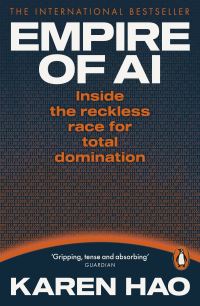
When long-time AI expert and journalist Karen Hao first began covering OpenAI in 2019, she thought they were the good guys. Founded as a non-profit with safety enshrined as its core mission, it was meant, its leader Sam Altman told us, to act as a check against more purely market forces. But the core truth of this massively disruptive sector is that it requires an unprecedented amount of proprietary resources: the ‘compute’ power of scarce high-end chips, the sheer volume of data that needs to be amassed at scale, the humans on the ground ‘cleaning it up’ for sweatshop wages throughout the Global South, and a truly alarming spike in the need for energy and water underlying everything. In this book, Hao recounts the meteoric rise of OpenAI and shows us the sinister impact that this industry is having on society.
-
£11.99
Tuberculosis has been entwined with humanity for millennia Once romanticized as a malady of poets, today tuberculosis is a disease of poverty that walks the trails of injustice and inequity we blazed for it. In 2019, John Green met Henry, a young tuberculosis patient at Lakka Government Hospital in Sierra Leone while travelling with Partners in Health. John became fast friends with Henry, a boy with spindly legs and a big, goofy smile. In the years since that first visit to Lakka, Green has become a vocal and dynamic advocate for increased access to treatment and wider awareness of the healthcare inequities that allow this curable, treatable infectious disease to also be the deadliest, killing 1.5 million people every year. John tells Henry’s story, woven through with the scientific and social histories of how TB has shaped our world and how our choices will shape the future of the disease.
-
£12.99
One of the most inspiring and counter-intuitive thinkers of our age, the author of ‘Seven Brief Lessons on Physics’, transforms the way we think about the world with his reflections on science, history, and humanity. In this collection of writings, the logbook of an intelligence always on the move, Carlo Rovelli follows his curiosity and invites us on a voyage through science, history, philosophy, and politics.
-
£10.99
Offers a startling new vision of motherhood: wild, intimate, diverse; as contested and extraordinary as the world in which we live and the animals with which we share it.
-
£18.99
Between a quarter and a fifth of young people in the UK now suffer a mental disorder. One in four adults are prescribed psychiatric medication. These numbers represent a huge and recent expansion in mental health labelling, but reveal nothing of the experience of those seeking help. In ‘The Unfragile Mind’, Gavin draws on conversations with patients, colleagues, and his thirty years of practice to explore the chequered history of psychiatry, the nature of mental health and ill-health, and the problems – including mood disorders, trauma, anxiety and addiction – that he addresses daily. The mind, he argues, is dynamic and adaptive – better addressed not with rigid labels and protocols, but with curiosity, kindness, humility and hope.
-
£12.99
Assume nothing, question everything. This is the message at the heart of ‘Freakonomics’, Levitt and Dubner’s rule-breaking, iconoclastic book about crack dealers, cheating teachers and bizarre baby names that turned everyone’s view of the world upside-down and became an international multi-million-copy-selling phenomenon.
-
£10.99
From attention mechanisms to memory processing, the neuroscience of sleep and the psychology of superstition, neuroscientist Dean Burnett explores the surprising workings of the brain and the bemusing behaviours these cause in everyday life.
-
£26.00
Wide-ranging, intellectually stimulating, passionately argued, and infused with his characteristic humour, ‘Brief Answers to the Big Questions’, the final book from one of the greatest minds in history, is a personal view on the challenges we face as a human race, and where we, as a planet, are heading next.
-
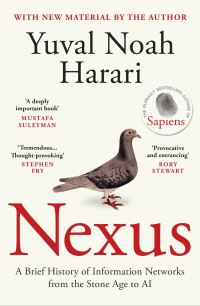
£12.99
For the last 100,000 years, humans have accumulated enormous power. But despite all our discoveries, inventions and conquests, we now find ourselves in an existential crisis. The world is on the verge of ecological collapse. Misinformation abounds. And we are rushing headlong into the age of AI – a new information network that threatens to annihilate us. If we are so wise, why are we so self-destructive? ‘Nexus’ considers how the flow of information has shaped us, and our world. Taking us from the Stone Age through the Bible, early modern witch-hunts, Stalinism, Nazism and the resurgence of populism today, Yuval Noah Harari asks us to consider the complex relationship between information and truth, bureaucracy and mythology, wisdom and power. He explores how different societies and political systems have wielded information to achieve their goals, for good and ill.
-
£10.99
Discover the magical science of getting the life you want. In this book, psychologist and neuroscientist Dr Sabina Brennan uses cutting edge research to demonstrate that the power to manifest the life of our dreams resides within us all. By grounding key manifestation principles in science, Dr Brennan shows that manifesting does not require blind trust or faith in higher powers. Instead, it requires changing how you think and behave, and learning how to harness the power of your brain. Through breaking down complicated neuroscience into empowering everyday strategies, this book will show you how to: cultivate more self-compassion; gain clarity on what you really want; connect with your true self; and take considered action to bring about the change you desire.
-
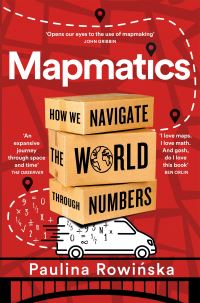
£12.99
A gripping exploration of how cartography shapes our world and the impact of maps on our everyday lives.
-
£10.99
We have entered a new ‘age of eating’ where most of our calories come from an entirely novel set of substances called ultra-processed food – food which is industrially processed and designed and marketed to be addictive. But do we really know what it’s doing to our bodies? Join Dr. Chris van Tulleken in his travels through the world of food science and a UPF diet to discover what’s really going on.
-
£10.99
Jon Ronson’s screamingly funny and deeply disturbing classic exploration of psychopathy.
-
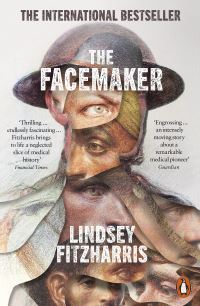
£12.99
From the moment the first machine gun rang out over the Western Front, one thing was clear: mankind’s military technology had wildly surpassed its medical capabilities. The war caused carnage on an industrial scale, and the nature of trench warfare meant that thousands sustained facial injuries. In ‘The Facemaker’, award-winning historian Lindsey Fitzharris tells the true story of the pioneering plastic surgeon Harold Gillies, who dedicated himself to restoring the faces of a brutalized generation.
-
£10.99
We are all bombarded with advice about what we should and shouldn’t eat, and new scientific discoveries are announced every day. Yet the more we are told about nutrition, the less we seem to understand. Through his pioneering scientific research, Tim Spector has been shocked to discover how little good evidence there is for many of our most deep-rooted ideas about food. In a series of short, myth-busting chapters, ‘Spoon-Fed’ reveals why almost everything we’ve been told about food is wrong. Spector explores the scandalous lack of good science behind many medical and government food recommendations, and how the food industry holds sway over these policies and our choices.
-
£10.99
300,000 years ago, Homo sapiens had bigger skulls. Cooked food meant our heads shrunk; alongside a growing brain, our airways got narrower. Urbanisation then led us to breathe less deeply and less healthily. And so today more than 90% of us breathe incorrectly. So we might have been breathing all our life, but we need to learn how to breathe properly! Here, James Nestor meets cutting-edge scientists at Harvard and experiments on himself in labs at Stanford to see the impact of bad breathing. He revives the lost, and recently scientifically proven, wisdom of swim coaches, Indian mystics, stern-faced Russian cardiologists, Czechoslovakian Olympians and New Jersey choral conductors – the world’s foremost ‘pulmonauts’ – to show how breathing in specific patterns can trigger our bodies to absorb more oxygen, and he explains the benefits for everyone that result.
 Freakonomics