On Un/certainty
£16.99We live in uncertain times. But what does uncertainty mean for our ability to act?
Showing 1–16 of 22 resultsSorted by latest
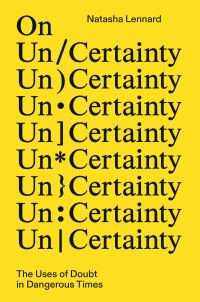
We live in uncertain times. But what does uncertainty mean for our ability to act?
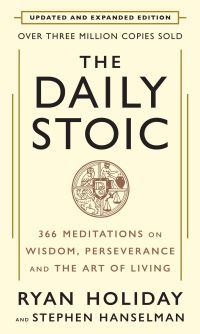
The Stoics’ unique blend of practicality and wisdom has been inspiring the most successful among us for centuries, from Roman emperors to Barack Obama, and most recently via Ryan Holiday’s bestselling ‘The Obstacle Is The Way’. If that book introduced readers to the idea that what is in the way is the way, ‘The Daily Stoic’ widens our view on the stoic philosophy and shows that it can be applied to any problem. From how to manage failure to getting what you want, the ideas of Seneca, Epictetus, Marcus Aurelius and others continue to be vitally relevant to today’s doers and thinkers. Here, in bold new translations, language is stripped down to reveal powerful aphorisms that cut straight to the heart of our day-to-day challenges.
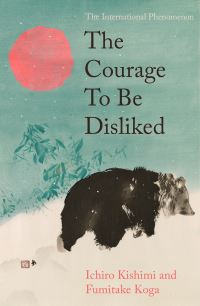
Millions have already benefited from the wisdom dispensed in ‘The Courage to Be Disliked’, its simple yet profound advice showing us how to harness our inner power to become the person we would like to be. A philosopher and a student have a discussion. Their conversation reveals a profoundly liberating way of thinking: by developing the courage to change, set healthy boundaries and resist the impulse to please others, it is possible to find genuine and lasting happiness.
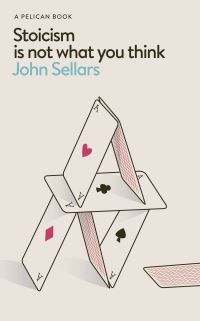
We all know what it means to be ‘stoical’: to have a stiff upper lip, to hide or suppress one’s emotions, to be indifferent to the outside world. Many people might reasonably think that this doesn’t sound like a good way to live. Who would want to feel nothing? But what exactly is the difference between being ‘stoic’ and being a ‘Stoic’? Are Stoics just naïve optimists? And is Stoicism really only for men? This book offers an invigorating corrective to one of philosophy’s most popular and most misunderstood traditions. Here philosopher John Sellars debunks all the major myths and misconceptions foisted on Stoicism by critics – and sometimes admirers too – and firmly puts them to rest. With vivid examples and fresh interpretations of ancient Stoics, from Marcus Aurelius to Epictetus to Seneca, Sellars shows why Stoicism is not only perennially relevant but essential for navigating the complexities of modern life.
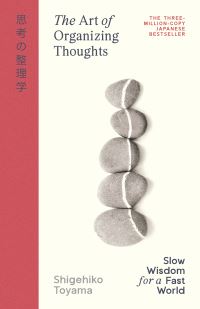
We live in an age defined by accelerating automation, polarized discourse, and constant cognitive overload. In ‘The Art of Organizing Thoughts’, first published in 1983 and newly resonant in the age of artificial intelligence, renowned scholar and teacher Shigehiko Toyama offers a humane and timeless reminder: thinking well is a distinctly human art, and one that must be cultivated, protected, and practiced. Toyama argues that knowledge alone is not wisdom – in fact, the more we accumulate, the easier it is to stop truly thinking.

What can we really know about the world around us? With clarity and lightness, physicist Carlo Rovelli guides us through the speculative depths of modern physics, unafraid to test their limits, not least because, as he suggests, there may be no final ground to reach. Electrons and minds, stones and laws, judgements and galaxies are not essentially different in nature from one another. They are ideas that illuminate each other. Reality, he shows, is shaped by this continuous play of reflections. From this emerges Rovelli’s central insight: the equality of all things. Like the ancient Chinese philosopher Zhuangzi, who dreams he is a butterfly and wakes unsure whether he is Zhuangzi dreaming to be a butterfly or a butterfly dreaming to be Zhuangzi, Rovelli invites us to see reality anew, recognizing our knowledge is coherent but also uncertain and circular.
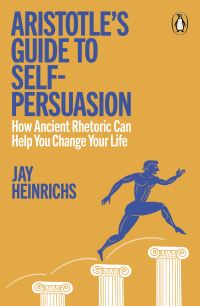
Rhetoric once sat at the centre of elite education. Alexander the Great, Shakespeare and Martin Luther King, Jr. used it to build empires, write deathless literature and inspire democracies. Here, Heinrichs shows us how these persuasive tools, honed over more than three thousand years of use persuading others, can be turned on our most difficult audiences – ourselves. Using techniques invented by the likes of Aristotle and Cicero and deployed by some of history’s most persuasive characters, we see how rhetoric can convert the gloomiest of situations into positive ones.

Whether you are studying philosophy, seeking to expand your knowledge, or simply exploring life’s biggest questions, this book will sharpen your critical thinking and deepen your understanding of the world.

Jonathan Black shows that from Marie Curie to today’s architects of AI, many of our greatest scientists have been guided by secret, mystical and ‘higher’ teachings towards an understanding of the universe familiar to the builders of the pyramids of Giza or the Temple at Jerusalem. He explores how these discoveries, foreshadowed and paralleled by geniuses including Carl Gustav Jung and Hilma af Klint, raise deep and urgent questions about ourunderstanding of the universe.

A contemporary Shaolin Master shares the wisdom and philosophy of the ancient tradition that has captured the imagination of millions worldwide.
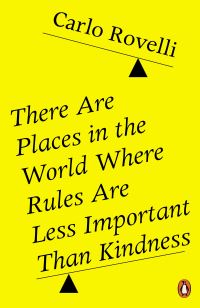
One of the most inspiring and counter-intuitive thinkers of our age, the author of ‘Seven Brief Lessons on Physics’, transforms the way we think about the world with his reflections on science, history, and humanity. In this collection of writings, the logbook of an intelligence always on the move, Carlo Rovelli follows his curiosity and invites us on a voyage through science, history, philosophy, and politics.
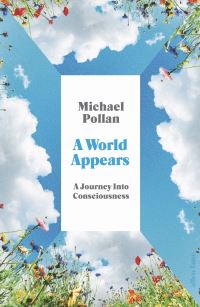
How does it feel to be you with your own personal feelings, thoughts and experiences? Every one of us is intimately familiar with consciousness, but no one knows how – or why – it came to be that three pounds of grey matter can generate a subjective point of view. The early 1990s marked the birth of a new science of consciousness, based on the assumption that the phenomenon could be explained in terms of brain activity, but that effort is faltering, and wilder ideas, such as panpsychism, are now getting a hearing. Indeed, there is now reason to doubt that ‘objective science’ as we have known it since Galileo has the right tools to plumb first-person experience. This title takes Michael Pollan from the laboratories where scientists are searching for the neural correlates of consciousness to encounters with philosophers and novelists and Buddhist monks, whom he finds have just as much to teach us about consciousness, if not more.
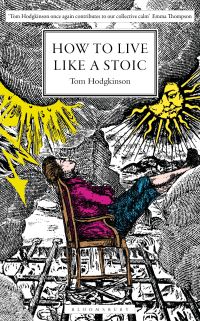
There’s more to Stoicism than shrugging your shoulders and getting on with it, as Tom Hodgkinson discovers in this witty and enlightening book.
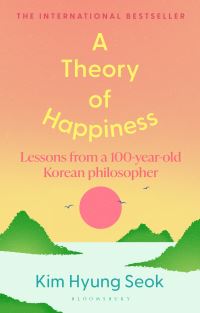
This Korean bestseller from a 105-year-old professor – known as the grandfather of Korean philosophy – shows us how we can curate our own happiness from within, sharing his philosophical wisdom from a life long-lived as well as key teachings from ancient Korean philosophy.

The epic adventure story of humanity’s obsession with the North Pole, from Norwegian explorer Erling Kagge who travelled there in 1990. ‘The North Pole’ is an adventure story, a book about enacting hidden human dreams, about difficult fathers and their difficult sons, and a psychological record of what it means to keep putting one foot in front of the other in the face of adversity. It is for anyone who’s gazed out at the horizon – and wondered what happens if you just keep walking.

Optimism, irrational though it might be, is central to the human psyche: it seems to give us an advantage both in everyday life and in the evolutionary race. What does Ernest Shackleton’s Antarctic expedition have in common with the chicken that crossed the road? Or James Baldwin’s campaign for civil rights with the development of AI? Or even Crossrail and George Bush’s ‘mission accomplished’? ‘The Bright Side’ makes a vital and transformative new argument: that optimism is not only the natural state of humanity, but an essential one.
No products in the basket.