“The Paranoid Style in American Politics” has been added to your basket.
View basket
Showing 1–16 of 22 resultsSorted by latest
-
£20.00
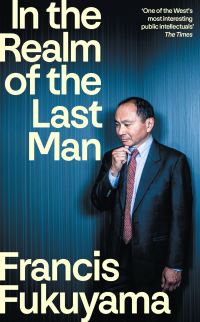
In 1989, one year before the fall of the Berlin Wall, Francis Fukuyama – then an early-career academic who had cut his teeth conducting research for Ronald Reagan during his years as California governor – delivered a conference paper that would go on to become one of the most celebrated – and controversial – works of political theory of our time: The End of History. By 2009, he had broken with his neoconservative mentors, from Allan Bloom to Paul Wolfowitz, after recanting his support for the ‘disastrous’ invasion of Iraq in 2003, and the laissez-faire economics that produced the financial crash of 2008. But why did he change his mind? In this political memoir, encompassing his father’s involvement in the civil rights movement and his own work on CIA contracts in the 1980s, Fukuyama analyses his life alongside the seismic political shifts of the last 30 years – from Bush to Obama to Trump, from the War on Terror to Russia’s invasion of
-
£25.00
We often read history as the biographies of ‘great men’ who shaped the world. But are leaders, whichever field they are in, really that influential? Should CEOs be given large bonuses when a company performs well? Why, when a political leader is assassinated, is their successor as likely to improve as damage a country? When do we know if firing a coach has changed the fortunes of the team? Historian and bestselling author Jared Diamond argues that leaders are neither heroic exceptions nor products of circumstance. Looking at four difference spheres: history, business, sport and religion, Diamond asks under which conditions is a leader most likely to make a difference and why. Drawing on the life and career of iconic leaders, Diamond shows us how leadership effectiveness is determined by a range of complex interrelated factors, from resources to geography, culture to technology.
-
£25.00
From its inception, liberalism offered a glittering promise of shared prosperity, equality, democratic values and the free pursuit of knowledge. At first, it flourished. And then it faltered. Once a tantalising beacon of hope, it began to erode and decay at the hands of elitism, intolerance and rising autocracy. One could say that liberalism is broken. So what comes next? Nobel prize-winning co-author of ‘Why Nations Fail’ Daron Acemoglu charts the rise and fall of liberal democracy, and offers hope for a way forward: a new theory that lays the groundwork for how we can – and must – remake liberalism before it’s too late.
-
£30.00
Between 1931 and 1949, a series of crises broke out that threatened collective security, world order and the internal cohesion of states across the globe. At the heart of these crises was a world war that shook the foundations of global power, a watershed moment in the history of the 20th Century. ‘Collapse’ is the first volume of an authoritative trilogy that tells the story of the Second World War through this international lens, covering theatres of war in multiple continents and analysing worldwide trends. Through new sources in 14 languages and from over 50 archives across the world, Professor Jonathan Fennell examines the first part of this ‘long war’, from 1931-1942, and explores what it really meant to live through this violent time. Using an innovative approach which explores the personal alongside the political, the global alongside the local, he shows how a world that many considered civilised collapsed into barbarity.
-
£25.00
The crises that face us in the twenty-first century are global and interconnected: amongst many others, climate change exacerbates the water crisis, which in turn impacts health. Yet, as Mariana Mazzucato argues, we have failed to treat these as collective goals with shared agendas. This, she argues, is not by coincidence, but by design. In this ambitious and urgent new book, Mazzucato presents a systematic and scalable vision of successful government that creates value, addresses inequalities, and serves collective ends. Emphasizing a need to shift from reactively putting bandages on market failures to proactively shaping economies that actually work, she proposes a new economic theory of the common good. The book outlines five pillars of progressive government and demonstrates how they can help us tackle the most pressing challenges of our time.
-
£25.00
From the dawn of the modern era to the end of the Cold War, global history was defined by rivalries between great powers. In the West, this meant the struggle for supremacy in Europe and the Americas, while in the East, it encompassed those vying for control over the successor states to Genghis Khan’s empire. Between 1989 and the year 2000, great power rivalry temporarily gave way to globalization, with liberal democracy on the march and national chauvinism seemingly in retreat. But events of the past decade have made one thing abundantly clear: the great powers are back. In this work, renowned historian Brendan Simms offers a history of the rise, fall, and return of the great powers in our time. He shows that over the past ten years or so, the major global actors have already resumed making decisions based on geopolitical rather than global economic considerations.
-
£12.99
This work is an unimprovable guide to the strange highways and byways of American life, written by Richard Hofstadter, the great American historian and intellectual. How is it that a country with such resources, so much space, with such a premium on education and written culture, can so quickly be reduced to a mere headless chicken by rumours, surreal conspiracy theories and the most brazen of conmen?The only hope offered by Hofstadter is that America has so often been assailed by such gusts of nonsense that we should by now be able to spot the manias, fabrications and the patently absurd rumours. There never has been a golden age of reasonably intelligent discourse. But, unfortunately, perhaps there never will be. In an era where we ourselves feel assailed by endless paranoid public statements it is comforting to read Hofstadter’s incisive refusal to see these as something new.
-
£25.00
The wealthy and powerful few have dominated the masses throughout most of human history. This is starkly visible now more than ever – today, the gulf between oligarchs and the average citizen is larger than any gap that existed during European serfdom or the slave society of Imperial Rome. We have arrived at the most blatant version of oligarchy that most modern states have endured, with politicians bought and paid for across the political spectrum. The strange thing is: we aren’t in open revolt against this system. In fact, we keep voting to prop it up. Why? In ‘The Blind Spot’, political scientist Jeffrey A. Winters delivers an urgent, incisive account of how we reached this era of in-your-face oligarchy, exposing how modern democracy was developed to protect the interests of the ultra-rich.
-
£10.99
Who are the white working class and why are they so misunderstood? Economist journalist Joel Budd has spent five years investigating their stories. This is what they have to say.
-
£10.99
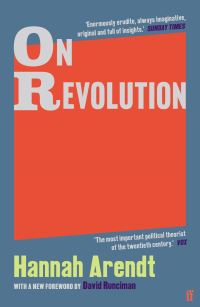
‘On Revolution’ is the great political thinker Hannah Arendt’s classic exploration of a phenomenon that has radically reshaped the world. Exploring the eighteenth-century rebellions in America and France through to the explosive political upheavals of the twentieth-century, ‘On Revolution’ is essential reading for anyone seeking to decipher the forces that have shaped our tumultuous age.
-
£25.00
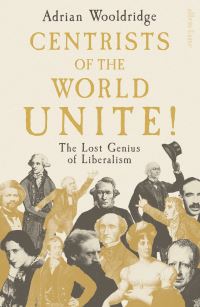
We live in an age of extremes: populist leaders are setting the agenda, autocracies are on the march, and the liberal establishment is a bewildered blob, devoid of new ideas or fresh solutions. Having once powered progress in the form of democracy, mass welfare and defeating totalitarianism, liberals have the power to save the world again – but only if they rediscover the lost genius of their creed. Guiding us skilfully and entertainingly through the intellectual, cultural and political histories of liberalism, this book lays out a centrist agenda for today’s problems. It reminds us of the dynamism and fixed principles that have shaped the successes of liberalism and warns us against splitting into sub-groups that fail to grapple with the common good.
-
£25.00
With over 30 years’ experience in conflict zones and fragile states, Arthur Snell travels from the heat of the Sahel to the Arctic Circle to show how climate change is coinciding with a breakdown in geopolitical order, increasing conflict and economic crises.
-
£30.00
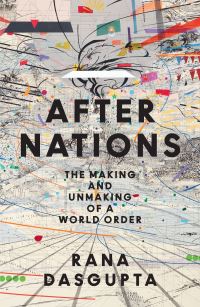
‘The twenty-first century’s counterpart to Hobbes’s Leviathan.’ EMMANUELE COCCIA
What has happened to the nation-state? From a prizewinning writer, After Nations offers a sweeping history of this most unquestioned of modern structures and a bold speculation about its future.
-
£12.99
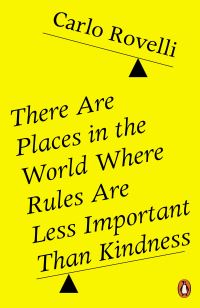
One of the most inspiring and counter-intuitive thinkers of our age, the author of ‘Seven Brief Lessons on Physics’, transforms the way we think about the world with his reflections on science, history, and humanity. In this collection of writings, the logbook of an intelligence always on the move, Carlo Rovelli follows his curiosity and invites us on a voyage through science, history, philosophy, and politics.
-
£11.99
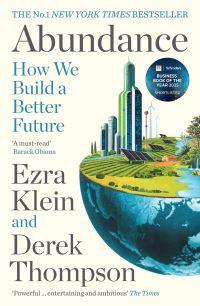
In the last few decades, our capacity to see problems has sharpened while our ability to solve them has diminished. Progress requires the ability to see promise rather than just peril in the creation of new ideas and projects, and an instinct to design systems and institutions that make building possible. In a book exploring how we can move from a liberalism that not only protects and preserves but also builds, Klein and Thompson trace the political, economic, and cultural barriers to progress and how we can adopt a mindset directed toward abundance, and not scarcity, to overcome them.
-
£25.00
The Hotel Lutetia is a Paris institution, the only ‘grand’ hotel on the city’s bohemian Left Bank. Ever since it opened, it has served as a meeting place for artists, musicians and politicians. Andre Gide took his lunch here, James Joyce lived in one of its rooms, Picasso and Matisse were regular guests. It has a darker history, too. During one short period, it became a focus for some of the most dramatic and terrible events in recent history. In the 1930s the Hotel Lutetia attracted intellectuals and political activists, forced to flee their homes when Hitler came to power, who met here with the hope of forming an alternative government. But when war came, Paris was occupied, and the hotel became the headquarters of the German military intelligence service – and the centre of their operation to root out enemies of the Reich.

 The Musician's Mission