“Against Identity” has been added to your basket.
View basket
Showing 1–12 of 97 resultsSorted by latest
-
£11.99
In this bold follow-up to ‘Confronting Leviathan’, David Runciman unmasks modern politics and reveals the great men and women of ideas behind it. What can Samuel Butler’s ideas teach us about the oddity of how we choose to organise our societies? How did Frederick Douglass not only expose the horrors of slavery, but champion a new approach to abolishing it? Why should we tolerate snobbery, betrayal and hypocrisy, as Judith Shklar suggested? And what does Friedrich Nietzsche predict for our future? From Rousseau to Rawls, fascism to feminism and pleasure to anarchy, this is a mind-bending tour through the history of ideas which will forever change your view of politics today.
-
£20.00
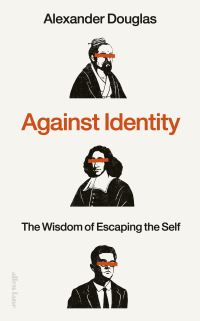
Modern life encourages us to pursue the perfect identity. Whether we aspire to become the best lawyer or charity worker, life partner or celebrity influencer, we emulate exemplars that exist in the world Рhoping it will bring us happiness. But this often leads to a complex game of envy and pride. We achieve these identities but want others to imitate us. We disagree with those whose identities contradict ours Рleading to polarisation and even violence. And yet when they thump against us, we are ashamed to ring hollow. In this book, philosopher Alexander Douglas seeks an alternative wisdom. Searching the work of three thinkers Рancient Chinese philosopher Zhuangzi, Dutch Enlightenment thinker Benedict de Spinoza, and 20th Century French theorist Ren̩ Girard Рhe explores how identity can be a spiritual violence that leads us away from truth.
-
£16.99
Vladimir Lenin, an occasional resident of North London who went on to other things, has been credited with once saying that there are decades where nothing happens but weeks when decades happen. The first two and a half decades of this century in Britain have had plenty of those weeks. Indeed, our recent history has at times resembled an episode of ‘Casualty’, the long-running BBC hospital drama in which every hedge trimmer slips, every gas pipe leaks, every piece of scaffolding collapses and everyone ends up in intensive care. In ‘Haywire’, Andrew Hindmoor makes sense of the deluge of events which have rained down on Britain since 2000, from the Iraq War to financial collapse, austerity to Brexit, as well as more easily forgotten moments such as the MP’s expenses scandal.
-
£10.99
With the Soviet Union extinct, Saddam Hussein defeated and US power at its zenith, the early 1990s promised a ‘kinder, gentler America.’ Instead, it was a period of punishing economic hardship, rising anger and domestic strife, setting the tone for the polarization and resurgent extremism we know today. The early 1990s climate of despair was weaponized by con men, conspiracists and racists – notably the former grand wizard of the Ku Klux Klan David Duke – both in the wider culture and at the ballot box. In other words, they sought to ‘break the clock’ of progress and ‘repeal the twentieth century’. They gave Americans’ resentment a shape and direction, and forged a new kind of paranoid, conspiratorial politcs. In this book, Ganz narrates the fall of the Reagan order and the rise of the conspiratorial politics that birthed Donald Trump’s America.
-
£12.99
As World War II ended, the United States stood as the dominant power on the world stage. In 1947, to support its new global status, it created the CIA to analyse foreign intelligence. But within a few years, the Agency was engaged in other operations: bolstering pro-American governments, overthrowing nationalist leaders, and surveilling anti-imperial dissenters in the US. The Cold War was an obvious reason for this transformation – but not the only one. Intelligence historian Hugh Wilford draws on decades of research to show the Agency as part of a larger picture, the history of Western empire. While young CIA officers imagined themselves as British imperial agents like T.E. Lawrence, successive US presidents used the covert powers of the Agency to hide overseas interventions from postcolonial foreigners and anti-imperial Americans alike.
-
£10.99
Nowadays, autocracies are run not by one bad guy, but by sophisticated networks composed of kleptocratic financial structures, security services and professional propagandists. The members of these networks are connected not only within a given country, but among many countries. The corrupt, state-controlled companies in one dictatorship do business with corrupt, state-controlled companies in another. The police in one country can arm, equip, and train the police in another. The propagandists share resources – the troll farms that promote one dictator’s propaganda can also be used to promote the propaganda of another – and themes, pounding home the same messages about the weakness of democracy and the evil of America. Unlike military or political alliances from other times and places, this group doesn’t operate like a bloc, but rather like an agglomeration of companies: Autocracy, Inc.
-
£10.99
In 2020 protest movements across the world revealed the inequalities sewn into the fabric of society. The wildfires that ravaged Australia and California made it clear we are in the middle of a climate catastrophe. The pandemic showed us all just how precarious our economies really are, and the conspiracy theories surrounding the US election proved the same of our democracies. Those in charge do not have the answers. In fact, those in charge, more often that not, are the problem. So, what do we do? In this book, political commentator Ece Temelkuran puts forward a compelling new narrative for our current moment, not for some idealised future but for right now, and asks us to make a choice.
-
£10.99
After the devastation of World War Two, the international community came together to enshrine fundamental rights to refuge, health, education and living standards, for privacy, fair trials and free speech, and outlawing torture, slavery and discrimination. Their goal was greater global justice, equality, and peace. That settlement is now in danger, attacked by opponents from across the political spectrum and populist and authoritarian movements worldwide. This book provides a powerful and urgent explanation and vindication of our human rights and freedoms.
-
£10.99
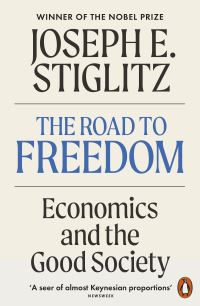
Despite its manifest failures, the narrative of neoliberalism retains its grip on the public mind and the policies of governments all over the world. Taking on giants of neoliberalism such as Hayek and Friedman and examining how public opinion is formed, Stiglitz reclaims the language of freedom from the right to show that far from ‘free’ – unregulated – markets promoting growth and enterprise, they in fact reduce it, lessening economic opportunities for majorities and siphoning wealth from the many to the few – both individuals and countries.
-
£20.00
Who are the white working class and why are they so misunderstood? Economist journalist Joel Budd has spent five years investigating their stories. This is what they have to say.
-
£10.99
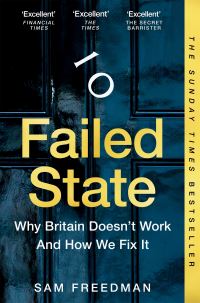
In Failed State, one of Britain’s leading policy experts, Sam Freedman, explores the dysfunction at the heart of the British state.
-
£22.00
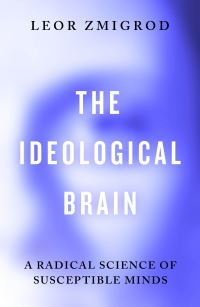
The human brain faces a set of dilemmas every day: how to achieve coherence from fragmented sensory inputs and how to attain connection with other people in an increasingly atomized and isolating world. Ideologies offer a shortcut, providing easy answers, scripts to follow, and a sense of shared identity. Whether our ideologies are far-right, far-left, nationalist, religious, or even progressive, they simplify our understanding and give us organizing frameworks through which to act and interact with others. But ideologies come at a cost: demanding conformity and suppressing individuality through rigid rules, repetitive rituals, and intolerance. Once ideologies grip our minds, they fundamentally transform us, making us less sensitive and adaptable. Drawing on her groundbreaking research, Dr Leor Zmigrod uncovers the hidden mechanisms driving our beliefs and behaviours.

 New Silk Roads: The Present and Future of the World
  Thinking Fast & Slow
  Shepherds Life
  Daughters of Latin America
  Ken Prep World Book Day: The Blitz Sisters
  Things I Dont Want To Know
  The Year of Magical Thinking