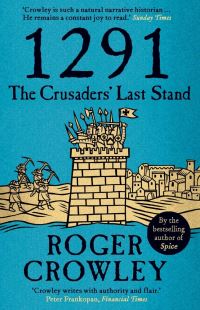
1291
£11.99A thrilling history of the bloody climax to two centuries of crusading in the Holy Land

 Classic Cat Stories
1 × £10.99 Harry Potter and the Goblet of Fire (4)
1 × £9.99 Tank Command
1 × £22.00
Classic Cat Stories
1 × £10.99 Harry Potter and the Goblet of Fire (4)
1 × £9.99 Tank Command
1 × £22.00 Subtotal: £42.98
Showing 1–16 of 19 resultsSorted by latest
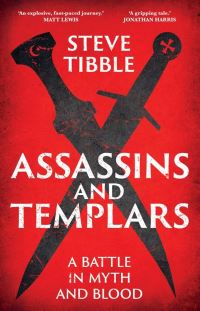
The story of the medieval world’s most extraordinary organisations, the Assassins and the Templars. In this engaging account, Steve Tibble traces the history of these two groups from their origins to their ultimate destruction. He shows how, outnumbered and surrounded, they survived only by perfecting ‘the promise of death’, either in the form of a Templar charge or an Assassin’s dagger. Death, for themselves or their enemies, was at the core of these extraordinary organisations. Their fanaticism changed the medieval world – and, even up to the present day, in video games and countless conspiracy theories, they have become endlessly conjoined in myth and memory.

The definitive visual record of the clandestine work carried out by the British Security Service, MI5, from its origins to the modern day. Regnum Defende: Defend the Realm. MI5, the intelligence agency responsible for protecting the UK against threats to national security, has acted under this motto since it was founded in 1909. This has involved the management of secrets over the decades: secrets for which vast swathes of information are now declassified. Detailing uprisings and executions, double agents and femmes fatales from across the globe, The MI5 Archive presents a window into the world of spycraft that has kept British democracy safe. Rummage through documents received anonymously to the shadowy PO Box 500, London, W2. Work out what has value and how to decode it, with experts at your shoulder: authors and archivists Mark Dunton and Stephen Twigge have had unparalleled access. Within you will find source material on the Sie
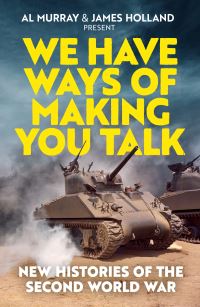
This volume will trace the darkest hours of the miracle that was Dunkirk, follow arctic convoys in the North Cape, consider the destruction of Hamburg, and unpick the only thing that ever really frightened Churchill. Like their hugely successful podcast – ‘We Have Ways of Making You Talk’ – this book will delve into the forgotten, hidden and little explained aspects of the war. At once entertaining and illuminating, this is the perfect book for fans of World War II history.
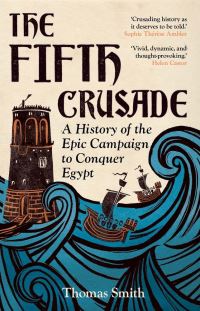
In 1217, the crusader states were in a highly fragile condition. The Fourth Crusade had failed, and Jerusalem had not been recovered. The crusaders now set their sights on Egypt. If the breadbasket of the Mediterranean could be conquered, long-term Christian control of the Holy Land could be ensured. Led by the rulers of Hungary and Austria, and backed by the Knights Templar and Hospitaller, the Fifth Crusade was launched. Thomas Smith tells the gripping story of the crusade for Egypt. Looking at a wide range of Christian and Muslim sources, Smith sheds new light on the brutal reality of medieval combat on land and water.

The global powerhouse that is the United States of America is younger even than the British Museum, Guinness and the flushing toilet. In 2026 it celebrates its 250th birthday. How did this vast land, long inhabited by diverse indigenous cultures, come to be dominated by English speakers? How has it grappled with the stark contradictions between its ideals of liberty and the grim reality of genocide and slavery? This extraordinary collection of fifty distinct states has weathered immense – and recent – challenges, including a Civil War that was still raging as the first London Underground station opened. How did this melting pot of peoples and ideas not only endure but rise to dominate global politics, commerce, culture and warfare? What insights does this rich history offer about an increasingly divided nation – and the world that moves to its rhythm?
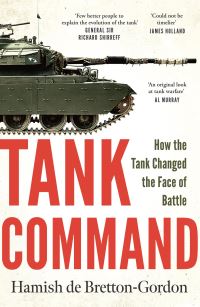
Who would have thought that steel boxes with guns would endure as the stalwart of the battlefield for over a hundred years? For all the new trickery and wizardry of the modern fight, the tank’s ability to pack a huge punch at up to 3000 metres, protected by steel, ceramics and now, electronics, is still the most reliable and durable weapon in the military toolbox. In this book, former tank commander Hamish de Bretton-Gordon OBE offers a unique and timely exploration of the evolution of the tank, on and off the battlefield. Written in close collaboration with the world-renowned Tank Museum, it brings the thrill of hardware together with the sweep of history, telling the tank’s origin story on the battlefields of World War I, charting its primacy during World War II, and analysing its critical role in modern warfare, whether in the Gulf (where Hamish served) or on the new Ukrainian and Russian front lines.

‘The Defector’ is the untold account of how, in 1971, the defection of a KGB saboteur in London led to the expulsion of more than a hundred Soviet ‘diplomats’ from the UK. Drawing on newly declassified intelligence documents and dozens of interviews with spymasters, the book tells a startling story of a Soviet mission to plant fake Kremlin agents within British and American intelligence services, the paranoia that ensued, and how the actions of a genuine turncoat, the former KGB officer Oleg Lyalin, and the secrets he revealed resulted to one of the most dramatic and pivotal moments in the Cold War.
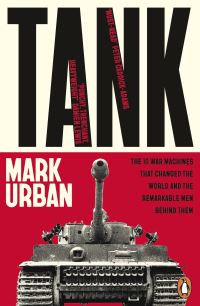
Tanks are the ultimate embodiment of industrial age warfare. In the popular imagination, they represent both a terrifying beast of destruction and a potent symbol of liberation. The technology behind these war machines has evolved relentlessly, and yet the coming of the information age has led many to predict that drones, missiles, and Artificial Intelligence have made the tank obsolete. Time and again, however, tanks have continued to shape – and be shaped by – battles around the world, from their introduction in 1916, through the Second World War and tank-on-tank fights in 1990s Iraq, to the current conflict in Ukraine. In ‘Tank’, Mark Urban draws on wide-ranging accounts from soldiers, designers, and politicians, from Winston Churchill to Volodymyr Zelensky, to tell the story of one of the most important developments in military history.

The Weimar Republic was Germany’s postwar experiment with democracy, and a time of unprecedented cultural, intellectual and artistic freedom. Berlin was at the cutting edge of quantum physics and psychoanalysis; its nightlife showcased grand opera and dissolute cabaret. Bauhaus architecture and modernist painting flourished, and it rivalled Hollywood as a capital of film. But beneath the glamour was a deeply polarised society of extremes plagued by economic disasters, populist leaders fuelling culture wars, and an uneasy political settlement that would soon spawn the horrors of Nazism. Covering 15 years from the end of the First World War to Hitler’s appointment as Chancellor in 1933, this book tells the definitive story of Germany’s interwar republic and descent into fascism.
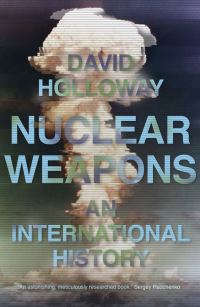
How should we deal with nuclear weapons? The discovery of nuclear fission fundamentally changed the world order. Its power was harnessed, nuclear bombs invented, and the cities of Hiroshima and Nagasaki were destroyed. In recurring international crises and calls for arms control, the threat of nuclear war has hung over humanity ever since. David Holloway traces how these weapons shaped the last century, from the US-Soviet arms race to the rivalry between India and Pakistan. Deterrence and intimidation, alliances and war plans, international treaties and organizations have all played their role. At the centre were political leaders – among them Truman, Kennedy, and Reagan, as well as Stalin, Khrushchev, and Gorbachev – who all had their fingers on the nuclear button.
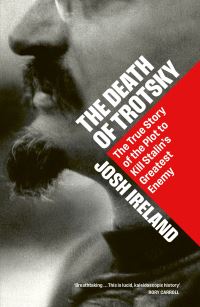
In August 1940, a man walked into Leon Trotsky’s study in Mexico City and drove an ice pick into his skull. The killer? Ramon Mercader – an aristocratic Spaniard turned Soviet assassin. The mastermind? Joseph Stalin. But this was no simple hit. It was the climax of a decade-long global hunt: a story of seduction and betrayal, of fake identities and secret loyalties, of idealists and fanatics, lovers and spies. While Trotsky raged in exile – still clinging to his revolutionary dream – Stalin’s agents closed in. And at the heart of it all was Mercader: a man trained to lie, charm and ultimately to kill.

“At once deeply researched and as readable as a thriller.”?Mark Galeotti ? “An important book about the world’s most dangerous mercenary outfit. Margolin unearths new details that will surprise readers.”?Sean McFate ? “Margolin takes readers deep into the shadowy underworld. . . . A must read.”?Clarissa Ward, CNN “A tale of violence and political intrigue that reads like a Tom Clancy novel written by Fyodor Dostoyevsky.”?The Wall Street Journal ? “Riveting. . . . It’s a vital window onto the weird world of secretive, privatized modern warfare.”?Publishers Weekly (starred review) An eye-opening, terrifying history of this notorious and widely influential mercenary group. Â This book exposes the history and the future of the Wagner Group, Russia’s notorious and secretive mercenary army, revealing details of their operations never documented before. Using extensive leaks, first-h
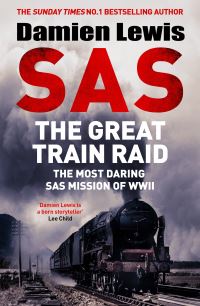
So secret was this mission, the SAS seizure of a train to raid deep into enemy territory to liberate a concentration camp, that it wasn’t until 1968 – 27 years after the formation of the SAS – that a short mention of it was made in the Rover and Wizard annual, under the headline ‘Who Dares Wins’. No further published record exists. Best-selling author Damien Lewis has unearthed the full incredible story from long-hidden files and first hand-testimony, his latest elite forces narrative delivering a scintillating tale of bravery, daring and determination which simply beggars belief.
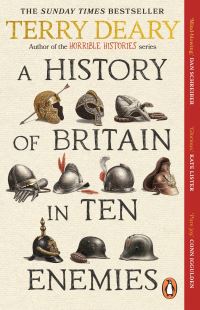
Ah, Britain. So special. The greatest nation on Earth, some say. And we did it all on our own. Didn’t we? Well, as it happens Britannia got its name from the Romans, and for the past two centuries we have been ruled by Germans. But then, as ‘Horrible Histories’ author Terry Deary argues, nations and their leaders are defined by the enemies they make. The surprisingly sadistic Boudica would be forgotten if it weren’t for the Ninth Legion, Elizabeth I a minor royal without the Spanish Armada, and Churchill an opposition windbag without the Nazis. Britain loves its heroes so much we have been known to pickle them in brandy to keep them fresh. This book is an entertaining gallop through history that will have you laughing as you find out what they didn’t teach you in school.

Kim Philby was the most notorious British defector and Soviet mole in history. Agent, double agent, traitor and enigma, he betrayed every secret of Allied operations to the Russians in the early years of the Cold War. In the aftermath of the Second World War, Philby, Nicholas Elliott and James Jesus Angleton were rising stars in the intelligence world and shared every secret. Elliott and Angleton thought they knew Philby better than anyone – and then discovered they had not known him at all. This is a story of loyalty, trust and treachery, of male friendships forged, and then systematically betrayed. With access to newly released MI5 files and previously unseen papers, ‘A Spy Among Friends’ unlocks what was perhaps the last great secret of the Cold War.
Classic Cat Stories
1 × £10.99 Harry Potter and the Goblet of Fire (4)
1 × £9.99 Tank Command
1 × £22.00 Subtotal: £42.98