-
Sorry, "The Art of War and Peace" was not added to cart because it has reached the maximum backorder limit. (0 available).
Showing 1–12 of 189 resultsSorted by latest
-
£25.00
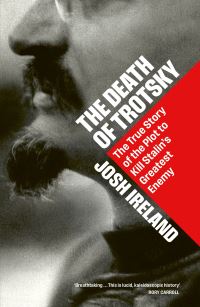
In August 1940, a man walked into Leon Trotsky’s study in Mexico City and drove an ice pick into his skull. The killer? Ramon Mercader – an aristocratic Spaniard turned Soviet assassin. The mastermind? Joseph Stalin. But this was no simple hit. It was the climax of a decade-long global hunt: a story of seduction and betrayal, of fake identities and secret loyalties, of idealists and fanatics, lovers and spies. While Trotsky raged in exile – still clinging to his revolutionary dream – Stalin’s agents closed in. And at the heart of it all was Mercader: a man trained to lie, charm and ultimately to kill.
-
£12.99
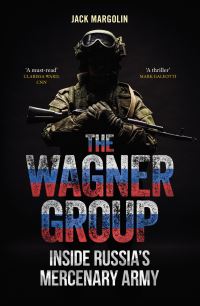
“At once deeply researched and as readable as a thriller.”?Mark Galeotti ? “An important book about the world’s most dangerous mercenary outfit. Margolin unearths new details that will surprise readers.”?Sean McFate ? “Margolin takes readers deep into the shadowy underworld. . . . A must read.”?Clarissa Ward, CNN “A tale of violence and political intrigue that reads like a Tom Clancy novel written by Fyodor Dostoyevsky.”?The Wall Street Journal ? “Riveting. . . . It’s a vital window onto the weird world of secretive, privatized modern warfare.”?Publishers Weekly (starred review) An eye-opening, terrifying history of this notorious and widely influential mercenary group. Â This book exposes the history and the future of the Wagner Group, Russia’s notorious and secretive mercenary army, revealing details of their operations never documented before. Using extensive leaks, first-h
-
£10.99
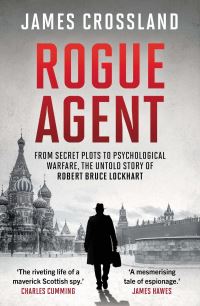
Sir Robert Bruce Lockhart (1887-1970) was an impressive figure: a diplomat, intelligence agent, conspirator, journalist and propagandist who played a key role in both world wars. He was a man who charmed his way into the confidences of everyone from Leon Trotsky to Anthony Eden. A man whom the influential press baron Lord Beaverbook claimed ‘could well have been prime minister’. And yet Lockhart died almost forgotten and near destitute, a Scottish footnote in the pages of history. ‘Rogue Agent’ is a biography of this gifted yet habitually flawed maverick. It chronicles his many exploits, from his time as Britain’s ‘Agent’ in Moscow, and his role in a plot to bring down the communist regime, to leading the Political Warfare Executive, a secret body responsible for disinformation and propaganda in the Second World War.
-
£25.00
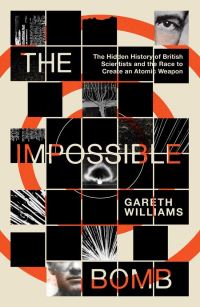
In this work, Gareth Williams tells the remarkable story of the forgotten British scientists who enabled the Manhattan Project to create the atomic bomb.
-
£25.00
How have the character and technology of war changed in recent times? Why does battlefield victory often fail to result in a sustainable peace? What is the best way to prevent, fight and resolve future conflict? The world is becoming a more dangerous place. Since the fall of Kabul and Russia’s invasion of Ukraine, the US-led liberal international order is giving way to a more chaotic and contested world system. Western credibility and deterrence are diminishing in the face of wars in Europe and the Middle East, tensions across the Taiwan Strait, and rising populism and terrorism around the world.
-
£10.99
There can be few more important but also more contentious issues than attempting to understand the human propensity for conflict. Our history is inextricably tangled in wave after wave of inter-human fighting from as far back as we have records. How can we make sense of what Einstein called ‘the dark places of human will and feeling’? Richard Overy draws on a lifetime’s study of conflict to write this challenging, invaluable book.
-
£10.99
The Battle of Arnhem is one of the best-known stories in British military history: a daring but thwarted attempt to secure a vital bridgehead across the Rhine in order to end the war before Christmas. It is always written about, with the benefit of unerring 20/20 hindsight, as being doomed to fail, but the men who fought there, men of military legend, didn’t know that that was to be their fate. By focusing on the events of one day as they happened through the eyes of the British participants and without bringing any knowledge of what would happen tomorrow to bear, Al Murray offers a very different perspective to a familiar narrative. Some things went right and a great many more went wrong, but recounting them in this way allows the reader to understand for the first time how certain decisions were taken in the moment and how opportunities were squandered.
-
£10.99
On the morning of the 28th of January 1986, just 73 seconds into flight, the space shuttle Challenger exploded over the Atlantic Ocean, killing all seven people on board. Like the assassination of JFK, the disaster is a defining moment in 20th century history – one that forever changed the way America thought of itself and its optimistic view of the future. Based on extensive archival research and meticulous, original reporting, this book follows a handful of central protagonists – including each of the seven members of the doomed crew – through the years leading up to the accident, a detailed account of the tragedy itself and into the investigation that followed.
-
£22.00
‘SAS Great Escapes Four’ recounts how soldiers of the world’s most famous fighting force, the SAS, carried out some of the most daring escapes of World War Two. Ranging from the infamous desert campaign of 1944 to the unforgiving terrain of the Vosges Mountains, these inspirational narratives include the tale of three Captains escaping an Italian Prisoner of War Camp in 1943; a perilous escape across Europe aided by the Resistance networks of Holland, Belgium; and a death-defying return to Britain via boat, tunnel and train. Each account plunges the reader into the escapees’ experiences – sharing the most terrifying yet astounding moments of their lives.
-
£10.99
There are no such thing as an easy victory in war but after triumph in Tunisia, the sweeping success of the Sicilian invasion, and with the Italian surrender, the Allies were confident that they would be in Rome before Christmas 1943. And yet it didn’t happen. Hitler ordered his forces to dig in and fight for every yard, thus setting the stage for one of the grimmest and most attritional campaigns of the Second World War. By the start of 1944, the Allies found themselves coming up against the Gustav Line: a formidable barrier of wire, minefields, bunkers and booby traps, woven into a giant chain of mountains and river valleys that stretched the width of Italy where at its strongest point perched the Abbey of Monte Cassino. James Holland has drawn widely on diaries, letters and contemporary sources to write the definitive account of this brutal battle.
-
£10.99
On April 30, 1980, six heavily armed gunmen burst into the Iranian embassy on Princes Gate, overlooking Hyde Park in London. There they took 26 hostages, including embassy staff, visitors, and three British citizens. A tense six-day siege ensued as millions gathered around screens across the country to witness the longest news flash in British television history, in which police negotiators and psychiatrists sought a bloodless end to the standoff, while the SAS – hitherto an organisation shrouded in secrecy – laid plans for a daring rescue mission: Operation Nimrod. Drawing on unpublished source material, interviews with the SAS, and testimony from witnesses including hostages, negotiators, intelligence officers and the on-site psychiatrist, historian Ben Macintyre takes readers on a journey from the years and weeks of build-up on both sides, to the minute-by-minute account of the siege and rescue.
-
£10.99
Ah, Britain. So special. The greatest nation on Earth, some say. And we did it all on our own. Didn’t we? Well, as it happens Britannia got its name from the Romans, and for the past two centuries we have been ruled by Germans. But then, as ‘Horrible Histories’ author Terry Deary argues, nations and their leaders are defined by the enemies they make. The surprisingly sadistic Boudica would be forgotten if it weren’t for the Ninth Legion, Elizabeth I a minor royal without the Spanish Armada, and Churchill an opposition windbag without the Nazis. Britain loves its heroes so much we have been known to pickle them in brandy to keep them fresh. This book is an entertaining gallop through history that will have you laughing as you find out what they didn’t teach you in school.