-
You cannot add that amount of "The Score" to the basket because there is not enough stock (0 remaining).
Showing 1–12 of 18 resultsSorted by latest
-
£12.99
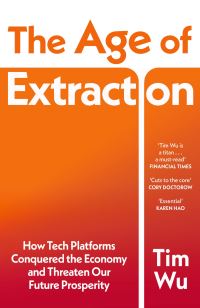
For the first time in history, we have the ability to create sustainable prosperity for all, but currently that wealth is concentrated in a tiny number of hands. It isn’t abundance that’s the problem; it is distribution. In this engaging, frequently surprising account, Tim Wu, one of the world’s foremost experts on anti-monopoly law, draws on fascinating case studies in the history of technology’s explosive rise to demonstrate emphatically that breaking monopolies will ultimately unleash creativity and growth – and reduce the vast inequality that inevitably leads to social upheaval and political chaos. Wu also sets out an alternative blueprint that preserves the economic flourishing that platforms catalyse, allowing tech platforms to play a major role in creating and sustaining an economic model of prosperity not just for the few but for the many.
-
£16.99
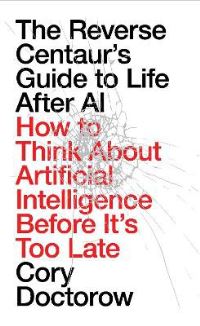
A provocative guide to what's good, bad, and (profoundly) stupid about AI, by the bestselling author of Enshittification.
-
£20.00
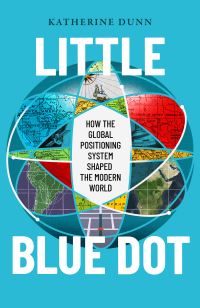
In this thrilling and utterly unique work of narrative non-fiction, Katherine Dunn explores the acute vulnerability of the GPS satellite system – in a book that lifts the lid on the invisible connections of the globe, from the space race to the phone in our pockets
-
£12.99
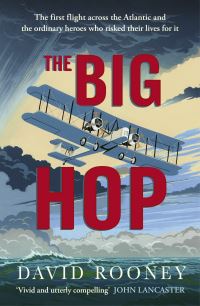
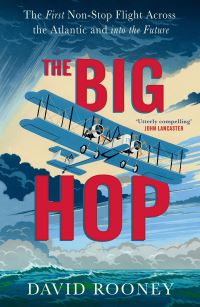
Newfoundland, 1919. Buffeted by winds, an unwieldy aircraft – made mainly from wood and stiff linen – struggled to take off from the North American island’s rocky slopes. Cramped side by side in its open cockpit were two men, freezing cold and barely able to move but resolute. They had a dream: to be the first in human history to fly, non-stop, across the Atlantic Ocean. But there were three other teams competing against them, and as the waves raged a few miles below, memories of wartime crashes resurfaced. Mining letters, diaries and evocative unpublished photographs, David Rooney’s deeply researched account of the audacious contest shows how it was the airmen’s thrilling wartime experiences that ultimately led them to the ‘Big Hop’, and brought old friends together for one more daring adventure.
-
£12.99
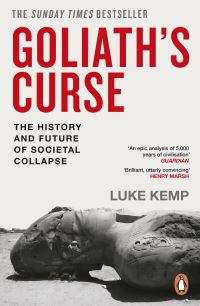
A new history of humanity told through the lens of collapse from Neanderthals to AI, and what it means for our uncertain future.
-
£10.99
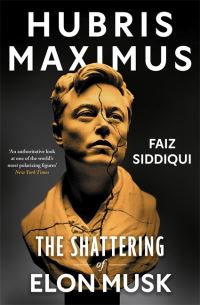
Once heralded as a modern-day Edison, Elon Musk has taken up a new role in public consciousness, with his growing desire to both transform global politics and engage in online arguments. What happened? In six short years, Musk turned Tesla into the world’s most valuable automaker and cast himself as a saviour of humanity, an altruist whose fortune would stop climate change and colonize Mars. Now he is the most polarizing and perpetually distracted CEO on the planet. ‘Hubris Maximus’ provides a gripping, detailed portrait of the billionaire’s rapid ascent and his spectacular public implosion.
-
£12.99
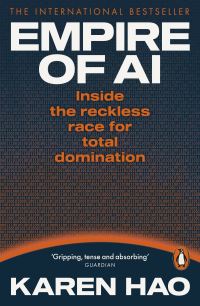
When long-time AI expert and journalist Karen Hao first began covering OpenAI in 2019, she thought they were the good guys. Founded as a non-profit with safety enshrined as its core mission, it was meant, its leader Sam Altman told us, to act as a check against more purely market forces. But the core truth of this massively disruptive sector is that it requires an unprecedented amount of proprietary resources: the ‘compute’ power of scarce high-end chips, the sheer volume of data that needs to be amassed at scale, the humans on the ground ‘cleaning it up’ for sweatshop wages throughout the Global South, and a truly alarming spike in the need for energy and water underlying everything. In this book, Hao recounts the meteoric rise of OpenAI and shows us the sinister impact that this industry is having on society.
-
£22.00
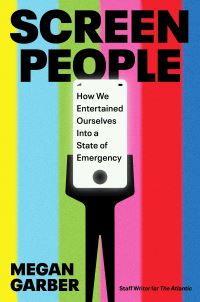
‘Screen People’ is a deep dive into what happens when we cede our reality to spectacle. Megan Garber explains how the internet-inflected culture of the present moment conditions us, every day, to see each other less as people than as characters in an ongoing show, and how some of our most chronic and harmful social conditions – loneliness, depression, mistrust, misinformation, cynicism – stem from our demand for diversion. In ten chapters, each themed around an element of stagecraft, Garber builds toward an argument as urgent as it is ironic: our fun is quickly becoming our emergency. And we can’t understand our politics without first understanding our culture. Part critical investigation, part manifesto, part fan’s diary, this book will be an eye-opening journey into the cultural underbelly of our present malaise.
-
£25.00
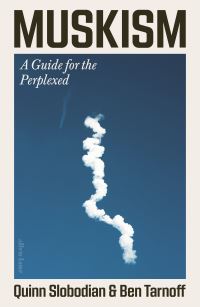
Who on earth is Elon Musk and what is he doing? Is he a hero, a villain, or does he swing constantly between those two poles? According to the constant media gush driven by his every act and pronouncement, Musk is best understood in personal terms. This book argues differently. Rather than seeing Musk as an individual, it sees him as an avatar of something called Muskism: a playbook for our new postliberal age. It’s not that Musk himself holds a coherent set of beliefs; you could say his life is one long improvisation. And he’s certainly never used the word Muskism – just as, a century ago, Henry Ford never used Fordism to define his own postliberal modernity. In exploring the forces that have shaped Musk, from South Africa to Silicon Valley, Space X to DOGE, Quinn Slobodian and Ben Tarnoff outline the motifs and practices that have come to dominate our own crisis-ridden world.
-
£25.00
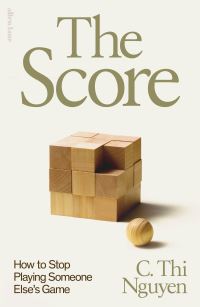
Scoring systems are everywhere. They underpin our daily lives – from social media to education and health – they have become pervasive and increasingly dangerous, warping our desires and outsourcing our values to external institutions. Scores are instructional manuals for behaviour. Instead of encouraging us to be more playful, to take pleasure in the journey of striving towards a goal, institutions weaponize scoring to impose their own interests. Philosopher C. Thi Nguyen shows us how games and their scoring systems, such as likes on social media or university rankings, have fundamentally changed our value systems, prioritising what can be measured and monetized over what is truly meaningful to us. In this love-letter to the immersive and profound power of games, Nguyen charts a way we might be able to break free from these constraints to lead more creative and joyful lives.
-
£12.99
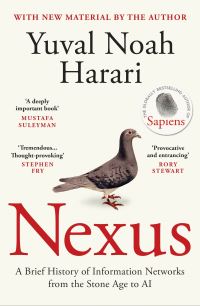
For the last 100,000 years, humans have accumulated enormous power. But despite all our discoveries, inventions and conquests, we now find ourselves in an existential crisis. The world is on the verge of ecological collapse. Misinformation abounds. And we are rushing headlong into the age of AI – a new information network that threatens to annihilate us. If we are so wise, why are we so self-destructive? ‘Nexus’ considers how the flow of information has shaped us, and our world. Taking us from the Stone Age through the Bible, early modern witch-hunts, Stalinism, Nazism and the resurgence of populism today, Yuval Noah Harari asks us to consider the complex relationship between information and truth, bureaucracy and mythology, wisdom and power. He explores how different societies and political systems have wielded information to achieve their goals, for good and ill.
-
£22.00
Newfoundland, 1919. Buffeted by winds, an unwieldy aircraft – made mainly from wood and stiff linen – struggled to take off from the North American island’s rocky slopes. Cramped side by side in its open cockpit were two men, freezing cold and barely able to move but resolute. They had a dream: to be the first in human history to fly, non-stop, across the Atlantic Ocean. But there were three other teams competing against them, and as the waves raged a few miles below, memories of wartime crashes resurfaced. Mining letters, diaries and evocative unpublished photographs, David Rooney’s deeply researched account of the audacious contest shows how it was the airmen’s thrilling wartime experiences that ultimately led them to the ‘Big Hop’, and brought old friends together for one more daring adventure.