Goliath’s Curse
£25.00A new history of humanity told through the lens of collapse, from Neanderthals to AI, and what it means for our uncertain future.

Showing 1–12 of 55 resultsSorted by latest
A new history of humanity told through the lens of collapse, from Neanderthals to AI, and what it means for our uncertain future.
A superbly written work of narrative non-fiction by an exciting new talent, The Anti-Catastrophe League is a brilliant study of the people and their teams who are trying to save the world.
Newfoundland, 1919. Buffeted by winds, an unwieldy aircraft – made mainly from wood and stiff linen – struggled to take off from the North American island’s rocky slopes. Cramped side by side in its open cockpit were two men, freezing cold and barely able to move but resolute. They had a dream: to be the first in human history to fly, non-stop, across the Atlantic Ocean. But there were three other teams competing against them, and as the waves raged a few miles below, memories of wartime crashes resurfaced. Mining letters, diaries and evocative unpublished photographs, David Rooney’s deeply researched account of the audacious contest shows how it was the airmen’s thrilling wartime experiences that ultimately led them to the ‘Big Hop’, and brought old friends together for one more daring adventure.
What if climate change isn’t an environmental challenge, but an energy challenge? In this visionary book, Dr Tim Gregory urges us to rethink the path to net zero. He argues that the solution to climate change lies not simply in replacing fossil fuels with renewables, but in fully embracing another energy source that emits zero carbon dioxide: nuclear power. Gregory dismantles the conventional wisdom that renewables are completely ‘green’ and ‘sustainable’, and exposes the limitations of wind and solar power, highlighting their unreliability and hidden fossil fuel dependency. He debunks myths surrounding nuclear waste and radiation, demonstrating that nuclear power is not only efficient, safe, and potent, but the most environmentally responsible way to harvest energy.
When longtime AI expert and journalist Karen Hao first began covering OpenAI in 2019, she thought they were the good guys. Founded as a nonprofit with safety enshrined as its core mission, it was meant, its leader Sam Altman told us, to act as a check against more purely market forces. But the core truth of this massively disruptive sector is that it requires an unprecedented amount of proprietary resources: the ‘compute’ power of scarce high-end chips, the sheer volume of data that needs to be amassed at scale, the humans on the ground ‘cleaning it up’ for sweatshop wages throughout the Global South, and a truly alarming spike in the need for energy and water underlying everything. In this book, Hao recounts the meteoric rise of OpenAI and shows us the sinister impact that this industry is having on society.
This is a riveting investigative account of Nvidia, the tech company that has exploded in value for its artificial intelligence computing hardware, and Jensen Huang, Nvidia’s charismatic, uncompromising CEO.
Selected as one of the ‘Best Summer Books of 2024: Business’ in the Financial Times
Instant New York Times and USA Today Bestseller.
Tech visionary and co-founder of Manas AI Reid Hoffman shares his unique insider’s perspective on an AI-powered future, making the case for its potential to unlock a world of possibilities.
“An essential companion.” – Fei-Fei Li
“An important read.” -Bill Gates
“Brilliant mind. Compassionate heart. Bold ideas?Read this book!” -Van Jones
“Refreshingly optimistic and welcome perspective.” – Ariana Huffington
“A fascinating and insightful book.” -Yuval Noah Harari
As taught at UPenn’s Wharton and Stanford.
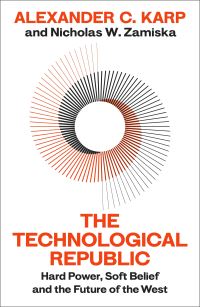
Silicon Valley has lost its way. From the founding of the American republic through much of the twentieth century, our most brilliant engineering minds and the democratic state collaborated to advance world-changing technologies. The partnership ensured the West’s dominant place in the geopolitical order. But that relationship has now eroded, with perilous repercussions. The modern incarnation of Silicon Valley turned its focus to the consumer market, including the construction of elaborate online advertising and social media platforms. The market rewarded shallow engagement with the potential of technology, as startup after startup catered to the whims of capitalist culture with little interest in constructing the technology that would address our most significant challenges.
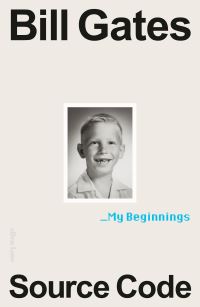
‘Source Code’ describes with unprecedented candour Bill Gates’ life from his childhood in Seattle to dropping out of Harvard aged 20 in 1975. Shortly afterwards he wrote, with Paul Allen, the programme which became the foundation of Microsoft and eventually for the entire software industry, changing the way the world works and lives. Gates writes about the centrality of family to his life – his encouraging grandmother and ambitious parents, about struggles to fit in, his rebelliousness, and the impact on him of the death of his closest friend. We see his extraordinary mind developing as a teenager, his excitement about the rapidly emerging technology of computing, and the earliest signs of his phenomenal business acumen. ‘Source Code’ is a warm, wise and revealing self-portrait of one of the most influential people of our age.
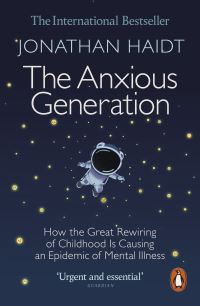
After more than a decade of stability or improvement, the mental health of adolescents in many countries around the world deteriorated suddenly in the early 2010s. Why have rates of depression, anxiety, self-harm and suicide risen so sharply, more than doubling in many cases? In this book, Social Psychologist Jonathan Haidt argues that the decline of free-play in childhood and the rise of smartphone usage among adolescents are the twin sources of increased mental distress among teenagers. Haidt delves into the latest psychological and biological research to show how, between 2010 and 2015, childhood and adolescence got rewired.
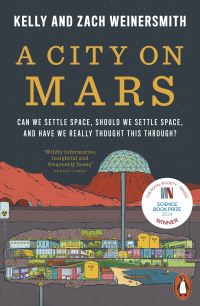
Earth is not well. The promise of starting life anew somewhere far, far away – no climate change, no war, no Twitter – beckons, and settling the stars finally seems within our grasp. Or is it? Authors Kelly and Zach Weinersmith set out to write the essential guide to a glorious future of space settlements, but after years of original research, and interviews with leading space scientists, engineers and legal experts, they aren’t so sure it’s a good idea. Space tech and space business are progressing fast, but we lack the deep knowledge needed to have space-kids, build space-farms and create space nations in a way that doesn’t spark conflict back home. In a world hurtling toward human expansion into space, ‘A City on Mars’ investigates whether the dream of new worlds won’t create a nightmare, both for settlers and the people they leave behind.
Notifications