Showing 25–36 of 338 resultsSorted by latest
-
£12.99
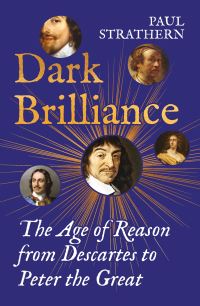
Between the end of the Renaissance and the start of the Enlightenment, Europe lived through an era known as the Age of Reason. This was a period which saw advances in areas such as art, science, philosophy, political theory and economics. However, all this was achieved against a background of extreme turbulence in the form of internal conflicts and international wars. While the ‘land of liberty’ was beginning to import slaves from Africa. Focusing on key characters from the seventeenth to the eighteenth centuries, including Caravaggio, Rembrandt, Newton, Descartes, Spinoza, Louis XIV and Charles I, ‘Dark Brilliance’ is a fascinating and wide-ranging history that explores the human costs of imposing progress and modernity.
-
£25.00
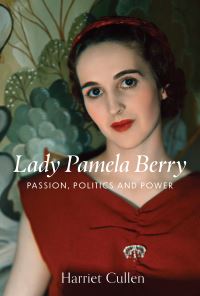
Pamela Berry was the daughter of the buccaneering and brilliant politician and lawyer, FE Smith, the first Earl of Birkenhead, and married the son of another self-made man, William Berry from South Wales, who became Viscount Camrose and the owner of a group of national newspapers, including the Daily Telegraph. She had an unusually glamorous and precocious childhood, spoiled by her adoring father, and much photographed by Cecil Beaton. In her prime she used her position as a newspaper proprietor’s wife to become the most famous political and press hostess of her generation, harnessing her beauty and wit to influence successive governments, and was accused of wielding ‘petticoat power’ during the Suez crisis. She had a decade-long affair with Malcolm Muggeridge, became a vigorous promoter of British fashion, dragging it out of the dowdy fifties, and in later life was active in the museum world.
-
£10.99
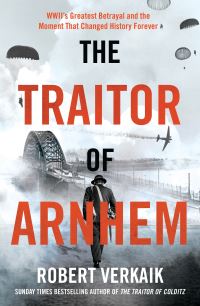
The end of the Second World War is in sight. Following the Western Allies’ overwhelming victory on D-Day, Churchill, Roosevelt and Stalin are all prepared to shape the future, and Operation Market Garden is Britain’s attempt to beat the Russians to Berlin and be the first to help craft the new world order. With 10,000 men dropped into Arnhem and another 20,000 in Grave, the British are set to secure the area and declare victory. However, Dutch resistance hero Christian Lindemans has other plans. Lindemans is determined to help the Germans gain the lead in the war and begins to dismantle the operation from within, betraying hundreds of Allied soldiers and changing the course of history forever. Drawn from unseen records, this is an epic story of secret missions, trust and treachery, bringing to light the murky story of one of the most influential spies of the 20th century.
-
£25.00
In this comprehensive account, David Commins narrates the full history of Saudi Arabia from oasis emirate to present-day attempts to leap to a post-petroleum economy. Moving through the ages, Commins traces how the Saud dynasty’s reliance on sectarianism, foreign expertise, and petroleum to stabilize power has unintentionally spawned secular and religious movements seeking accountability and justice. He incorporates the experiences of activists, women, religious minorities, Bedouin, and expatriate workers as the country transformed from subsistence agrarian life to urban consumer society. This is a perceptive portrait of Saudi Arabia’s complex and evolving story – and a country that is all too easily misunderstood.
-
£12.99
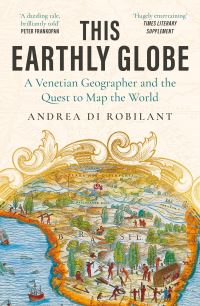
In the autumn of 1550, an anonymously authored volume containing a wealth of geographical information new to Europeans was published in Venice. This was closely followed by two further volumes that, when taken together, constituted the largest release of geographical data in history, and could well be considered the birth of modern geography. The editor of these volumes was a little-known public servant in the Venetian government, Giovambattista Ramusio. He gathered a vast array of both popular and closely guarded narratives, from the journals of Marco Polo to detailed reports from the Muslim scholar and diplomat Leo Africanus. Andrea di Robilant brings to life the man who used all his political skill, along with the help of conniving diplomats and spies, to democratise knowledge and show how the world was much larger than anyone previously imagined.
-
£10.99
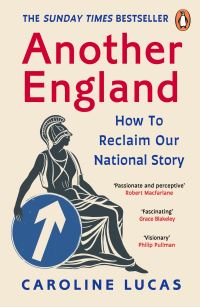
Who are the English? Today, the dominant story told about our national history solely serves the interests of the right. The only people who dare speak of ‘Englishness’ are cheerleaders for isolationism and imperial nostalgia. But there is another story, equally compelling, about who we are: about the English people’s radical inclusivity, their ancient commitment to the natural world, their long struggle to win rights for all. It puts the Chartists and the Levellers in their rightful places alongside Nelson and Churchill. It draws on the medieval writers and Romantic poets who emphasised the sanctity of the environment. And at its heart is England’s ancient multicultural heritage, embodied by the Black and Asian writers the curriculum neglects. Here, Caroline Lucas uses this alternative story to offer a progressive vision of what Englishness is and what it might be.
-
£12.99
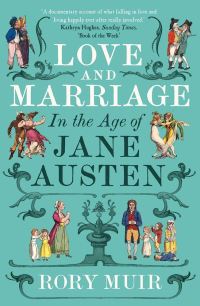
What happened when Jane Austen’s heroines and heroes were finally wed? Marriage is at the centre of Jane Austen’s novels. The pursuit of husbands and wives, advantageous matches, and, of course, love itself, motivate her characters and continue to fascinate readers today. But what were love and marriage like in reality for ladies and gentlemen in Regency England? Rory Muir uncovers the excitements and disappointments of courtship and the pains and pleasures of marriage, drawing on fascinating first-hand accounts, as well as novels of the period.
-
£25.00
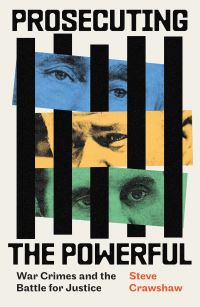
Could we ever see Vladimir Putin in the dock for his crimes? What about a Western ally like Benjamin Netanyahu? Putting a country’s leader on trial once seemed unimaginable. But as Steve Crawshaw describes in ‘Prosecuting the Powerful’ – a blend of powerful eyewitness reporting and gripping history – the possibilities of justice have been transformed. Crawshaw includes recent stories from the front lines of justice in Ukraine, Israel/Palestine and at The Hague, as well as his earlier encounters with war criminals like Slobodan Milosevic.
-
£22.00
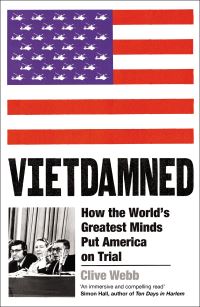
Guilty – the conclusion of many trials. But this verdict was unusual, delivered by a jury of the greatest minds of the twentieth century, among them Jean-Paul Sartre and Simone de Beauvoir, James Baldwin and Stokely Carmichael; and in the chair, legendary philosopher-mathematician Bertrand Russell. The defendant was unusual, too – the United States government. Award-winning historian Clive Webb lays bare the extraordinary true story of the 1967 Russell Tribunal and its attempt to hold the US government to account for atrocities in the Vietnam War. The revelations that came out of the tribunal shocked the world. Vietdamned is an eye-opening account of the anti-war movement, of cover-ups and abuses of government, and of the power (and limits) of celebrity.
-
£25.00
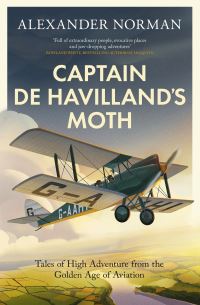
The first flight of the DH60 Moth marked the beginning of a craze for flying that gripped a war-weary world for more than a decade. The most successful aircraft of its era, it was the one in which people had the greatest adventures. And it was the Moth which showed that flying was safe, practical and, potentially, open to all. True, many early Mothists were uber-privileged. The Prince of Wales had one, as did his brother, the Duke of Gloucester. Beryl Markham, who had affairs with both, learned to fly in a Moth. Other enthusiasts included Philip Sassoon, one of the richest commoners in the land. In this story, as entertaining as it is extraordinary, the reader is introduced to an astonishing cast of characters whose courage, determination and eccentricity is shown in the light of what it is actually like to fly these remarkable aeroplanes.
-
£25.00
The Dead Sea is a place of many contradictions. Hot springs around the lake are famed for their healing properties, though its own waters are deadly to most lifeforms – even so, civilizations have built ancient cities and hilltop fortresses around its shores for centuries. The protagonists in its story are not only Jews and Arabs, but also Greeks, Nabataeans, Romans, Crusaders and Mamluks. Today it has become a tourist hotspot, but its drying basin is increasingly under threat. In this panoramic account, Nir Arielli explores the history of the Dead Sea.
-
£10.99
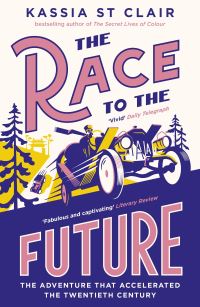
The world of 1907 is poised between the old and the new: communist regimes will replace imperial ones in China and Russia; the telegraph is transforming modern communication and the car will soon displace the horse. Kassia St Clair traces the fascinating stories of two interlocking races – setting the derring-do (and sometimes cheating) of one of the world’s first car races against the backdrop of a larger geopolitical and technological rush to the future, as the rivalry grows between countries and empires, building up to the cataclysmic event that changed everything – the First World War. ‘The Race to the Future’ is the incredible true story of the quest against the odds that shaped the world we live in today.