Showing 1–16 of 51 resultsSorted by latest
-
£25.00
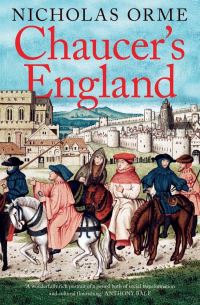
Who were Chaucer’s thirty-three pilgrims, and why were they heading to Canterbury? What do they and their tales tell us about medieval England as a place, and about the daily lives of its people? Leading historian Nicholas Orme brings literature and history together to answer this question, using the ‘Canterbury Tales’ and the other great writings of Chaucer’s day. In ten chapters, he explains what people thought: about time and space, religion and the social system. He shows their wide degree of literacy and how they spent their leisure. He takes us through the politics of the day, the crusades, and the lifestyles of the nobility, clergy, townsfolk and country dwellers, along with the landscapes they lived in. This is an intimate and intriguing guide to the world which produced some of the greatest poetry in the English language, re-creating Chaucer’s England in all its richness and variety.
-
£14.99
A bold new account of Europe’s plight as it faces political fracture, economic stagnation and external challenges from the U.S., China and Russia. Drawing on unpublished archives and interviews with over 150 leading figures, David Marsh investigates Europe’s present crisis, from the march of populism, Franco-German malaise, and the breakdown of relations with Putin’s Russia. Fault lines are emerging in the monetary union, while the fight against climate change has impacted growth. Facing its gravest test since WWII, Europe must find fresh reserves of resilience – and seek out renewed international partnerships to ensure success.
-
£25.00
For the last 20 years, Putin’s Russia has weaponised its vast resources of oil and gas, trying to use them to dominate Ukraine and, later, with growing audacity, challenge NATO itself. But this is far from the first time this tactic has been used. Over the last 150 years, access to oil and gas has repeatedly been used as a tool to gain an advantage. Looking at the global picture, including Vietnam, India, and Egypt, Guy Laron charts the connection between oil, gas, and political power from the First World War through the Cold War to the crises of today. He shows how political actors leveraged their power through key chokepoints: production sites, pipelines, and even refineries. Whilst at the same time, companies lobbied states to block rivals and eliminate competition. This has been a high-stakes game over the controlling heights of the world economy that continues until this very day.
-
£35.00
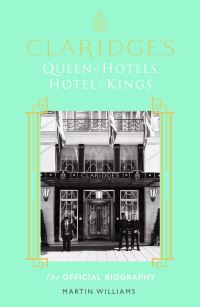
There is no hotel in the world quite like Claridge’s. A byword for luxury, exclusivity and grandeur, it has, from its inception in 1812, showcased the finest traditions of British hospitality while continually demonstrating a flair for innovation and renewal. For generations of crowned heads, power brokers and celebrities, it has been the best – indeed, the only – place to stay in London. Few would dispute its right to be considered the Queen of Hotels and Hotel of Kings. In this comprehensive, lively and superbly readable account, Martin Williams invites readers to check in at the world’s most storied hotel and immerse themselves in the colourful history of a London landmark. He evokes the glamour, excitement and drama of each chapter in Claridge’s unfolding story while taking us behind the scenes to explain how and why it has become, for all who know and love it, both a legend and a way of life.
-
£20.00
An enthralling anthology of poems that were lost to history but have been rediscovered through archaeology, accompanied by fascinating stories of how they survived.
-
£22.00
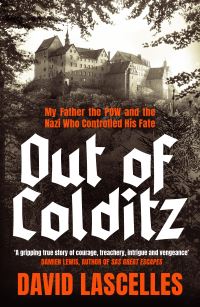
The grandson of a King. The son of the Viceroy of India. Churchill’s nephew. Held captive at the notorious Colditz prisoner of war camp, they were the Prominente: scions of the British establishment, and pawns in the hands of Nazi leaders. As a German defeat loomed, the SS head of the POW camps Gottlob Berger made a pivotal decision: he would disobey direct orders and spare their lives. ‘Please remember what I have done for you when the war ends,’ he asked. This Nazi overseer, who would later be convicted of war crimes, held their future in his hands. Eighty years later, David Lascelles – the son of George, Earl of Harewood, who would never have been born if his father had been executed – traces the Prominentes’ extraordinary journey and wonders who Gottlob Berger was and what motivated his fateful decision: compassion? Remorse? Or self-interest?
-
£11.99
A thrilling history of the bloody climax to two centuries of crusading in the Holy Land
-
£11.99
The story of the medieval world’s most extraordinary organisations, the Assassins and the Templars. In this engaging account, Steve Tibble traces the history of these two groups from their origins to their ultimate destruction. He shows how, outnumbered and surrounded, they survived only by perfecting ‘the promise of death’, either in the form of a Templar charge or an Assassin’s dagger. Death, for themselves or their enemies, was at the core of these extraordinary organisations. Their fanaticism changed the medieval world – and, even up to the present day, in video games and countless conspiracy theories, they have become endlessly conjoined in myth and memory.
-
£15.99
When the Sky Falls tells the story of the global cultural history of shooting stars from the prehistoric to the present day, exploring beliefs, superstitions, and the relationship between humanity and meteors throughout time.
-
£45.00
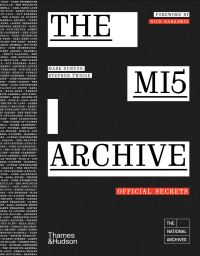
The definitive visual record of the clandestine work carried out by the British Security Service, MI5, from its origins to the modern day. Regnum Defende: Defend the Realm. MI5, the intelligence agency responsible for protecting the UK against threats to national security, has acted under this motto since it was founded in 1909. This has involved the management of secrets over the decades: secrets for which vast swathes of information are now declassified. Detailing uprisings and executions, double agents and femmes fatales from across the globe, The MI5 Archive presents a window into the world of spycraft that has kept British democracy safe. Rummage through documents received anonymously to the shadowy PO Box 500, London, W2. Work out what has value and how to decode it, with experts at your shoulder: authors and archivists Mark Dunton and Stephen Twigge have had unparalleled access. Within you will find source material on the Sie
-
£30.00
Reds tells the global history of communism, going beyond the turmoil of the 20th century, and exploring communist ideas, movements, and regimes
-
£25.00
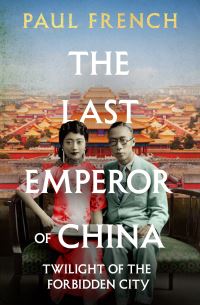
A major new account of China’s Last Emperor – the spellbinding story now told in full for the first time
-
£25.00
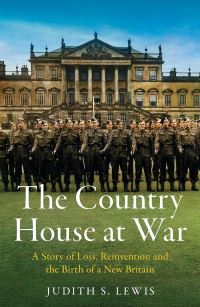
The story of how English country houses were repurposed during the Second World War, told through the lives of those who lived and worked in themIn the Second World War, country houses across England were requisitioned by the government for the war effort. These homes opened their doors to evacuated children, were transformed into hospitals, and played host to training camps for the armed forces. The care of the estates was often left to young women and the elderly, who had to completely change the running of their homes to accommodate essential wartime activities.In this fascinating history, Judith S. Lewis explores the lives of country houses during the Second World War. Some homes were requisitioned for intelligence operations, like Audley End, which was used as the headquarters of the Polish Section of SOE, whereas others, like West Wycombe, were used to house artefacts of national importance. Examining the long legacy of the war, L
-
£25.00
An authoritative life of Harold II, the king who died at the Battle of Hastings in 1066Harold Godwinson is renowned as the king who lost England to the invading William the Conqueror in 1066. Infamous legends, invented by the Victorians, surround his life, corrupting our idea of him. But who was the real Harold II?In this major new biography, Tom Licence reveals the truth behind the nineteenth-century myths. Moving from Harold’s childhood and his adventures as an earl in Edward the Confessor’s court, to his nine-month reign and the bloody battles at its end, Licence rewrites the story of his life at every turn. We see Harold’s rupture with his family, his cultivation of alliances, and his political interventions at home and overseas. He seized the throne as a skilled political leader who was the prime candidate to unite a realm divided by rebellion. And, when war came to English shores, Harold managed the conflict as well as any command
-
£14.99
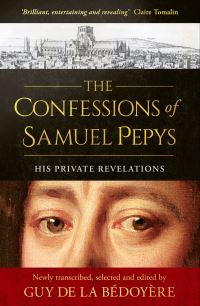
A collection of the most personal aspects of Samuel Pepys’ diaries, to celebrate the 200th anniversary of their publication.
-
£30.00
For thousands of years, humans have looked to the sky to make sense of the world. Long before astronomy became a formal discipline, observations of the Sun, Moon, planets and stars shaped calendars, navigation and systems of belief across many cultures. This book traces this global history, examining how societies developed the concepts and methods that allowed humanity to interpret the cosmos. It book uses infographics and maps to show how people throughout history have understood the universe and to consider what the future of space exploration might hold.