“A history of the world in 47 borders” has been added to your basket.
View basket
Showing all 5 resultsSorted by latest
-
£25.00
For over 10,000 years, we humans have been busy altering our environment and embracing ‘progress’, evolving seamlessly from hunter gatherers to the modern urban sophisticates we see ourselves as today. But what are the ideas and inventions that enabled humanity to become, by the early 21st century, a majority urban species for the first time? How did the essential infrastructure of modern life – the innovations that we barely even notice, but without which our world would fall apart – actually come to be? With his characteristic wit and boundless curiosity, Jonn Elledge invites us to join him on a fascinating and often surprising tour of the ideas and technologies that made modernity possible. From elevators to electric lighting, parks to pedestrian crossings, he guides us through the history of civilisation itself.
-
£30.00
The acclaimed historian of Russia offers his compelling analysis of a dramatic turning point in recent Russian history: the August Coup of 1991.
-
£20.00
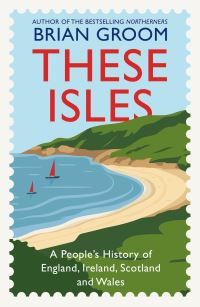
An inventive new look at the entwined histories of Britain and Ireland’s nations – and the people who have called them home.
-
£11.99
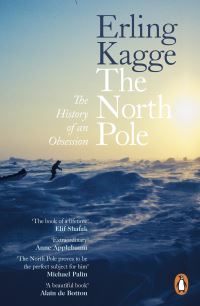
The epic adventure story of humanity’s obsession with the North Pole, from Norwegian explorer Erling Kagge who travelled there in 1990. ‘The North Pole’ is an adventure story, a book about enacting hidden human dreams, about difficult fathers and their difficult sons, and a psychological record of what it means to keep putting one foot in front of the other in the face of adversity. It is for anyone who’s gazed out at the horizon – and wondered what happens if you just keep walking.
-
£10.99
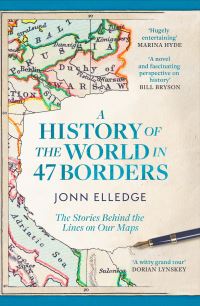
People have been drawing lines on maps for as long as there have been maps to draw on. Sometimes rooted in physical geography, sometimes entirely arbitrary, these lines might often have looked very different if a war or treaty or the decisions of a handful of tired Europeans had gone a different way. By telling the stories of these borders, we can learn a lot about how political identities are shaped, why the world looks the way it does – and about human folly. From the Roman attempts to define the boundaries of civilisation, to the secret British-French agreement to carve up the Ottoman Empire during the First World War, to the reason why landlocked Bolivia still maintains a navy, this is a fascinating, witty and surprising look at the history of the world told through its borders.
 A history of the world in 47 borders