These Isles
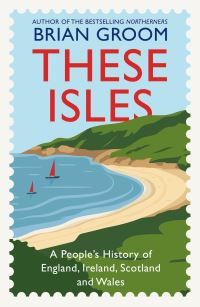
£20.00An inventive new look at the entwined histories of Britain and Ireland’s nations – and the people who have called them home.
 The fragile Earth
Available on backorder (5-7 days)
A history of the world in 47 borders
Available on backorder (5-7 days)
Subtotal: £37.99
Showing 1–12 of 19 resultsSorted by latest
An inventive new look at the entwined histories of Britain and Ireland’s nations – and the people who have called them home.
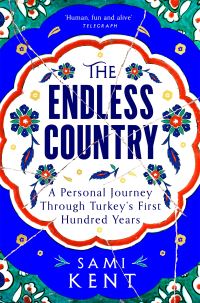
An intimate, riveting portrait of modern Turkey, combining memoir, politics and history.
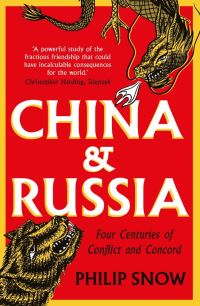
Here is a compelling, expansive history of the relationship between China and Russia, from the seventeenth century to the present Russia and China, the largest and most populous countries in the world, respectively, have maintained a delicate relationship for four centuries.
People have been drawing lines on maps for as long as there have been maps to draw on. Sometimes rooted in physical geography, sometimes entirely arbitrary, these lines might often have looked very different if a war or treaty or the decisions of a handful of tired Europeans had gone a different way. By telling the stories of these borders, we can learn a lot about how political identities are shaped, why the world looks the way it does – and about human folly. From the Roman attempts to define the boundaries of civilisation, to the secret British-French agreement to carve up the Ottoman Empire during the First World War, to the reason why landlocked Bolivia still maintains a navy, this is a fascinating, witty and surprising look at the history of the world told through its borders.
Throughout recorded human time, few places on Earth have inspired as much fascination as the North Pole. This is an otherworldly place with no latitude and no longitude, a place where the sun rises and stays aloft for six months before setting, plunging the expanse of ice and water into darkness for half a year. Long before we ever journeyed to the North Pole, human beings have wondered what the northernmost point of our planet might be like. It became densely mythologised by writers, thinkers, historians and philosophers across civilisations. Perhaps it was the actual garden of Eden? Or the sunny land of the Hyperboreans, as Herodotus surmised? Only recently did we get to the North Pole – fending off scurvy, polar bears and frostbite – to report on its strange wonders.
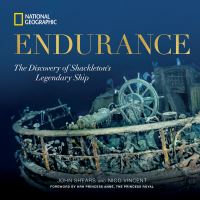
In March 2022, an international polar expedition team made an astonishing find: the wreck of Ernest Shackleton’s legendary Endurance, lost in 1915 after being crushed by ice and then swallowed by the Weddell Sea. The harrowing story of Shackleton’s survival and rescue of all 27 men aboard is well known, but the ship has lain unseen for a century, 10,000 feet underwater – until now. The vessel remains incredibly intact, as crystal-clear photography and digital scans from the expedition reveal.
People have been drawing lines on maps for as long as there have been maps to draw on. Sometimes rooted in physical geography, sometimes entirely arbitrary, these lines might often have looked very different if a war or treaty or the decisions of a handful of tired Europeans had gone a different way. By telling the stories of these borders, we can learn a lot about how political identities are shaped, why the world looks the way it does – and about human folly. From the Roman attempts to define the boundaries of civilisation, to the secret British-French agreement to carve up the Ottoman Empire during the First World War, to the reason why landlocked Bolivia still maintains a navy, this is a fascinating, witty and surprising look at the history of the world told through its borders.

A funny, warm and timely meditation on identity and belonging, following the scenic route along the England-Wales border: Britain’s deepest faultline.
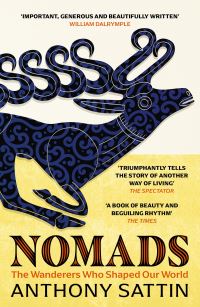
Moving across millennia, ‘Nomads’ explores the transformative and often bloody relationship between settled and mobile societies. Often overlooked in history, the story of the umbilical connections between these two very different ways of living presents a radical new view of human civilisation. From the Neolithic revolution to the 21st century via the rise and fall of the Roman Empire, the great nomadic empires of the Arabs and Mongols, the Mughals and the development of the Silk Road, nomads have been a perpetual counterbalance to the empires created by the power of human cities. Exploring evolutionary biology and psychology of restlessness that makes us human, Sattin’s sweeping history charts the power of nomadism from before the Bible, to its decline in the present day.
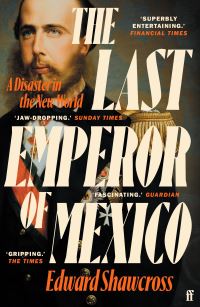
Here is history’s judgement on the events surrounding the ill-fated reign of Maximilian of Mexico, the young Austrian archduke who in 1864 crossed the Atlantic to assume a faraway throne. He had been convinced to do so by a duplicitous Napoleon III. Keen to spread his own interests abroad, the French emperor promised Maximilian a hero’s welcome, which he would ensure with his own mighty military support. Instead, Maximilian walked into a bloody guerrilla war – and with a headful of impractical ideals and a penchant for pomp and butterflies, the so-called new emperor was singularly unequipped for the task. ‘The Last Emperor of Mexico’ is the vivid history of this barely known, barely believable episode – a bloody tragedy of operatic proportions, and a vital debacle, the effects of which would be felt into the twentieth century and beyond.
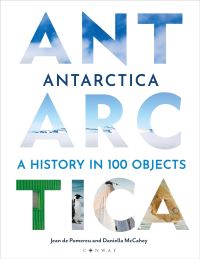
This powerfully relevant work tells the history of Antarctica through 100 varied and fascinating objects drawn from collections around the world. Retracing the history of Antarctica through 100 varied and fascinating objects drawn from collections across the world, this book is published to coincide with the 250th anniversary of the first crossing into the Antarctic Circle by James Cook aboard Resolution, on 17th January, 1773.
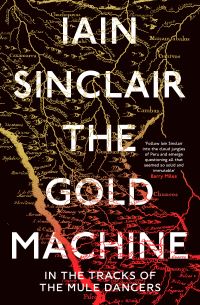 The fragile Earth
Available on backorder (5-7 days)
A history of the world in 47 borders
Available on backorder (5-7 days)
Subtotal: £37.99
Notifications