Showing 1–16 of 108 resultsSorted by latest
-
£30.00
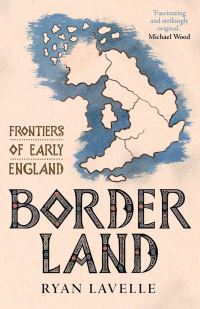
The earliest written record of a political boundary in England dates from around 880, when King Alfred and Danish warlord Guthrum formalised a legal treaty to divide lands between them. How did Alfred and his descendants think about the borders of ‘English’ territory? And what can these markers tell us about the English kingdom itself? Ryan Lavelle takes readers on a journey around the borders and edges of early medieval England. From an oak tree used as a marker by St Augustine, through Alfred’s famous treaty, to 1066 and beyond, Lavelle explores how land was divided and the ways in which boundaries were perceived.
-
£25.00
We are a nation of villages, from the rural, picturesque hamlets of Castle Combe and Clovelly, to the tight-knit urban communities of Leeds’ terraces and Cricklewood’s backyards. Villages link us with our past and are the stuff of art, poetry, folklore and song – and for many they offer a place of community and sanctuary. And yet Britain today is one of the most centralised political systems in Europe, with decisions on local matters made by national government and local communities feeling increasingly disempowered and disconnected. In ‘The Village in Britain’, Simon Jenkins, author and former chair of the National Trust, delves into the past, present and future of this powerful national symbol, and argues that we need to find a way of embedding the qualities of the village into our modern lives.
-
£12.99
This revelatory history explores the ancient roots of Muslim Europe, tracing their journey through the Mediterranean. Our odyssey begins in the little-known Sufi lodges in Cyprus, where Muslims arrived in 647AD. From there, we travel through the continent – visiting places such as Sicily, Malta, Portugal and Spain – encountering red-haired European Sultans and Arabic-speaking Christian Kings. We meet forgotten Muslim pioneers, such as Abbas Ibn Firnas who gave us flight and Ibn Sina who gave us modern medicine. We see the Islam-inspired mudejar art of fourteenth-century Christians in Spain, and how such cross fertilisation birthed Europe’s ‘Renaissance’. We discover the long-forgotten tombs of European Muslims who knew the Prophet Muhammad, and the author – award-winning writer Tharik Hussain – becomes the first Muslim in over 900 years to pray inside the remains of a nameless Sicilian Mosque.
-
£14.99
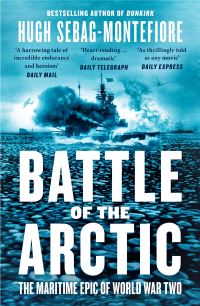
‘As thrillingly told as any movie’ DAILY EXPRESS
‘Heart-rending … dramatic’ DAILY TELEGRAPH
’A harrowing tale of incredible endurance and heroism’ DAILY MAIL
-
£12.99
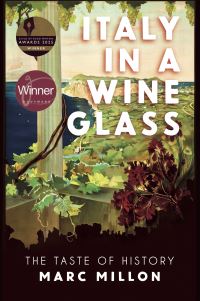
A lively, page-turning history of Italy and its wines, from the Roman Empire to climate change.
-
£16.99
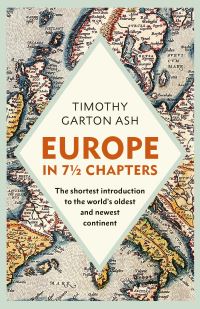
It has never been more important to understand the rich and fascinating story of the European continent. As the old global order crumbles under the double shock of Donald Trump and Vladimir Putin, everyone is wondering whether Europe can step into the breach. But what is this Europe? Drawing on a lifetime of studying, travelling in and writing about Europe, Timothy Garton Ash tells the continent’s story in a hundred pages. Brilliantly readable, witty, accessible yet profound,’ Europe in 7 1/2 Chapters’ takes you on an exhilarating journey through geography, history and culture – from wars and revolutions to food and football – to show how Europe came to be as it is today: more united than ever, and more divided. Can it still flourish in this dangerous new world and even shape it for the better?
-
£25.00
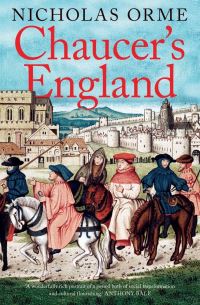
Who were Chaucer’s thirty-three pilgrims, and why were they heading to Canterbury? What do they and their tales tell us about medieval England as a place, and about the daily lives of its people? Leading historian Nicholas Orme brings literature and history together to answer this question, using the ‘Canterbury Tales’ and the other great writings of Chaucer’s day. In ten chapters, he explains what people thought: about time and space, religion and the social system. He shows their wide degree of literacy and how they spent their leisure. He takes us through the politics of the day, the crusades, and the lifestyles of the nobility, clergy, townsfolk and country dwellers, along with the landscapes they lived in. This is an intimate and intriguing guide to the world which produced some of the greatest poetry in the English language, re-creating Chaucer’s England in all its richness and variety.
-
£14.99
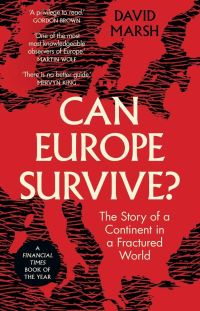
A bold new account of Europe’s plight as it faces political fracture, economic stagnation and external challenges from the U.S., China and Russia. Drawing on unpublished archives and interviews with over 150 leading figures, David Marsh investigates Europe’s present crisis, from the march of populism, Franco-German malaise, and the breakdown of relations with Putin’s Russia. Fault lines are emerging in the monetary union, while the fight against climate change has impacted growth. Facing its gravest test since WWII, Europe must find fresh reserves of resilience – and seek out renewed international partnerships to ensure success.
-
£40.00
In 1804, immediately after his coronation as Emperor, Napoleon created the Marshalate, the supreme martial rank of the empire. Over the next decade, he elevated to it some of his most outstanding generals, who played leading roles in his extraordinary campaigns – including the brave Ney, the flamboyant Murat, the vain Massena, the iron Davout and the logistics master Berthier. Some of them were son of aristocrats, others of innkeepers or coopers, but all carried the baton of a Marshal of France. Andrew Roberts masterfully captures their personalities and ambitions, capacities and rivalries. But unlike Lincoln, who forged a team of rivals, Napoleon created a nest of vipers whose lust for glory descended into destructive competitiveness and mutual recrimination. For all his inspiring qualities as a leader, he manipulated and controlled those whose loyalty he most needed to survive, and ultimately only two of them rode beside him at Waterl
-
£15.99
Great British Architecture brings together the stories behind 86 great buildings from across the nation, revealing their quiet charm, deep heritage and dedicated craftsmanship.
-
£12.99
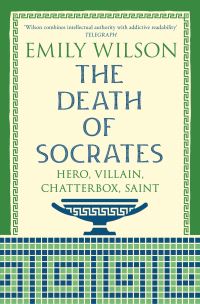
Socrates is revered as a man who spoke truth to power. Yet his death in 399 BC was the first time in recorded history that a democratic government condemned a person to death for their beliefs. His death was a potent symbol of free speech, and Socrates’ fate has haunted Western thought ever since – a guiding influence on Plato, John Stuart Mills, Nietzsche and Martin Luther King. In this incisive survey of philosophy and politics, renowned classicist and translator Emily Wilson unravels ancient philosophy’s most enduring – and hardest – questions: why did ancient Athens execute its leading intellectual? How do democracies deal with dissent? And can our own society allow for total freedom of speech and thought?
-
£10.99
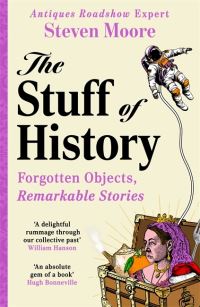
Too often history focuses on the stories of kings, those (often men) who were given the credit, yet what fascinates most are the stories of those who have passed through the cracks of history, people like: Giuliana Coen, the greatest fashion designer you’ve never heard of, the women at Playtex and how their out-of-the-box thinking and incredible skill played a major role in getting the first man on the Moon, and the tale of the unknown war hero Tommy Brown, who helped the code breakers of Bletchley with his extraordinary act of bravery. But it’s not just the people, as the book also champions the curious back stories to everyday objects – the humble fork, the china cup, and the real history of tea to name but a few. This book presents a thoughtful and often funny, curated selection of fascinating forgotten histories that give insight into some of the Western world’s most important cultural moments.
-
£26.00
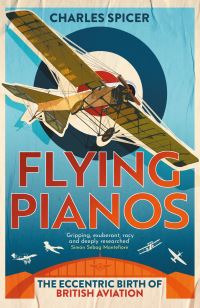
Inside the miraculous birth of British aviation
-
£25.00
This work combines forensic new research with vivid and compelling narrative to provide an entirely new history of Britain that for the first time clarifies the true significance of the transatlantic trade in enslaved Africans to Britain’s development as a modern nation. Between the birth of the trade in the 16th century and its abolition in 1807, Britain derived vast wealth from the traffic in Africans from West Africa to the Americas – but until now the people who conceived, designed and engineered that trade have been largely unknown to us. As a result, it has been impossible to trace where the wealth derived from slavery went, what purposes it was put to, who it empowered and what it enabled.
-
£25.00
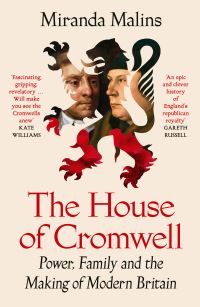
'Fascinating, gripping, revelatory' KATE WILLIAMS
'An epic and clever history' GARETH RUSSELL
'I know no rival to this book in its presentation of a major dynasty in English history' DIARMAID MACCULLOCH
THOMAS MADE ENGLAND. OLIVER MADE BRITAIN.
-
£22.00
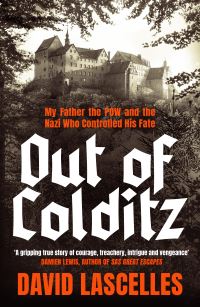
The grandson of a King. The son of the Viceroy of India. Churchill’s nephew. Held captive at the notorious Colditz prisoner of war camp, they were the Prominente: scions of the British establishment, and pawns in the hands of Nazi leaders. As a German defeat loomed, the SS head of the POW camps Gottlob Berger made a pivotal decision: he would disobey direct orders and spare their lives. ‘Please remember what I have done for you when the war ends,’ he asked. This Nazi overseer, who would later be convicted of war crimes, held their future in his hands. Eighty years later, David Lascelles – the son of George, Earl of Harewood, who would never have been born if his father had been executed – traces the Prominentes’ extraordinary journey and wonders who Gottlob Berger was and what motivated his fateful decision: compassion? Remorse? Or self-interest?