Superveloce
£12.99From the author of High Performance and Racing Through the Dark, the story of how Italy rose from the ashes of the Second World War to lead the world with its beautiful fast cars.

Showing 33–48 of 81 resultsSorted by latest
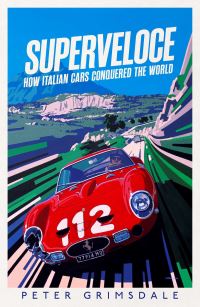
From the author of High Performance and Racing Through the Dark, the story of how Italy rose from the ashes of the Second World War to lead the world with its beautiful fast cars.

The history of Britain told through the stories of twenty-five notable buildings, from the Iron Age fortification of Maiden Castle in Dorset to the Gherkin.
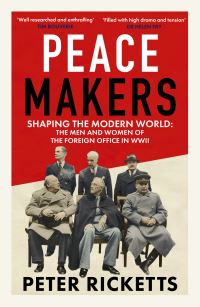
Combining vivid storytelling with fresh research, Peace Makers explores how Britain’s diplomats played a vital and unsung part in victory in WWII while also laying the foundations for post-war peace, and how the war transformed the Foreign Office, sweeping away the barriers which had kept women out of top jobs.
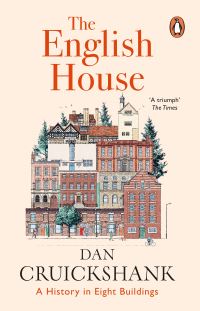
This is the story of the superbly elegant early 18th-century Pallant House in Chichester. It’s the story of 19 Princelet Street in Spitafields, built for a Huguenot silk-weaver, ultimately a synagogue. It’s also the story of – among others – a row of two-up, two-downs in Toxteth, a block of flats in London’s East End, and what Ideal Home’s magazine described in 1926 as Britain’s ‘first modern house’ – in Northampton. Together these buildings reveal the ways in which English homes have developed and changed over the past few centuries. At the same time, as Dan Cruickshank shows, they have much to tell us about the lives of their first occupants: their aspirations, their struggles, their place within society and relationship with their local community. ‘The English House’ blends architectural and social history to create a series of brilliantly observed portraits of fascinating buildings.
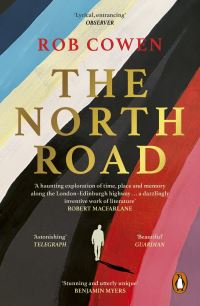
The A1. The Great North Road. A 400-mile multiplicity of ancient trackway, Roman road, pilgrim path, coach route and motorway that has run like a backbone through Britain for the last 2,000 years. In this genre-defying and profoundly personal book, Cowen follows this ghost road from beginning to end on a journey through history, place, people and time. Weaving his own histories and memories with the layered landscapes he moves through, this is the story of an age, of coming to terms with time past and time passing, and the roads that lead us to where we find ourselves.
For centuries, Mount Etna has sent lava to engulf the towns and villages, terraced fields, orchards, vineyards, and citrus groves that nestle across its slopes. But still it remains home to a quarter of Sicily’s population. Why? Because Etna has always rewarded her people after every eruption with a landscape of unparalleled fertility, richness and drama. In this book, Helena Attlee combines travel writing with history, mythology, geology, gastronomy and horticulture to tell a unique story of life in the shadow of Sicily’s most dangerous and alluring landmark.
From the Sunday Times number 1 bestselling royal biographer comes an intimate and revealing portrait of Elizabeth II – daughter, wife, mother and queen.
The First and Second World Wars were separated by a mere two decades, making the period 1914-1945 an unprecedentedly intense and violent era of history. But how did Britain develop its complex military strategy during these wars, and how were decisions made by those at the top? Robin Prior examines the influence politicians had on military operations, in the first history to assess both world wars together. Drawing uniquely on both military and political archives and previously unexamined sources Prior explores the fraught relationships between civilian and military leaders: from Lloyd George’s remarkably interventionist stance on military tactics during the First World War to Churchill’s near-constant arguments with American leaders during the Second.
The political Left in Britain rose out of the Industrial Revolution, as the working classes emerged as the leading force in the call for social change. Their contributions extended widely to political representation, the birth of the Labour Party and women’s suffrage, the autodidact tradition in adult education, and Britain’s literary culture. Throughout subsequent decades, the working classes remained central to the British radical tradition. Geoff Andrews traces the history of the Left and the Labour Party through the ideas of leading thinkers, writers, educationalists, trade unionists, and politicians. Ranging from the Workers Educational Association to the General Strike and the Women’s Liberation Movement, Andrews uncovers the voices of key figures.
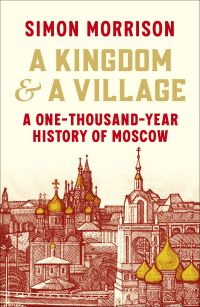
The city of Moscow stands at the centre of a nation comprising eleven percent of the globe’s landmass, 11 time zones and nearly 150 million people, some 13 million of whom live in the capital. In ‘A Kingdom and a Village’, historian Simon Morrison offers a vividly rendered history of Russia’s heart and soul, tracing its transformation from a ‘big village’ – the demeaning nickname the St. Peterburg nobility gave to its provincial neighbour – into a spectacular metropolis of vast geopolitical import.
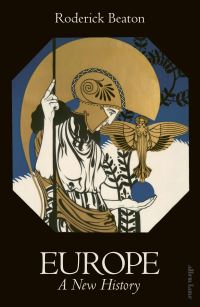
Roderick Beaton tells the story of Europe as never before – as the history of an idea, and a collective identity. Since its dramatic birth in ancient Greece, ‘Europe’ has been defined, and redefined, by its people. Through this powerful lens, and with the narrative drive and scope of a novelist, Beaton deftly surveys Europe’s major historical developments: the rise and fall of Rome; the explosion of Christianity; the intellectual ferment of the Renaissance and the Enlightenment; the arrival of Europeans in the Americas; the violent upheavals of the 19th and 20th centuries; and the uncertainties of the present. Throughout, original sources allow the voices of the past, from Tacitus to Thatcher, to speak for themselves. Grappling with the multi-layered identities that have always come with being European, Europe places the Europe of today in a long arc of history stretching back more than 2500 years.
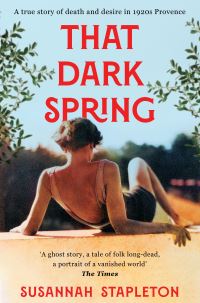
A gripping, explosive murder mystery by acclaimed true crime writer Susannah Stapleton.

Trace the tumultuous history of Europe during the Early Middle Ages through 90 specially commissioned maps and a authoritative narrative. Medieval Europe remains a mystery to many, yet the relative dearth of information about the period cannot mask its crucial importance in history. Often mischaracterized as a time of darkness and decline, the period from AD 476 to 1000 was marked by turmoil, rebirth and transformation. From the towering legacy of Constantine to the iron rule of Charlemagne, and the Huns, Goths and Saxons to the Slavs, Franks, Vikings, Rus, Bulgars and Magyars, John Haywood brings to life the dynamic story of how a new Europe emerged from the ashes of the crumbling Roman Empire. We witness the spread of Christianity, the emergence of Islam, the rise and fall of kingdoms, and the birth of the leading nations of modern Europe.

What do our gardens say about us? Monty Don has spent many years travelling the world, from America to Japan, from Italy and the Adriatic to Spain and the Mediterranean, getting under the skin of a country through its gardens and gardening traditions. Here, he finally brings his focus to home, journeying from the northern tip of Scotland to the Cornish coast, seeking to understand what our gardens tell us about ourselves as a nation. Encompassing historical gardens and public parks, mountains and seascapes, urban gardens and rural nurseries, glasshouses and community plots, each encounter is another link in a larger story of British identity: marks of ingenuity, eccentricity, and adaptation to changing environments.
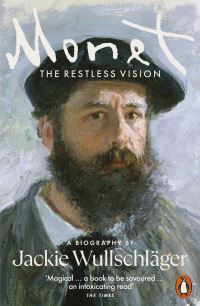
Behind this great and famous artist is a volatile, voracious, nervous yet reckless man, largely unknown. Jackie Wullschläger’s enthralling biography, based on thousands of never-before translated letters and unpublished sources, is the first account of Monet’s turbulent private life and how it determined his expressive, sensuous, sensational painting. He was as obsessional in his love affairs as in his love of nature, and changed his art decisively three times when the woman at the centre of his life changed. Enduring devastating bereavements, he pushed the frontier of painting inward, to evoke memory and the passing of time. His work also responded intensely to outside cataclysms – the Dreyfus Affair, the First World War. This rich and moving biography immerses us in that passionate experience, transforming our understanding of the man, his paintings and the fullness of his achievement.
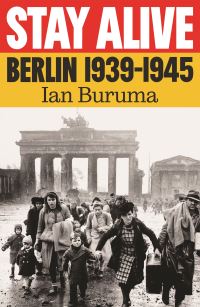
In 1939, when Ian Buruma’s epic opens, Berlin has been under Nazi rule for six years, and its 4.3 million people have made their accommodations to the regime, more or less. When war broke out with Poland in September, what was most striking at first was how little changed. Unless you were Jewish. Then life, already hard, was soon to get unfathomably worse. By 1943, with the German defeat at Stalingrad, ordinary life in Berlin would acquire an increasingly desperate cast. The last three years of the war in Berlin are truly a descent into hell, with a deranged regime in desperate free fall, an increasingly relentless pounding from Allied bombers, and the mounting dread of the approaching Soviet army. And by war’s end Berlin’s population had fallen by almost half. Among the people trying to stay alive in the city was Ian Buruma’s own father, a prisoner conscripted into forced labour in the war economy along with 400,000 other imported work
No products in the basket.