“The Age of Extraction” has been added to your basket.
View basket
Showing all 16 resultsSorted by latest
-
£25.00
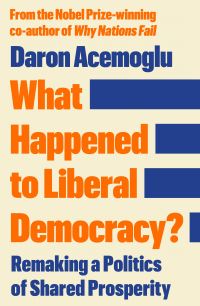
From its inception, liberalism offered a glittering promise of shared prosperity, equality, democratic values and the free pursuit of knowledge. At first, it flourished. And then it faltered. Once a tantalising beacon of hope, it began to erode and decay at the hands of elitism, intolerance and rising autocracy. One could say that liberalism is broken. So what comes next? Nobel prize-winning co-author of ‘Why Nations Fail’ Daron Acemoglu charts the rise and fall of liberal democracy, and offers hope for a way forward: a new theory that lays the groundwork for how we can – and must – remake liberalism before it’s too late.
-
£30.00
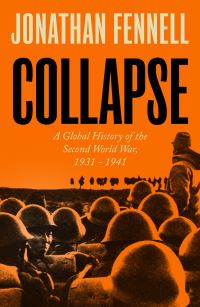
Between 1931 and 1949, a series of crises broke out that threatened collective security, world order and the internal cohesion of states across the globe. At the heart of these crises was a world war that shook the foundations of global power, a watershed moment in the history of the 20th Century. ‘Collapse’ is the first volume of an authoritative trilogy that tells the story of the Second World War through this international lens, covering theatres of war in multiple continents and analysing worldwide trends. Through new sources in 14 languages and from over 50 archives across the world, Professor Jonathan Fennell examines the first part of this ‘long war’, from 1931-1942, and explores what it really meant to live through this violent time. Using an innovative approach which explores the personal alongside the political, the global alongside the local, he shows how a world that many considered civilised collapsed into barbarity.
-
£12.99
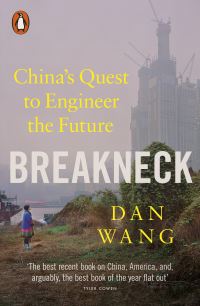
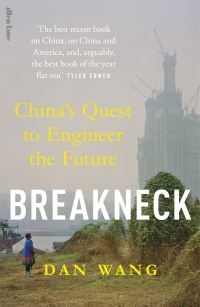
America used to pride itself on ambition. Today, it looks stuck. Meanwhile, China has been busy building the future. Over the past six years, technology analyst Dan Wang lived through China’s astonishing, messy progress and the dissolution of its relationship to the West. In ‘Breakneck’, Wang offers a new framework for understanding China – which helps us to see global geopolitics more clearly too.
-
£12.99
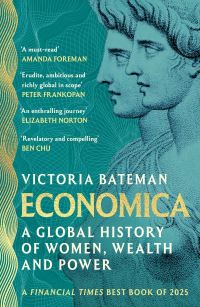
Women have never been ‘missing’ from economic life – they were simply hidden from view by those writing the history books. In ‘Economica’, feminist historian Victoria Bateman rescues them from obscurity in a thrilling narrative that retells the economic history of the world from a female perspective.
-
£12.99
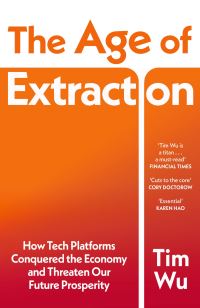
For the first time in history, we have the ability to create sustainable prosperity for all, but currently that wealth is concentrated in a tiny number of hands. It isn’t abundance that’s the problem; it is distribution. In this engaging, frequently surprising account, Tim Wu, one of the world’s foremost experts on anti-monopoly law, draws on fascinating case studies in the history of technology’s explosive rise to demonstrate emphatically that breaking monopolies will ultimately unleash creativity and growth – and reduce the vast inequality that inevitably leads to social upheaval and political chaos. Wu also sets out an alternative blueprint that preserves the economic flourishing that platforms catalyse, allowing tech platforms to play a major role in creating and sustaining an economic model of prosperity not just for the few but for the many.
-
£12.99
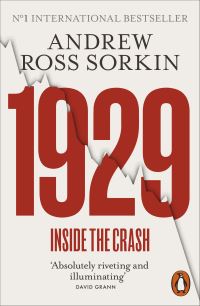
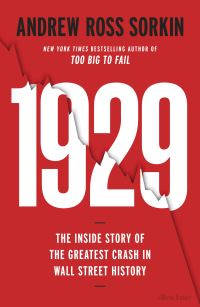
In 1929, the world watched in shock as the unstoppable Wall Street bull market went into a freefall, wiping out fortunes and igniting a depression that would reshape a generation. But behind the flashing ticker tapes and panicked traders, another drama unfolded – one of visionaries and fraudsters, titans and dreamers, euphoria and ruin. With unparalleled access to historical records and newly uncovered documents, New York Times bestselling author Andrew Ross Sorkin takes readers inside the chaos of the crash, behind the scenes of a raging battle between Wall Street and Washington and the larger-than-life characters whose ambition and naivety in an endless boom led to wreckage.
-
£20.00
From the pre-eminent historian of WWII, an impassioned appreciation of the unprecedented postwar decision by the United States to aid its enemies as well as its allies via the Marshall Plan, leading to eight decades of peace and shared prosperity, which are being upended in today’s political environment.
-
£12.99
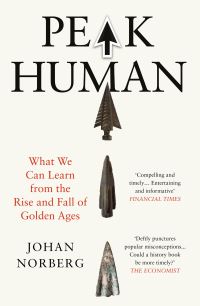
All golden ages are marked by periods of spectacular cultural flourishing, scientific exploration, technological achievement and economic growth; yet no two are the same. Their beliefs, societies and place in the wider world all vary. Despite this, all previous golden ages have ended, whether it be because of external pressures or internal fracturing; too much hubris or too little wariness. Looking at seven of humanity’s greatest civilisations – ancient Athens, the Roman Republic, Abbasid Baghdad, Song China, Renaissance Italy, the Dutch Republic and the Anglosphere – historian and commentator Johan Norberg seeks to distil their strengths and shortcomings in answering the question: how do we ensure that our current golden age doesn’t end?
-
£30.00
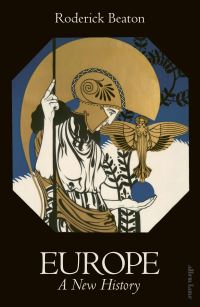
Roderick Beaton tells the story of Europe as never before – as the history of an idea, and a collective identity. Since its dramatic birth in ancient Greece, ‘Europe’ has been defined, and redefined, by its people. Through this powerful lens, and with the narrative drive and scope of a novelist, Beaton deftly surveys Europe’s major historical developments: the rise and fall of Rome; the explosion of Christianity; the intellectual ferment of the Renaissance and the Enlightenment; the arrival of Europeans in the Americas; the violent upheavals of the 19th and 20th centuries; and the uncertainties of the present. Throughout, original sources allow the voices of the past, from Tacitus to Thatcher, to speak for themselves. Grappling with the multi-layered identities that have always come with being European, Europe places the Europe of today in a long arc of history stretching back more than 2500 years.
-
£11.99
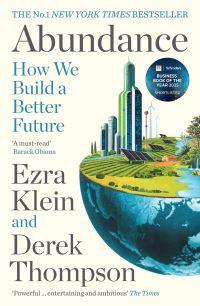
In the last few decades, our capacity to see problems has sharpened while our ability to solve them has diminished. Progress requires the ability to see promise rather than just peril in the creation of new ideas and projects, and an instinct to design systems and institutions that make building possible. In a book exploring how we can move from a liberalism that not only protects and preserves but also builds, Klein and Thompson trace the political, economic, and cultural barriers to progress and how we can adopt a mindset directed toward abundance, and not scarcity, to overcome them.
-
£30.00
In 1929, the world watched in shock as the unstoppable Wall Street bull market went into a freefall, wiping out fortunes and igniting a depression that would reshape a generation. But behind the flashing ticker tapes and panicked traders, another drama unfolded – one of visionaries and fraudsters, titans and dreamers, euphoria and ruin. With unparalleled access to historical records and newly uncovered documents, New York Times bestselling author Andrew Ross Sorkin takes readers inside the chaos of the crash, behind the scenes of a raging battle between Wall Street and Washington and the larger-than-life characters whose ambition and naivety in an endless boom led to wreckage.
-
£25.00
America used to pride itself on ambition. Today, it looks stuck. Meanwhile, China has been busy building the future. Over the past six years, technology analyst Dan Wang lived through China’s astonishing, messy progress and the dissolution of its relationship to the West. In ‘Breakneck’, Wang offers a new framework for understanding China – which helps us to see global geopolitics more clearly too.
-
£10.99
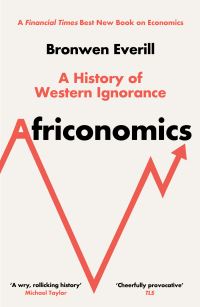
‘A historically insightful read’Financial Times
‘A wry, rollicking, and provocative history’ Michael Taylor, author of The Interest
‘A thought-provoking analysis of Africa’s relationship with economic imperialism’ Astrid Madimba and Chinny Ukata, authors of It’s A Continent
-
£10.99
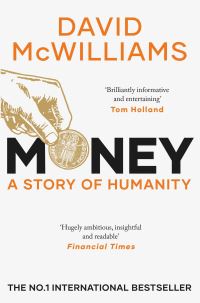
For readers of SAPIENS and Yanis Varoufakis, the definitive story of money and how it shaped humankind from influential global economist David McWilliams
Â
-
£12.99
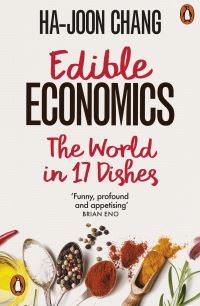
For decades, a single free market philosophy has dominated global economics. But this is bland and unhealthy – like British food in the 1980s, when bestselling author and economist Ha-Joon Chang first arrived in the UK from South Korea. Just as eating a wide range of cuisines contributes to a more interesting and balanced diet, so too is it essential we listen to a variety of economic perspectives. In ‘Edible Economics’, Chang makes challenging economic ideas more palatable by plating them alongside stories about food from around the world. Structuring the book as a series of menus, Chang uses histories behind familiar food items – where they come from, how they are cooked and consumed, what they mean to different cultures – to explore economic theory.
-
£16.99
Innovations rarely come from ‘experts’. Jeff Bezos was not a bookseller; Elon Musk was not in the auto industry. When it comes to innovation, a legendary venture capitalist told Sebastian Mallaby, the future cannot be predicted, it can only be discovered. Most attempts at discovery fail, but a few succeed at such a scale that they more than make up for everything else. That extreme ratio of success and failure is the power law that drives venture capital, Silicon Valley, the tech sector, and, by extension, the world. Drawing on unprecedented access to the most celebrated venture capitalists of all time, award-winning financial historian Sebastian Mallaby tells the story of this strange tribe of financiers who have funded the world’s most successful companies, from Google to SpaceX to Alibaba.

 The Age of Extraction