Space oddities
£10.99An eye-opening and accessible account of the latest as-yet-inexplicable phenomena of the universe – oddities that could transform our understanding of the fundamental nature of reality.

 The Goldfinch
1 × £12.99
The Goldfinch
1 × £12.99 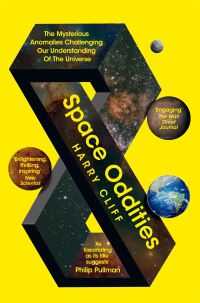 Living by the Ocean
Available on backorder (5-7 days)
Space oddities
Available on backorder (5-7 days)
Subtotal: £53.93
Showing 1–12 of 15 resultsSorted by latest
An eye-opening and accessible account of the latest as-yet-inexplicable phenomena of the universe – oddities that could transform our understanding of the fundamental nature of reality.
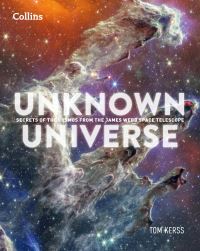
A beautiful book showcasing the most stunning images from the first years of the James Webb Space Telescope, the most powerful infrared space observatory, along with expert insights into their revelations.
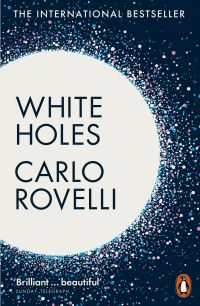
Let us journey, with beloved physicist Carlo Rovelli, into the heart of a black hole. Let us slip beyond its boundary, the horizon, and tumble – on and on – down this crack in the universe. As we plunge, we’ll see geometry fold, we’ll feel the equations draw tight around us. Eventually, we’ll pass it: the remains of a star, deep and dense and falling further far. And then – the bottom. Where time and space end, and the white hole is born. With lightness and magic, here Rovelli traces the ongoing adventure of his own cutting-edge research, of the uncertainty and joy of going where we’ve not yet been. Guiding us to the edge of theory and experiment, he invites us to go beyond, to experience the fever and the disquiet of science. Here is the extraordinary life of a white hole.

In a series of 50 accessible essays, Jo Baker introduces and explains all of the essential concepts, major discoveries and the very latest thinking in astrophysics. From heliocentrism to Newton’s theory of optics, the theory of relativity to supermassive black holes, this book is a complete introduction to the most important concepts about our universe.
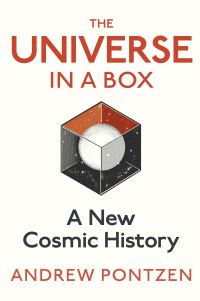
How was our universe built? What happened at its beginning? And where do humans fit in? We are a minuscule part of an incredible continuum: a chain of events spanning 13.8 billion years, with an infinite future. But what does that future hold? And will we ever truly understand our cosmic home? ‘The Universe In a Box’ is Andrew Pontzen’s tribute to simulation – the remarkable fusion of technology and science that, over the last century, has allowed us to understand the distant past and far future of the universe. It challenges everything we think we know about galaxies, black holes and matter itself. And it reveals the pioneer scientists who unlocked mysteries of space, from redshift to improbable dark materials that pass, ghost-like, through solid rock.
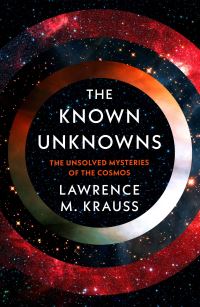
Three of the most important words in science are ‘I don’t know’. Not knowing implies a universe of opportunities – the possibility of discovery and surprise. Our understanding of cosmology has advanced immeasurably over the last five hundred years of modern science, yet many fundamental mysteries of existence persist. How did our Universe begin, if it even had a beginning? How big is it? What’s at the bottom of a black hole? How did life on Earth arise? Are we alone? Is time travel possible? These mysteries define the scientific forefront, the threshold of the unknown. To explore that threshold is to gain a deeper understanding of just how far science has progressed. In this book, theoretical physicist and science writer Lawrence Krauss explores cosmology’s greatest known unknowns.
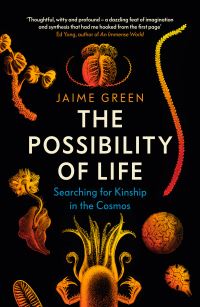
For fans of Ed Yong, Brian Cox and Carl Zimmer: a dazzling cultural and scientific adventure through our ideas about extraterrestrial life and the cosmos
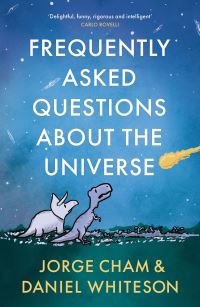
You’ve got questions: about space, time, gravity, and the odds of meeting your older self inside a wormhole. All the answers you need are right here. As a species, we may not agree on much, but one thing brings us all together: a need to know. We all wonder, and deep down we all have the same big questions. Why can’t I travel back in time? Where did the universe come from? What’s inside a black hole? Can I rearrange the particles in my cat and turn it into a dog? Physics professor Daniel Whiteson and researcher-turned-cartoonist Jorge Cham are experts at explaining science in ways we can all understand, in their books and on their popular podcast, Daniel and Jorge Explain the Universe. With their signature blend of humour and oh-now-I-get-it clarity, they offer answers to some of the most common, most outrageous, and most profound questions about the universe they’ve been asked.
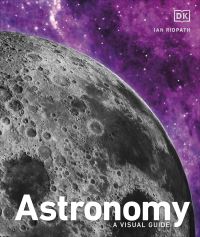
Take a tour of the Universe, from the 150km impact craters on the Moon to Jupiter’s Great Red Spot – a 400mph swirling storm that started in the 1600s. This illustrated handbook covers every aspect of astronomy. Learn about the history of discoveries in the field, from the earliest human civilisations to the present day. Discover more about astronomical phenomena, from the supermassive black hole at the centre of our galaxy, and what happens when a star runs out of energy, to theories about the fate of the Universe. This is a month-by-month guide to the night sky, with profiles of all 88 constellations, over 100 star charts, and an Almanac of astronomical events over the next decade, will help you to navigate your way around the night sky, and locate stars, galaxies, and other objects.
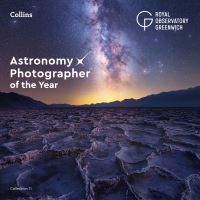
From the number one Astronomy publisher, this book showcases the most spectacular space photography, taken from locations across the globe. Marvel at the wonders of the universe captured by the most talented astrophotographers.
Space is astonishingly, mind-blowingly empty. But then there are the stars and planets. Some are familiar from our own backyard: yellow suns, rocky planets like Mars, gas and ice giants like Jupiter and Neptune. But there are many more: giant stars, red and white dwarfs, super-earths and hot Jupiters. Elsewhere are swirling clouds of dust giving birth to stars, and infinitely dense regions of space-time called black holes. These clump together in the star clusters we call galaxies, and the clusters of galaxies we call galaxy clusters. As we travel further we encounter ever more weird, wonderful and dangerous entities: supernovas, supermassive black holes, quasars, pulsars, neutron stars, black dwarfs, quark stars, gamma ray bursts and cosmic strings. ‘A Journey Through The Universe’ is a grand tour of the most amazing celestial objects and how they fit together to build the cosmos.
To make an apple pie, one first needs to build a universe. A brilliantly accessible introduction to today’s physics by a young academic and educator.
The Goldfinch
1 × £12.99 Living by the Ocean
Available on backorder (5-7 days)
Space oddities
Available on backorder (5-7 days)
Subtotal: £53.93
Notifications