Rebel Island
£12.99An essential guide to Taiwan’s past and present, providing invaluable context at a time of escalating tension over its future.

 Spy and the Traitor: The Greatest Espionage Story of the Cold War
1 × £10.99
Spy and the Traitor: The Greatest Espionage Story of the Cold War
1 × £10.99  Sabzi
1 × £26.00 The fall of the Aztecs
1 × £8.99
Sabzi
1 × £26.00 The fall of the Aztecs
1 × £8.99 Subtotal: £45.98
Showing 1–12 of 72 resultsSorted by latest
An essential guide to Taiwan’s past and present, providing invaluable context at a time of escalating tension over its future.
‘A historically insightful read’Financial Times
‘A wry, rollicking, and provocative history’ Michael Taylor, author of The Interest
‘A thought-provoking analysis of Africa’s relationship with economic imperialism’ Astrid Madimba and Chinny Ukata, authors of It’s A Continent
One of the most highly respected and longstanding foreign correspondents in Taiwan explores the people, politics and history of the unique nation caught in a power struggle between the USA and China.
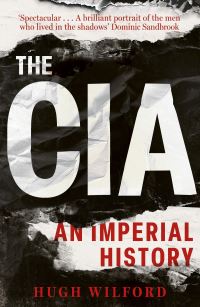
As World War II ended, the United States stood as the dominant power on the world stage. In 1947, to support its new global status, it created the CIA to analyse foreign intelligence. But within a few years, the Agency was engaged in other operations: bolstering pro-American governments, overthrowing nationalist leaders, and surveilling anti-imperial dissenters in the US. The Cold War was an obvious reason for this transformation – but not the only one. Intelligence historian Hugh Wilford draws on decades of research to show the Agency as part of a larger picture, the history of Western empire. While young CIA officers imagined themselves as British imperial agents like T.E. Lawrence, successive US presidents used the covert powers of the Agency to hide overseas interventions from postcolonial foreigners and anti-imperial Americans alike.
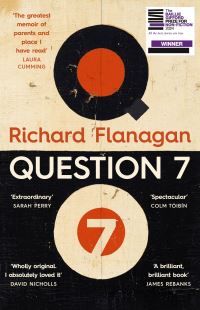
Beginning at a love hotel by Japan’s Inland Sea and ending by a river in Tasmania, ‘Question 7’ is about the choices we make about love and the chain reaction that follows. By way of H.G. Wells and Rebecca West’s affair through 1930s nuclear physics to Flanagan’s father working as a slave labourer near Hiroshima when the atom bomb is dropped, this daisy chain of events reaches fission when Flanagan as a young man finds himself trapped in a rapid on a wild river not knowing if he is to live or to die. At once a love song to his island home and to his parents, this hypnotic melding of dream, history, place and memory is about how our lives so often arise out of the stories of others and the stories we invent about ourselves.
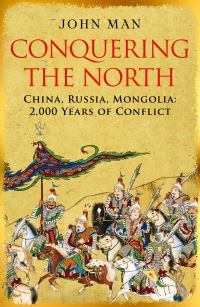
A panoramic history of the roots of China and Mongolia’s historic rivalry? and why it matters now.
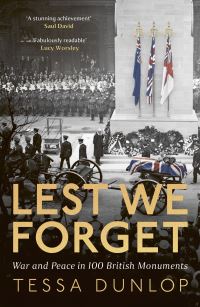
‘An impressive audit of the monuments all around us and their often forgotten back-stories. A hundred individual histories, skillfully assembled, built into a poignant meditation on why they still matter.’ David Olusoga
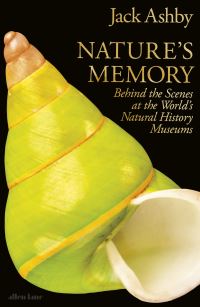
A behind-the-scenes tour through the world’s greatest natural history museums, revealing how their hidden secrets can help us in the fight against climate change.
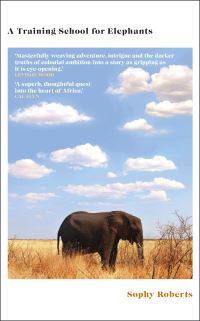
In 1879, King Leopold II of Belgium launched an ambitious plan to plunder Africa’s resources. The key to cracking open the continent, or so he thought, was its elephants – if only he could train them. And so he commissioned the charismatic Irish adventurer Frederick Carter to ship four tamed Asian elephants from India to the East African coast, where they were marched inland towards Congo. The ultimate aim was to establish a training school for African elephants. Following in the footsteps of the four elephants, Roberts pieces together the story of this long-forgotten expedition, in travels that take her to Belgium, Iraq, India, Tanzania and Congo. The storytelling brings to life a compelling cast of historic characters and modern voices, from ivory dealers to Catholic nuns, set against rich descriptions of the landscapes travelled.
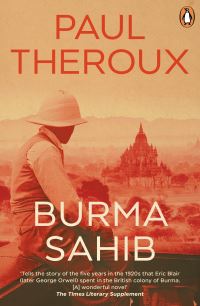
Before George Orwell was Orwell – the pen name he took on becoming a writer – he was Eric Blair, an unlikely policeman in Burma. 19 years old, unusually tall, highly intelligent, a diffident loner fresh from Eton, Blair stood out amongst his fellow trainees in 1920s Mandalay. It was here, over five years in the narrow colonial world of the Raj – a decaying system steeped in overt racism and petty class-conflict – that Eric Blair became the George Orwell we know: an anti-imperialist, a socialist and a writer of rare commitment. The inner journey he made in these years is remarkable, but in the absence of letters or diaries from the period, this richly complex transformation can only be told in fiction, as it is here by Paul Theroux, in one of his most striking and accomplished novels.
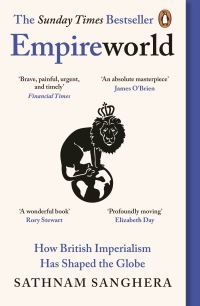
In ‘Empireworld’, award-winning author and journalist, Sathnam Sanghera extends his examination of British imperial legacies beyond Britain. Travelling the globe to trace its international legacies – from Barbados and Mauritius to India and Nigeria and beyond – Sanghera demonstrates just how deeply British imperialism is baked into our world. And why it’s time Britain was finally honest with itself about empire.
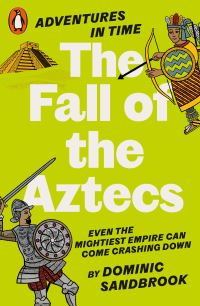
The Aztec Empire had been blessed by the gods. Its pyramid temples were warmed by the sun, its fields were thick with corn, its bustling marketplaces were full of feathers, pottery and jewellery. But the Emperor Montezuma was troubled by terrifying omens. And when Spanish sailors landed on the shore, seeking their fortunes in a foreign land, nothing would ever be the same.
Spy and the Traitor: The Greatest Espionage Story of the Cold War
1 × £10.99 Sabzi
1 × £26.00 The fall of the Aztecs
1 × £8.99 Subtotal: £45.98
Notifications