“Life on Earth” has been added to your basket.
View basket
Showing all 12 resultsSorted by latest
-
£25.00
Edinburgh, 1878. A medical student named Arthur Conan Doyle squeezes into the Royal Infirmary’s packed operating theatre, hoping to catch a glimpse of the celebrated professor whose uncanny powers of observation blur the line between diagnosis and detective work. That professor was Joseph Bell, who became one of the most celebrated surgeons and medical reformers of his age. With a flair for the theatrical and an eye for clues hidden in the tiniest details, he astonished his students with lightning-fast deductions about his patients’ backgrounds and ailments. Together with Edinburgh’s chief police surgeon, Henry Duncan Littlejohn, Bell also investigated some of the highest-profile murders of the century, including those of Jack the Ripper, and collaborated with forensic specialists such as a ballistics expert named Dr Watson. And as Conan Doyle’s mentor, Bell inspired the creation of literature’s most iconic sleuth: Sherlock Holmes.
-
£18.99
From radiotherapy to computer code, climate change to DNA – meet the female scientists who changed the world.
-
£22.00
When Claire Stapleton joined Google in 2007, it felt like stepping into a worldview as much as a job. The company offered not just a career, but a moral project. In the heady early years of Big Tech and when Google’s in-house slogan was ‘Don’t be evil,’ it was easy to believe that technology wasn’t just changing the world – it was going to fix it. As Stapleton rose through increasingly rarefied roles, from the storied Creative Lab to YouTube marketing, she helped shape the myth from the inside. But as the gap between Google’s ideals and its reality widened, the dissonance became impossible to ignore. In 2018, amid outrage over the company’s handling of sexual harassment, Stapleton helped organize the Google Walkout – a defining rupture in Silicon Valley’s self-image. Sharp, witty and unsparing, ‘Don’t Be Evil’ is an insider’s account of how power actually works – and a deeper reckoning with the stories we tell about work, purpose and ou
-
£25.00
The Lifesavers were a small number of men and women who during WW2 were at the forefront of global progress in saving lives through collecting, preserving and courageously delivering blood – trailblazers whose work was then adopted around the world. This tiny and short-lived service (1939-45) created ground-breaking advances to improve survival rates with an impact comparable to the discovery of penicillin. In this compelling story from historian Roderick Bailey, we meet the nurses who built and tapped the bank of volunteer donors (1.5m registered by the end of the war); the unsung technicians responsible for storing, preserving and moving the blood; and the specialist medical officers who risked their lives in traversing battlefields across the globe to give transfusions.
-
£12.99
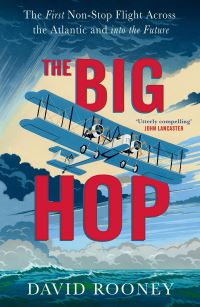
Newfoundland, 1919. Buffeted by winds, an unwieldy aircraft – made mainly from wood and stiff linen – struggled to take off from the North American island’s rocky slopes. Cramped side by side in its open cockpit were two men, freezing cold and barely able to move but resolute. They had a dream: to be the first in human history to fly, non-stop, across the Atlantic Ocean. But there were three other teams competing against them, and as the waves raged a few miles below, memories of wartime crashes resurfaced. Mining letters, diaries and evocative unpublished photographs, David Rooney’s deeply researched account of the audacious contest shows how it was the airmen’s thrilling wartime experiences that ultimately led them to the ‘Big Hop’, and brought old friends together for one more daring adventure.
-
£14.99
A new, beautifully illustrated edition of David Attenborough’s groundbreaking Life on Earth.
-
£30.00
Even by the standards of an industry stacked with so-called visionary leaders, Demis Hassabis is recognized as a special case. His journey to pursue the dream of super-human intelligence has taken him from working-class origins in North London to the founding of revolutionary AI company DeepMind to a Nobel Prize. Unlike many of his Silicon Valley peers, his goals are not money and power but scientific enlightenment. For the past several years, Sebastian Mallaby has had unprecedented access to Hassabis and DeepMind. In this book, he offers an unrivalled window into the AI revolution, a transformation potentially more significant than any since we gained a capacity for abstract thought 70,000 years ago.
-
£25.00
Who on earth is Elon Musk and what is he doing? Is he a hero, a villain, or does he swing constantly between those two poles? According to the constant media gush driven by his every act and pronouncement, Musk is best understood in personal terms. This book argues differently. Rather than seeing Musk as an individual, it sees him as an avatar of something called Muskism: a playbook for our new postliberal age. It’s not that Musk himself holds a coherent set of beliefs; you could say his life is one long improvisation. And he’s certainly never used the word Muskism – just as, a century ago, Henry Ford never used Fordism to define his own postliberal modernity. In exploring the forces that have shaped Musk, from South Africa to Silicon Valley, Space X to DOGE, Quinn Slobodian and Ben Tarnoff outline the motifs and practices that have come to dominate our own crisis-ridden world.
-
£18.99
The brilliant and sometimes scandalous lives of twenty-one women who made French history.
-
£22.00
Newfoundland, 1919. Buffeted by winds, an unwieldy aircraft – made mainly from wood and stiff linen – struggled to take off from the North American island’s rocky slopes. Cramped side by side in its open cockpit were two men, freezing cold and barely able to move but resolute. They had a dream: to be the first in human history to fly, non-stop, across the Atlantic Ocean. But there were three other teams competing against them, and as the waves raged a few miles below, memories of wartime crashes resurfaced. Mining letters, diaries and evocative unpublished photographs, David Rooney’s deeply researched account of the audacious contest shows how it was the airmen’s thrilling wartime experiences that ultimately led them to the ‘Big Hop’, and brought old friends together for one more daring adventure.
-
£10.99
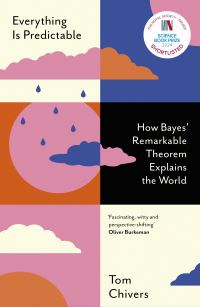
Thomas Bayes was an eighteenth-century Presbyterian minister and amateur mathematician whose obscure life belied the profound impact of his work. Like most research into probability at the time, his theorem was mainly seen as relevant to games of chance, like dice and cards. But its implications soon became clear, affecting fields as diverse as medicine, law and artificial intelligence. Bayes’ theorem helps explain why highly accurate screening tests can lead to false positives, causing unnecessary anxiety for patients. A failure to account for it in court has put innocent people in jail. But its influence goes far beyond practical applications. Fusing biography, razor-sharp science communication and intellectual history, ‘Everything Is Predictable’ is a captivating tour of Bayes’ theorem and its impact on modern life.
-
£25.00
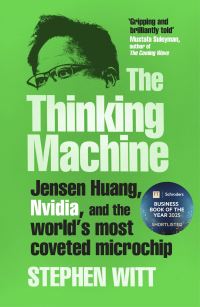
This is a riveting investigative account of Nvidia, the tech company that has exploded in value for its artificial intelligence computing hardware, and Jensen Huang, Nvidia’s charismatic, uncompromising CEO.

 Jerusalem