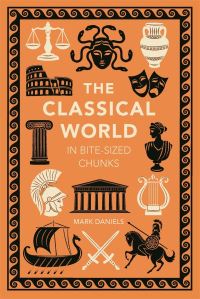
The Classical World in Bite-Sized Chunks
£9.99An entertaining and accessible introduction to the fascinating world of Greek and Roman history, covering the people, events, art and mythology that have shaped the Western world.

 The notorious virtues
1 × £8.99 Happy Retirement
1 × £9.99 The Next China Is Still China
1 × £25.00
The notorious virtues
1 × £8.99 Happy Retirement
1 × £9.99 The Next China Is Still China
1 × £25.00 Subtotal: £43.98
Showing 61–72 of 841 resultsSorted by latest
An entertaining and accessible introduction to the fascinating world of Greek and Roman history, covering the people, events, art and mythology that have shaped the Western world.
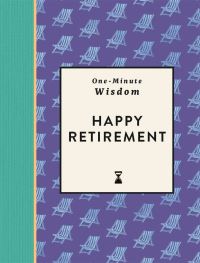
One-Minute Wisdom: Happy Retirement is your gentle guide to embracing change and stepping into a new season with confidence – one moment at a time.
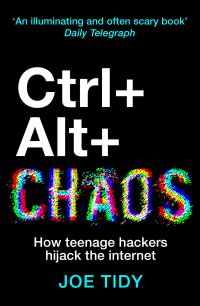
From the BBC’s cyber correspondent and foremost voice on cybercrime, comes the insider exposé of the global rise of teen hackers
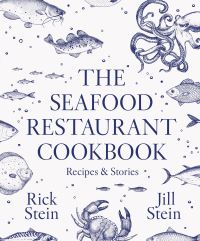
A fabulous celebratory cookbook of Rick and Jill Stein's legendary Cornish seafood restaurant.
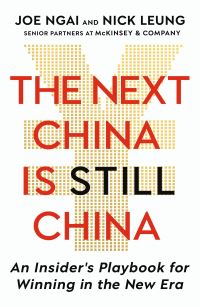
Both a revelatory, insight-filled playbook for doing business in China and a probing look at why the country, despite the challenges it faces, still possesses unrivalled prospects for growth and entrepreneurial opportunity – by two leaders who, over the course of decades, have taken turns helming McKinsey’s China-based management consulting.

There are fewer than 5000 people who can genuinely claim to be members of the British aristocracy, and yet they loom large in the popular consciousness. We’re fascinated by their houses and estates, their lives and loves, their foibles and eccentricities. And we entertain the strong suspicion that, while they may be fellow citizens, they are very far from being people like us. In this book, Eleanor Doughty draws on her unparalleled access to a bewildering range of dukes, duchesses, earls and others to create a vivid picture of who they are and how they tick.
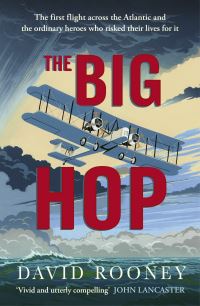
Newfoundland, 1919. Buffeted by winds, an unwieldy aircraft – made mainly from wood and stiff linen – struggled to take off from the North American island’s rocky slopes. Cramped side by side in its open cockpit were two men, freezing cold and barely able to move but resolute. They had a dream: to be the first in human history to fly, non-stop, across the Atlantic Ocean. But there were three other teams competing against them, and as the waves raged a few miles below, memories of wartime crashes resurfaced. Mining letters, diaries and evocative unpublished photographs, David Rooney’s deeply researched account of the audacious contest shows how it was the airmen’s thrilling wartime experiences that ultimately led them to the ‘Big Hop’, and brought old friends together for one more daring adventure.
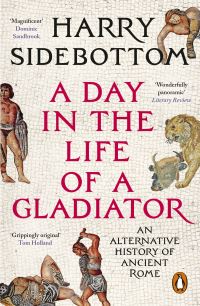
Dressed in armour and clutching a bloody sword, the Roman gladiator is the most iconic figure of the ancient world. Both fascinating and repulsive to us now, he was in his own time a deeply controversial character, by turns hated and idealized – and always at the heart of Roman culture. But what did he really mean to the Romans? What did they see in the gladiator and the spectacle of the games? And what does he reveal to us today about the Roman way of life? Brilliantly written and meticulously researched, this book tells the stories of the gladiators and those who observed them – from grand emperors to lowly slaves – illuminating and analysing the all-consuming passion of the Roman Empire for the spectacle of mortal combat. In doing so, it reveals Roman ideas about everything from freedom and servitude to sex and desire, from courage and cowardice to death and the afterlife.

The global powerhouse that is the United States of America is younger even than the British Museum, Guinness and the flushing toilet. In 2026 it celebrates its 250th birthday. How did this vast land, long inhabited by diverse indigenous cultures, come to be dominated by English speakers? How has it grappled with the stark contradictions between its ideals of liberty and the grim reality of genocide and slavery? This extraordinary collection of fifty distinct states has weathered immense – and recent – challenges, including a Civil War that was still raging as the first London Underground station opened. How did this melting pot of peoples and ideas not only endure but rise to dominate global politics, commerce, culture and warfare? What insights does this rich history offer about an increasingly divided nation – and the world that moves to its rhythm?
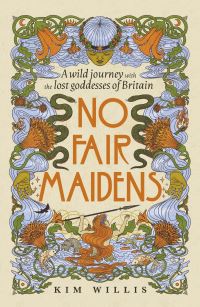
As Kim Willis drifts from the traditional path of marriage and motherhood, she yearns for a new set of stories to light her way. Here, she is pulled towards the source of the Severn, hearing whispers of ancient matriarchs: shape-shifting enchantresses, scaly nymphs and goddesses who once commanded our lands. These are no fair maidens, but powerful warrioresses and animalistic beasts, snaking along the edges of watery places where we meet the otherworld in the shadows. As she uncovers the ancient myths hidden in the rugged landscapes of the British Isles, the stories of women like Arianrhod, Melusine and Cerridwen awaken a forgotten power. Journeying from the Severn to Skye, Eryri to Northumberland, Kim discovers new magic in the tales of old, unveiling forgotten truths about grief and healing, while charting a new course through sisterhood and sexuality, fertility and freedom.
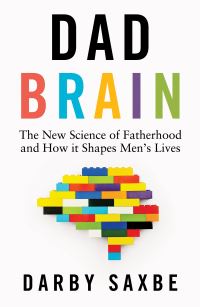
Clinical psychologist Darby Saxbe reveals parenthood fundamentally changes men’s brains and biology. Dad brains shrink (to become more efficient), testosterone levels drop (in a good way); men can even experience a form of postpartum depression, and of course their whole sense of meaning and identity can be challenged and transformed. Based on two decades of research and one of the world’s only longitudinal studies of men’s brains as they become fathers, ‘Dad Brain’ takes us from the author’s lab in Los Angeles, to a beachfront neuroimaging centre in Barcelona and a midwife’s office in Stockholm. It explores the different ways that men parent in different societies, how trends in men’s involvement with birth and parenting have shifted over the decades, class-based and racist assumptions about absent fathers, the rise of parenting outside the gender binary, old dads versus young dads, and much, much more.
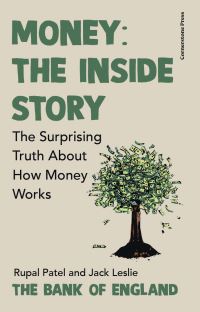
Where does money come from? What gives a 1 coin its value? And whose job is it to actually print banknotes? Most of us think about money every day. But we tend not to think about how weird it is: a totally abstract concept, built entirely on trust, which somehow makes the whole world function. The Bank of England know more about money than most – after all, they are the ones responsible for making sure it works. Now, the Bank answer all the questions about money that you’ve never thought to ask – from what makes money money, to how private banks create money every time they give out a loan, to what happens to cash when it’s past its sell by date (it’s often moulded into garden furniture, as it turns out). Along the way, they offer your one-stop guide to how money really works – and where it might be going next.
The notorious virtues
1 × £8.99 Happy Retirement
1 × £9.99 The Next China Is Still China
1 × £25.00 Subtotal: £43.98
Notifications