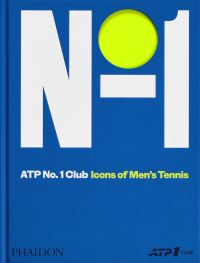
ATP No. 1 Club
£39.95A striking visual journey through modern men’s tennis, celebrating the twenty-nine players in the elite ATP No. 1 Club

 After Dark
1 × £10.99 In Search of Lost Thoughts
1 × £16.99 The Last Best Place on the Internet
1 × £18.99 Battle of the Arctic
1 × £14.99 In Cold Blood
1 × £20.00 How to Begin
1 × £18.99 Starting Today, I Choose to Be Happy
1 × £14.99 Italy in a Wineglass
1 × £12.99 In Rome's Long Shadow
1 × £25.00 Are You With Me Now?
1 × £20.00 The Village in Britain
1 × £25.00
Subtotal: £198.93
Showing 17–32 of 1400 resultsSorted by latest
A striking visual journey through modern men’s tennis, celebrating the twenty-nine players in the elite ATP No. 1 Club

Innovation and creativity have been the defining watchwords of American exceptionalism for decades, used by business thinkers, tech gurus, military strategists, educators, and urban planners to describe the country’s unique standing in the world. While other countries supposedly suffer from regimentation and a fatal lack of imagination, the United States is often portrayed as an unmatched dynamo of new ideas and products. In his book, Thomas Frank disabuses us of this notion, offering a bold account of the way creativity and innovation have been used as a kind of ideological cover for policies that reinforce the class system. Frank uncovers the insidious effects of centring innovation and creativity in rhetoric while, in practice, nurturing exactly the opposite.

We are a nation of villages, from the rural, picturesque hamlets of Castle Combe and Clovelly, to the tight-knit urban communities of Leeds’ terraces and Cricklewood’s backyards. Villages link us with our past and are the stuff of art, poetry, folklore and song – and for many they offer a place of community and sanctuary. And yet Britain today is one of the most centralised political systems in Europe, with decisions on local matters made by national government and local communities feeling increasingly disempowered and disconnected. In ‘The Village in Britain’, Simon Jenkins, author and former chair of the National Trust, delves into the past, present and future of this powerful national symbol, and argues that we need to find a way of embedding the qualities of the village into our modern lives.

This volume takes us out into the night to discover the natural world after dark, its rarely seen spectacles and curiosities. With acclaimed nature writer John Lewis-Stempel as our guide, we spot a moonbow, an arch of white light in the heavens; we watch hares box in a star-charmed, wave-earthed ploughfield; we tip our hat to a badger as he snuffles down the path. The book shows us our human insignificance by gazing up at the cosmic sprawl of the Milky Way.
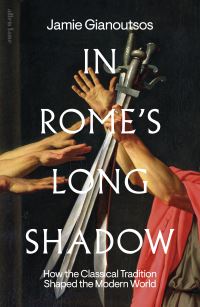
A fascinating history of the republican tradition that modern states inherited from ancient Rome. Julius Caesar, Lucretia, Cincinnatus, Augustus, the Gracchi brothers: Roman figures have had an extraordinary influence on modern republics from America to France. Here historian Jamie Gianoutsos traces the Roman republic and its afterlives through the revolutionary birth of modern republics in the seventeenth and eighteenth centuries to reveal how ancient ideas of liberty, virtue, and corruption shaped the political imagination of a new age. Moving from stories of tyranny and collapse in ancient Rome to moments of crisis in early modern Europe and the Atlantic world, Gianoutsos uncovers recurring patterns in the rise – and fall – of republics.

Agent Al Dewey of the Kansas Bureau of Investigation has a horrific murder to solve – and precious few clues. Capote’s reconstruction of the slaughter of an entire family shows a gripping mix of journalistic skills and imaginative power.

This revelatory history explores the ancient roots of Muslim Europe, tracing their journey through the Mediterranean. Our odyssey begins in the little-known Sufi lodges in Cyprus, where Muslims arrived in 647AD. From there, we travel through the continent – visiting places such as Sicily, Malta, Portugal and Spain – encountering red-haired European Sultans and Arabic-speaking Christian Kings. We meet forgotten Muslim pioneers, such as Abbas Ibn Firnas who gave us flight and Ibn Sina who gave us modern medicine. We see the Islam-inspired mudejar art of fourteenth-century Christians in Spain, and how such cross fertilisation birthed Europe’s ‘Renaissance’. We discover the long-forgotten tombs of European Muslims who knew the Prophet Muhammad, and the author – award-winning writer Tharik Hussain – becomes the first Muslim in over 900 years to pray inside the remains of a nameless Sicilian Mosque.

On 1st May 1776 a radical young professor named Adam Weishaupt founded a secret society whose aim was to infiltrate and overturn the system of world power from within. Intellectuals, judges, politicians and poets joined, united by Enlightenment ideals and liberal attitudes towards politics and religion. Within a decade the Order, with its bizarre ciphers and melodramatic rituals, was gone. Outed and banned by the authorities, its leaders were prosecuted and exiled; its effects had been minimal. Yet to this day millions of people worldwide maintain that its collapse was a sham and that for 250 years this shadowy cabal of self-appointed power brokers, whose members now include Hillary Clinton, George Soros, Bill Gates and Taylor Swift, has been manipulating world events. Here is a complete history of the brief, troubled life of the Illuminati and the conspiracy theory they spawned, from which all others have since derived.

The follow-up to Hanif Kureishi’s extraordinary hospital memoir, ‘Shattered’, this is the story of what came next – a year of living at home in London after paralysis, told through scenes of carers, physio, insomnia, sex, money, football, film sets, festivals and family. The song ‘Are You with Me Now?’ was a regular soundtrack to the drives Hanif and partner Isabella would take from Rome to her mother’s house on the Amalfi Coast, both of them singing along as they skirted the Bay of Naples, in the time before the accident which paralysed him. This book takes its title from that music – and it is a question that has now become more urgent and more complex. Beginning with this memory of the past and ending with his marriage to Isabella and his first faltering steps, Hanif Kureishi, with son Carlo, charts how a writer, a couple and a family adapt to disability.

Edmund de Waal’s grandmother, Elisabeth, aspires to be a poet. She is a young woman studying for a law degree in 1920s Vienna; she enters a dramatic correspondence with one of the totemic writers of the age, Rainer Maria Rilke. She is young, ambitious, uncertain; he is greatly revered. She dares to share her work, and he gives her encouragement and advice. They exchange letters for the five years until his death, alongside books, translations, poems in manuscript. Decades later when her grandson starts to write, it is Elisabeth’s turn to act as mentor, to take this young man seriously and to write him letters of encouragement. And most importantly, to introduce him to the poetry of Rilke. This work follows Edmund’s creative journey, from apprentice potter, familiar with failure, to a successful life as an artist.
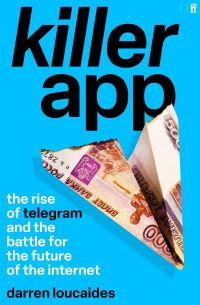
Telegram is one of the world’s most popular social networks. Its low-moderation, privacy-focused ethos has made it an ideal platform for organising social movements – but it also facilitates extremists, violent terrorists and disinformation networks. Having avoided attempts by governments around the world to curtail suspected illegal activity on the platform, Telegram’s Russian founder, Pavel Durov, was arrested for alleged complicity with organised crime, drug trafficking and the distribution of child sex abuse material – charges he denies. Durov and his team had long approached the matter of content moderation with a laissez-faire and libertarian philosophy. Now a fierce debate has emerged: could a CEO really be held liable for what was said and done on their platform? Based on years of reporting and intimate access to his employees, friends and associates, ‘Killer App’ tells the story of how Durov’s social media platform changed the
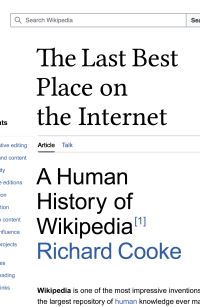
The first post to appear read simply: ‘hello world’. Two decades later, Wikipedia has defied the usual tech trajectory of commercialization and corruption and now stands as the largest repository of human knowledge in existence, containing over six million articles, accessed millions times every day by users throughout the world. It has held true to its founding principles: it is still free to use, still worked on by unpaid, amateur and mostly anonymous volunteers, and still home to information as varied as it is glorious. Here, Cooke takes us inside the world of Wikpedian’s, exploring the major schools of thought that underpin the project (Inclusionists and Deletionists), illuminating the concept of Wikidata and the site’s hidden legacy in AI, and investigating the inevitable controversies that have arisen – from specific pages on Jesus, Freddy Mercury, the Scots language, and Phillip Roth, to the problem of gender bias and sexism.
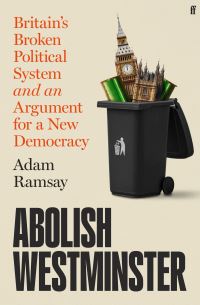
Go to any street in Britain and ask people what they think about politics, and most will tell you that it is broken, that they ‘don’t trust any of them’ – our politicians. In other words, they believe our system doesn’t work, or that it works only for a chosen few, the elites. A searing work of political analysis, ‘Abolish Westminster’ makes the case that most people are in fact correct: our politics is broken. Lifting the lid on the British state and society, the book explains why. Examining the lack of accountability faced by our major governmental departments, the pliancy of our cultural institutions and the malleability of national identity, it reveals how power and money are often bent back to the powerful and wealthy – and how, historically, this has almost always been the case, producing disastrous effects. And so, Adam Ramsay points to a radical possibility in an effort to re-establish democracy: breaking up Britain.

'Arthur’s experience in the role is unparalleled and this is a truly captivating memoir of an extraordinary career, told by the man the royals themselves seek out in the crowd.' Emily Nash.
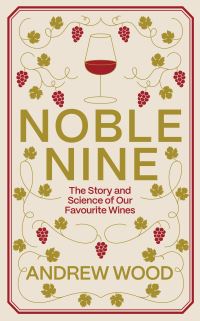
‘Noble Nine’ delves into fascinating botanical history and cutting edge science to explore why wine tastes the way it does, and how biology, weather and human shape it. Hugely informative and entertaining, it opens a unique window onto wine: its qualities, its heritage, and its future, from vine to glass and every stage in between.
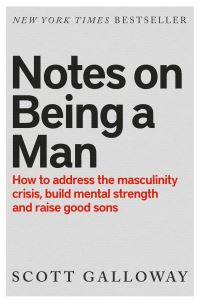
Boys and men are in crisis. Rarely has a cohort fallen further and faster than young men living in Western democracies. Boys are less likely to graduate from high school or college than girls. One in seven men reports having no friends, and men account for three of every four deaths of despair in America. Even worse, the lack of attention to these problems has created a void filled by voices espousing misogyny, the demonization of others, and a toxic vision of masculinity. But this is not just a male issue: women and children can’t flourish if men aren’t doing well. As we know from spasms of violence, there is nothing more dangerous than a lonely, broke young man. Scott Galloway has been sounding the alarm on this issue for years. In this book, he explores what it means to be a man in modern America.
After Dark
1 × £10.99 In Search of Lost Thoughts
1 × £16.99 The Last Best Place on the Internet
1 × £18.99 Battle of the Arctic
1 × £14.99 In Cold Blood
1 × £20.00 How to Begin
1 × £18.99 Starting Today, I Choose to Be Happy
1 × £14.99 Italy in a Wineglass
1 × £12.99 In Rome's Long Shadow
1 × £25.00 Are You With Me Now?
1 × £20.00 The Village in Britain
1 × £25.00 Subtotal: £198.93