“Illuminati” has been added to your basket.
View basket
Showing 1–16 of 19 resultsSorted by latest
-
£25.00
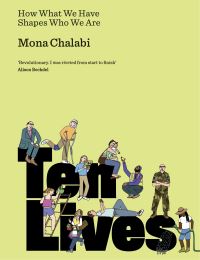
Anna has a comfortable life in a beautiful house thanks to her husband – until he suddenly asks for a divorce. Kristina faces a choice between raising her child and finishing her degree; growing other people’s babies afforded her a way out. Tiffany, meanwhile, earns so little that the farm which is her greatest source of reassurance is also her greatest source of stress. Then there’s Jacob: he earns vast sums in finance, and yet he’s less concerned with what he has than with what he has to lose. Ten people, ten different incomes, all of them somehow afraid. For five years, data journalist Mona Chalabi followed their lives, documenting how wealth shaped their feelings, choices, identities and insecurities. Exposing our various delusions and our universal trappedness, her arresting account of what she discovered asks how much is actually enough to be – and feel – safe?
-
£25.00
On 1st May 1776 a radical young professor named Adam Weishaupt founded a secret society whose aim was to infiltrate and overturn the system of world power from within. Intellectuals, judges, politicians and poets joined, united by Enlightenment ideals and liberal attitudes towards politics and religion. Within a decade the Order, with its bizarre ciphers and melodramatic rituals, was gone. Outed and banned by the authorities, its leaders were prosecuted and exiled; its effects had been minimal. Yet to this day millions of people worldwide maintain that its collapse was a sham and that for 250 years this shadowy cabal of self-appointed power brokers, whose members now include Hillary Clinton, George Soros, Bill Gates and Taylor Swift, has been manipulating world events. Here is a complete history of the brief, troubled life of the Illuminati and the conspiracy theory they spawned, from which all others have since derived.
-
£30.00
Most of life on Earth is plant. And yet the half a million species of plant alive today are a minuscule fraction of those that have ever existed. The true story of the plant kingdom’s almost inconceivable variety and ingenuity is to be found in the past. From the arrival of the first plants on land 484 million years ago to the globe-spanning diversity of flora we know today, ‘Green Kingdom’ traces the evolution of plant life across eons and continents, reanimating the lost worlds that shaped its course and dramatically expanding our vision of what it means to be a plant. Through the stories of sixteen plant families, from the humble bog moss to the exquisite adaptations of the orchid, we witness how plant life colonised land, pioneered leaves, recruited fungi, invented wood, sunk roots, formed seeds, manipulated animals and ultimately came to dominate our planet.
-
£25.00
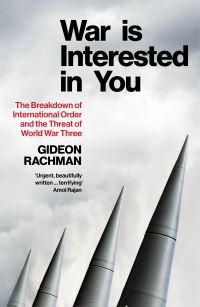
A long period of peace and stable relations between the world’s most powerful nations is coming to an end. Major wars have broken out in Europe and the Middle East, tensions are rising in East Asia, world leaders have spoken publicly about the possibility of a Third World War and intelligence agencies have never seen the world in a more dangerous and precarious state. Making use of Rachman’s unique, unparalleled access to leaders in political and intelligence spheres around the globe and full of extremely well-informed and insightful analysis, ‘War is Interested in You’ explores how we got to this point in global affairs and, crucially, what happens next – in this case, the increasing risk of global conflict.
-
£16.99
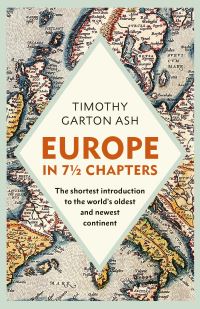
It has never been more important to understand the rich and fascinating story of the European continent. As the old global order crumbles under the double shock of Donald Trump and Vladimir Putin, everyone is wondering whether Europe can step into the breach. But what is this Europe? Drawing on a lifetime of studying, travelling in and writing about Europe, Timothy Garton Ash tells the continent’s story in a hundred pages. Brilliantly readable, witty, accessible yet profound,’ Europe in 7 1/2 Chapters’ takes you on an exhilarating journey through geography, history and culture – from wars and revolutions to food and football – to show how Europe came to be as it is today: more united than ever, and more divided. Can it still flourish in this dangerous new world and even shape it for the better?
-
£25.00
This work combines forensic new research with vivid and compelling narrative to provide an entirely new history of Britain that for the first time clarifies the true significance of the transatlantic trade in enslaved Africans to Britain’s development as a modern nation. Between the birth of the trade in the 16th century and its abolition in 1807, Britain derived vast wealth from the traffic in Africans from West Africa to the Americas – but until now the people who conceived, designed and engineered that trade have been largely unknown to us. As a result, it has been impossible to trace where the wealth derived from slavery went, what purposes it was put to, who it empowered and what it enabled.
-
£25.00
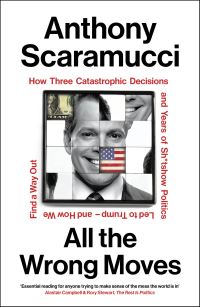
We’re living in an age of deep political anger and frustration. Where did it come from, and how do we get out? Anthony Scaramucci’s electrifying answer – rooted in history, business, and first-hand experience – reveals the true origins of America’s current crisis, charting how both political parties made a series of catastrophic decisions that dismantled a post-war period of unprecedented stability and prosperity. Each decision deepened inequality, corroded trust, and fuelled the anger that empowered Donald Trump’s rise and his assault on democracy. The story Scaramucci tells is ‘money-point-of-view history’: it gallops from Wall St to Main St, from the boardroom to the Situation Room.
-
£14.99
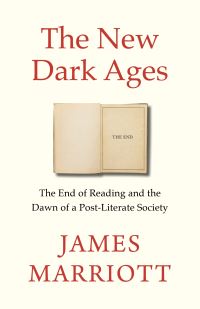
Books are dying. Across the world the number of people reading is in free fall. Literacy is declining or stagnating in most developed countries. At universities, students are unable to read the books assigned to them by their teachers. Addictive digital entertainment technologies have colonised our free time with infantilising ‘slop’. The golden chain of knowledge linking reader to reader through the centuries is breaking for the first time since the collapse of the Western Roman Empire ushered in the Dark Ages. This book is an impassioned attack on the trivial and meaningless culture of the screen and a defence of the written word.
-
£22.00
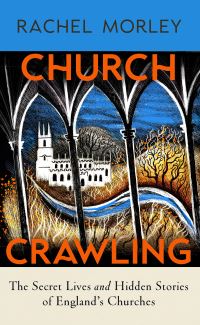
The poet John Betjeman coined the phrase ‘church crawling’ to describe his days out visiting churches. In the spirit of Betjeman, Rachel Morley’s book captures the magical experience of poking around a dusty village church, only to have it transform – through her expert eyes – into a portal to the past, one that brings England’s people and history to life in the most colourful, moving and unexpected ways. Through their wall-paintings and monuments, their graffiti and plaques, their jumble of furniture and curios, Morley shows these buildings to be the expression of centuries of communal memory and folk culture – time capsules of connection to ancient and medieval ways of thinking, to revolutions and wars, to lives both glorious and humble.
-
£25.00
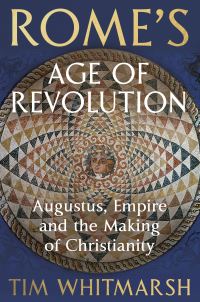
How did Christianity, starting out as a minor offshoot of Judaism, grow into an international faith that shaped the world as we know it? ‘Rome’s Age of Revolution’ corrects the triumphalist narrative that the Christian message was so persuasive, and indeed superior, that people converted in huge numbers, abandoning their pagan beliefs, thereby turning a small persecuted sect into the state religion of the Roman Empire. Tim Whitmarsh shows that Christianity would never have succeeded if it had not taken advantage of the infrastructure and culture of the Roman Empire; in turn the new religion was indelibly shaped and transformed by Roman beliefs and ideas, especially those circulating in the Greek-speaking, or Hellenistic, eastern parts of the empire. This radical transformation, Tim argues, can only be described as a revolution. The consequences are with us to this day.
-
£22.00
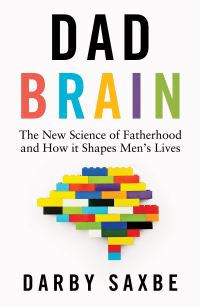
Clinical psychologist Darby Saxbe reveals parenthood fundamentally changes men’s brains and biology. Dad brains shrink (to become more efficient), testosterone levels drop (in a good way); men can even experience a form of postpartum depression, and of course their whole sense of meaning and identity can be challenged and transformed. Based on two decades of research and one of the world’s only longitudinal studies of men’s brains as they become fathers, ‘Dad Brain’ takes us from the author’s lab in Los Angeles, to a beachfront neuroimaging centre in Barcelona and a midwife’s office in Stockholm. It explores the different ways that men parent in different societies, how trends in men’s involvement with birth and parenting have shifted over the decades, class-based and racist assumptions about absent fathers, the rise of parenting outside the gender binary, old dads versus young dads, and much, much more.
-
£25.00
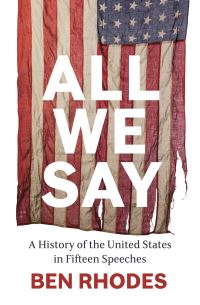
At a time when what it means to be an American is a matter of intense debate and division, Ben Rhodes – author and former presidential speechwriter – offers rare insight into the gap between who we say we are, and who we want to be. He offers a vital account of 15 speeches and orators – from Benjamin Franklin to Barack Obama – that tells the story of the United States as a battle over what it means to be an American.
-
£25.00
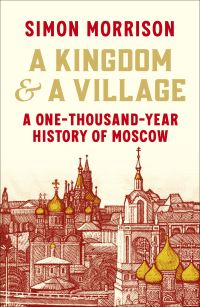
The city of Moscow stands at the centre of a nation comprising eleven percent of the globe’s landmass, 11 time zones and nearly 150 million people, some 13 million of whom live in the capital. In ‘A Kingdom and a Village’, historian Simon Morrison offers a vividly rendered history of Russia’s heart and soul, tracing its transformation from a ‘big village’ – the demeaning nickname the St. Peterburg nobility gave to its provincial neighbour – into a spectacular metropolis of vast geopolitical import.
-
£25.00
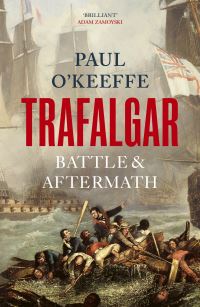
At or about 1.15 in the afternoon of 21 October 1805, Vice Admiral Horatio Nelson was struck by a 22-gramme, 15-millimetre French musket round fired down from the mizzen top of the Redoutable, a distance of some 70 feet to HMS Victory’s quarter deck. It nicked the edge of his epaulette, and passed diagonally down, through the material of his coat and into the left shoulder, fracturing the upper part of the scapula or shoulder blade, then the second and third rib. It pierced the left lung, dividing a branch of the pulmonary artery, and emerged to sever the spine, splintering the sixth and seventh vertebrae above and below as it crashed between. The soft lead ball – distorted by collisions with bone – ended its flight embedded in muscle two inches below the right scapula. In this fresh and visceral retelling of the battle of Trafalgar, Paul O’Keeffe traces the course of events both prior and subsequent to that fatal shot.
-
£22.00
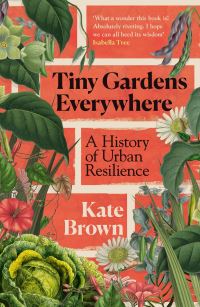
In the heart of bustling European and American cities lies an overlooked yet vibrant corner of resilience, ingenuity and magic: our gardens. From pre-Industrial England to modern-day Washington, via the Paris Commune, Barrackia in pre-war Berlin, Soviet allotments in Estonia, the orchards tended by Black migrants in Washington and food forests in contemporary Amsterdam, ordinary people, working with each other and with nature, cultivated life in the unlikeliest of places. Over the past three hundred years, these tiny gardens, often born from necessity and shaped by precarity, immigration and environmental crisis, thrived by recycling nutrients, remedying contaminated soil and transforming how we think about our relationship to the earth. This title is a hymn to the most fertile agriculture in recorded human history, showing that it occurred not on farms but with little effort in small garden beds.
-
£22.00
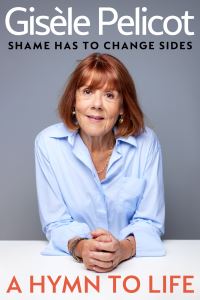
In 2024, Gisèle Pelicot inspired and moved millions of people with her astonishing courage and dignity as she chose to waive her right to anonymity in her legal fight against her husband and the 50 men accused of her sexual assault. Gisèle Pelicot’s call for shame to change sides in cases of sexual abuse, and the power of the messages she has sent out to the world, have generated an extraordinary public response and moved both women and men all over the world.
 Mini Murdle Junior: Holiday Hijinks