“Out of Colditz” has been added to your basket.
View basket
Showing 1–16 of 32 resultsSorted by latest
-
£22.00
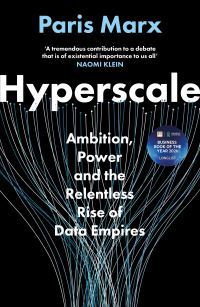
The cloud is an ethereal world of convenience and freedom. A place where memories and messages live nowhere and everywhere. But on the ground, sprawling server farms power our online world – while plundering our physical one. Delving into the labyrinthine industry of data centres that are now multiplying at an alarming rate, ‘Hyperscale’ is an urgent exposé of the ruinous physical infrastructure of the digital age. In the race to meet the AI revolution, tech overlords are waging a resource war as they trade our future for their profit. Marx unmasks a civilisational time bomb in the making with razor-sharp reporting and analysis to show that the greatest threat is not the spectre of AI, but a global disaster that has already begun.
-
£20.00
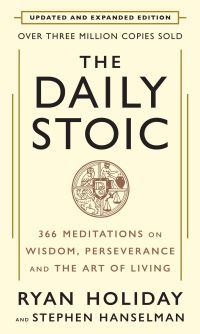
The Stoics’ unique blend of practicality and wisdom has been inspiring the most successful among us for centuries, from Roman emperors to Barack Obama, and most recently via Ryan Holiday’s bestselling ‘The Obstacle Is The Way’. If that book introduced readers to the idea that what is in the way is the way, ‘The Daily Stoic’ widens our view on the stoic philosophy and shows that it can be applied to any problem. From how to manage failure to getting what you want, the ideas of Seneca, Epictetus, Marcus Aurelius and others continue to be vitally relevant to today’s doers and thinkers. Here, in bold new translations, language is stripped down to reveal powerful aphorisms that cut straight to the heart of our day-to-day challenges.
-
£12.99
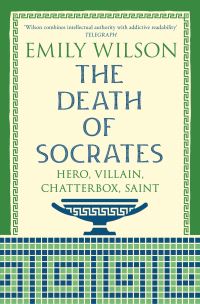
Socrates is revered as a man who spoke truth to power. Yet his death in 399 BC was the first time in recorded history that a democratic government condemned a person to death for their beliefs. His death was a potent symbol of free speech, and Socrates’ fate has haunted Western thought ever since – a guiding influence on Plato, John Stuart Mills, Nietzsche and Martin Luther King. In this incisive survey of philosophy and politics, renowned classicist and translator Emily Wilson unravels ancient philosophy’s most enduring – and hardest – questions: why did ancient Athens execute its leading intellectual? How do democracies deal with dissent? And can our own society allow for total freedom of speech and thought?
-
£14.99
Hell is other people. You are what you eat. Ignorance is bliss. Or is it? We read them, perhaps give a knowing chuckle, and move on with next to no thought. But what do these timeless and iconic quotations really mean? Thankfully, language and philosophy obsessive Eli Burnstein is on hand to unpack forty-five of humanity’s most iconic statements with lightness and wit. From Aristotle to Hannah Arendt, William Blake to Simone de Beauvoir, each delightfully illustrated entry will improve your grasp of the meaning behind their riddle some words, and deepen your appreciation for the big ideas they stand for.
-
£10.99
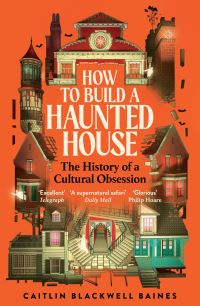
What makes a house haunted? Why do some buildings conjure up a reputation for being particularly creepy, while others leave us unmoved? Barring the possibility of a looming afterlife, what are the particular features, contexts and histories that lend a building the dreaded identity of haunted house? This book tours some of the world’s most famously spine-chilling structures in search of answers.
-
£30.00
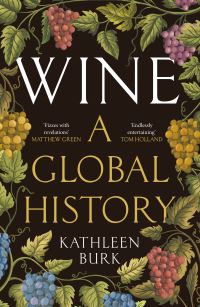
In the beginning, there was the vine. Wine: a drink, a medicine, a ritual and a commodity. Across millennia, it has been used to celebrate and commiserate, as a negotiating tool and a diplomatic gift. But where – and when – was it first discovered? And how did it become a worldwide phenomenon? From the planting of grape seeds in conquered territories across Ancient Rome, to the uprooting of vineyards during the Chinese Communist Revolution, this is the first truly global survey of wine from acclaimed historian Kathleen Burk. From a symbol of civilisation to the depths of debauchery, the formation of new trade routes to the consolidation of empires, Burk traces the story of our contemporary civilisation through one of the world’s most ancient – and sought-after – pleasures.
-
£22.00
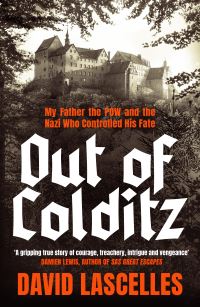
The grandson of a King. The son of the Viceroy of India. Churchill’s nephew. Held captive at the notorious Colditz prisoner of war camp, they were the Prominente: scions of the British establishment, and pawns in the hands of Nazi leaders. As a German defeat loomed, the SS head of the POW camps Gottlob Berger made a pivotal decision: he would disobey direct orders and spare their lives. ‘Please remember what I have done for you when the war ends,’ he asked. This Nazi overseer, who would later be convicted of war crimes, held their future in his hands. Eighty years later, David Lascelles – the son of George, Earl of Harewood, who would never have been born if his father had been executed – traces the Prominentes’ extraordinary journey and wonders who Gottlob Berger was and what motivated his fateful decision: compassion? Remorse? Or self-interest?
-
£20.00
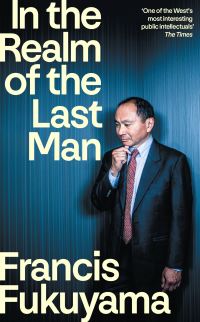
In 1989, one year before the fall of the Berlin Wall, Francis Fukuyama – then an early-career academic who had cut his teeth conducting research for Ronald Reagan during his years as California governor – delivered a conference paper that would go on to become one of the most celebrated – and controversial – works of political theory of our time: The End of History. By 2009, he had broken with his neoconservative mentors, from Allan Bloom to Paul Wolfowitz, after recanting his support for the ‘disastrous’ invasion of Iraq in 2003, and the laissez-faire economics that produced the financial crash of 2008. But why did he change his mind? In this political memoir, encompassing his father’s involvement in the civil rights movement and his own work on CIA contracts in the 1980s, Fukuyama analyses his life alongside the seismic political shifts of the last 30 years – from Bush to Obama to Trump, from the War on Terror to Russia’s invasion of
-
£12.99
Mountains, meridians, rivers and borders; these are some of the features that carve up the world on our maps and in our minds. But geography is far less set in stone than we might believe and, over time, we have become experts at reshaping our surroundings. From the Qhapaq Ñan, South America’s ‘Great Road’, and the Panama Canal to Mozambique’s railways and Korea’s sacred Baekdu-daegan mountain range, Samson explores how we mould the world around us. And how, as we etch our needs onto the natural landscape, we alter the course of history. An immense work of cultural geography touching on ecology, sociology, history and politics, ‘Earth Shapers’ argues that, far from being constrained by geography, we are instead its creators.
-
£14.99
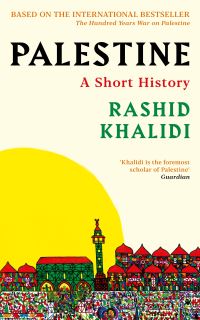
‘Come for a walk with me, if you would, along the streets of Jerusalem. My family has walked these streets for more than a thousand years.’ With this invitation, this book offers a powerful introduction to Palestinian history through a century of conflict and resistance. Blending incisive research with his own family memories, celebrated scholar Rashid Khalidi traces Palestine’s story from the British occupation to Israel’s ongoing colonial war. Powerfully explaining the history behind the world’s most urgent – and misunderstood – conflict, Khalidi explores why Israel has long fought against Palestine.
-
£25.00
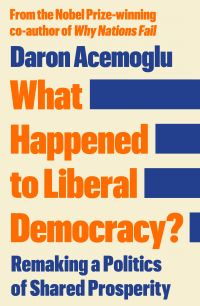
From its inception, liberalism offered a glittering promise of shared prosperity, equality, democratic values and the free pursuit of knowledge. At first, it flourished. And then it faltered. Once a tantalising beacon of hope, it began to erode and decay at the hands of elitism, intolerance and rising autocracy. One could say that liberalism is broken. So what comes next? Nobel prize-winning co-author of ‘Why Nations Fail’ Daron Acemoglu charts the rise and fall of liberal democracy, and offers hope for a way forward: a new theory that lays the groundwork for how we can – and must – remake liberalism before it’s too late.
-
£22.00
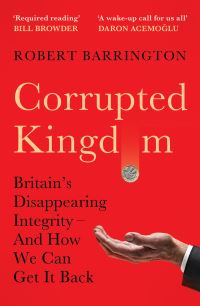
Britain is complacent about corruption. We are used to thinking of ourselves as firm defenders of fairness and the rule of law. But our institutions have never been more corrupt, from scandals in parliament and local government to crises in housing and the NHS. The evidence is impossible to ignore. Political leaders face a clear choice: tackle corruption or continue on the road to decline. Robert Barrington is one of the world’s leading researchers on corruption. ‘Corrupted Kingdom’ is his comprehensive examination of how corruption manifests in Britain, from politicians to prisons, the Monarchy and the Met. He assesses the origins of corruption, from Londongrad to the end of Empire, and shows how we can best reverse the decline and restore trust in politics and the democratic process. Vital and authoritative, this book provides an essential insight into why the abuse of power harms us all – and how we can banish corruption for good.
-
£12.99
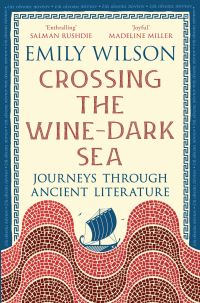
How do we give old words new voices? What must a translator lose – and might she gain – when she moves between languages, bringing ancient stories to modern life? Reflecting on the inspiration, interpretation and (mis)appropriation of words from Antiquity to today, Emily Wilson invites us to explore the translator’s art and mind – and gives a wholly fresh insight into the joys and quandaries of her own work. From Athenian comedy and Rome’s love of Greek culture to Han Kang’s novels, Cardi B’s lyrics and the discoveries she made whilst translating Homer, this is a playful and fascinating voyage into the promise, possibility and constant renewal of our founding classical culture.
-
£9.99
As dusk falls on an English summer, a detective interviews a stranger with a sinister story to tell. Among the sands of an Egyptian desert, a tourist buys a souvenir which is not quite as it seems. On the sparkling waters of the Scilly Isles, a boating trip turns deadly. It might be the height of summer, but in the midday sun – it’s murder. Ten tales of murder, mystery and mayhem.
-
£12.99
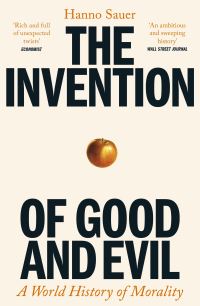
For almost five million years, humans have been locked in a relationship with morality, inventing and reinventing the concepts of ‘Good’ and ‘Evil’, and weaving them into our cities, laws and customs. Morality is often associated with restraint and coercion; restriction and sacrifice; inquisition, confession and a guilty conscience. Joyless and claustrophobic, it is a device used to shames us into compliance. This impression is not entirely incorrect, but it is certainly incomplete. Using our past as a basis for a new understanding of our future, Hanno Sauer traces humanity’s fundamental moral transformations from our earliest ancestors through to the present day, when it seems we have never disagreed more over what it means to be good. Our current political disagreements may feel like the end of the world, but where will the evolution of morality take us next?
 Out of Colditz