Showing 1–12 of 50 resultsSorted by latest
-
£16.99
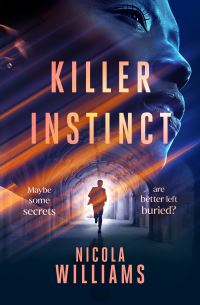
When the Head Clerk at her Chambers is murdered, Lee Mitchell doesn’t know who she can trust. One of the last people to see him alive, the crime is pinned on Junior Clerk Dean who ‘seems like the type’. Working-class and still living on the estate where he grew up, he has the most to gain from Tom’s death. But Lee knows how easily prejudices can snowball into convictions – and steps in to defend him. As the trial progresses, people Lee has worked with for years become suspects as her Chambers crumble into a world of chaos and deceit. And, what of the diary, whispered about by those at Chambers? The one Tom used to blackmail Lee’s friends and enemies alike to do his bidding? The one containing secrets some might kill to keep hidden? Maybe finding it will be the key to solving his murder. Or maybe some secrets are better left buried.
-
£25.00
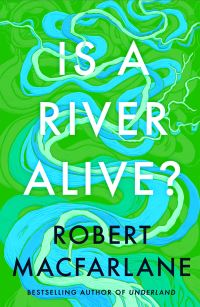
At the heart of ‘Is a River Alive?’ is a single, transformative idea: that rivers are not mere matter for human use, but living beings, who should be recognised as such in both imagination and law. Macfarlane takes the reader on a mind-expanding global journey into the history, futures, people and places of the ancient, urgent concept. Around the world, rivers are dying from pollution, drought and damming. But a powerful movement is also underway to recognize the lives and the rights of rivers, and to re-animate our relationships with these vast, mysterious presences whose landscapes we share. The young ‘rights of nature’ movement has lit up activists, artists, law-makers and politicians across six continents – and become the focus for revolutionary thinking about rivers in particular.
-
£16.99
Joe Dunthorne had always wanted to write about his great-grandfather, Siegfried: an eccentric scientist who invented radioactive toothpaste and a Jewish refugee from the Nazis who returned to Germany under cover of the Berlin Olympics to pull off a heist on his own home. The only problem was that Siegfried had already written the book of his life – an unpublished, two-thousand page memoir so dry and rambling that none of his living descendants had managed to read it. And, as it turned out when Joe finally read the manuscript himself, it told a very different story from the one he thought he knew. Thus begins a mystery which stretches across the twentieth century and around the world, from Berlin to Ankara, New York, Glasgow and eventually London – a mystery about the production of something much more sinister than toothpaste.
-
£20.00
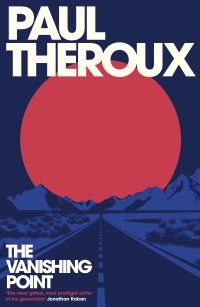
The stories in Paul Theroux’s ‘The Vanishing Point’ are both exotic and domestic, their settings ranging from Hawaii to Africa and New England. Each focuses on life’s vanishing points – a moment when seemingly all lines running through one’s life converge, and one can see no farther, yet must deal with the implications. With the insight, subtlety, and empathy that has long characterized his work, Theroux has written deeply moving stories about memory, longing, and the passing of time, reclaiming his status, once again, as a master of the form.
-
£18.99
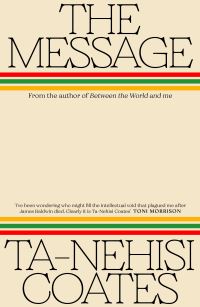
With his bestseller, ‘Between the World and Me’, Ta-Nehisi Coates established himself as a unique voice in his generation of American authors; a brilliant writer and thinker in the tradition of James Baldwin. In his keenly anticipated new book, ‘The Message’, he explores the urgent question of how our stories – our reporting, imaginative narratives and mythmaking – both expose and distort our realities. Travelling to three resonant sites of conflict, he illuminates how the stories we tell – as well as the ones we don’t – work to shape us.
-
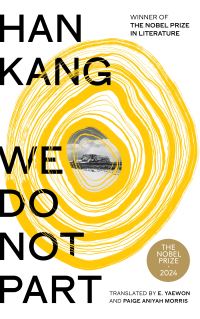
£18.99
One morning in December, Kyungha is called to her friend Inseon’s hospital bedside. Airlifted to Seoul for an operation following a wood-chopping accident, Inseon is bedridden and begs Kyungha to take the first plane to her home on Jeju Island to feed her pet bird, who will quickly die unless it receives food. Unfortunately, as Kyungha arrives a snowstorm hits. Lost in a world of snow, she begins to wonder if she will arrive in time to save the bird – or even survive the terrible cold that envelops her with every step. But she doesn’t yet suspect the darkness which awaits her at her friend’s house. There, the long-buried story of Inseon’s family surges into light, in dreams and memories passed from mother to daughter, and in a painstakingly assembled archive, documenting the terrible massacre seventy years before that saw 30,000 Jeju civilians murdered.
-
£20.00
Deborah Levy invites the reader into the interiors of her world, sharing her most intimate thoughts and experiences, as she traces and measures her life against the backdrop of the literary and artistic muses that have shaped her. From Marguerite Duras to Colette and Ballard, and from Lee Miller to Francesca Woodman and Paula Rego, we can relish here the richness of their work and, in turn the richness of the author’s own. Each page draws upon Levy’s life in exalting ways, encapsulating the wonderful precision and astonishing depth of her writing, as she seamlessly shifts between and meditates on questions of mortality, language, suburbia, gender, consumerism and the poetics of every day living.
-
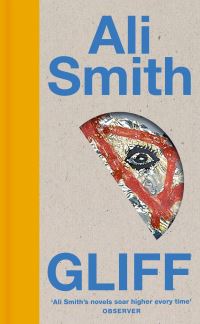
£18.99
‘Gliff’ – a Scots or Northern word for a glimpse, a shock, a glance – will not only tell its own story but also contain within it a hidden story, to be revealed only in a second novel, ‘Glyph’ – from the Greek, meaning a mark, carving or symbol – to be published a year later. In form and feeling, ‘Gliff’ will light a new, fabular and fabulist path for Ali Smith and for us through the gathering darkness of our chaotic times.
-
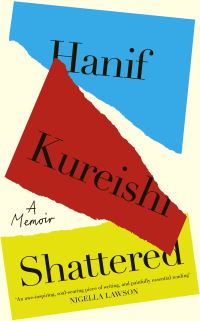
£18.99
On Boxing Day 2022, in Rome, Hanif Kureishi had a fall. When he came to, in a pool of blood, he was horrified to realise he had lost the use of his limbs. He could no longer walk, write or wash himself. He could do nothing without the help of others, and required constant care in a hospital. So began an odyssey of a year through the medical systems of Rome and Italy, with the hope of somehow being able to return home, to his house in London. While confined to a series of hospital wards, he felt compelled to write, but being unable to type or to hold a pen, he began to dictate to family members the words which formed in his head. The result was an extraordinary series of dispatches from his hospital bed – a diary of a life in pieces, recorded with rare honesty, clarity and courage.
-
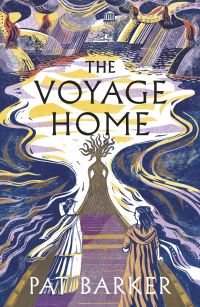
£20.00
After ten blood-filled years, the war is over. Troy lies in smoking ruins as the victorious Greeks fill their ships with the spoils of battle. Alongside the treasures looted are the many Trojan women captured by the Greeks – among them the legendary prophetess Cassandra, and her watchful maid, Ritsa. Enslaved as concubine – war-wife – to King Agamemnon, Cassandra is plagued by visions of his death – and her own – while Ritsa is forced to bear witness to both Cassandra’s frenzies and the horrors to come. Meanwhile, awaiting the fleet’s return is Queen Clytemnestra, vengeful wife of Agamemnon. Heart-shattered by her husband’s choice to sacrifice their eldest daughter to the gods in exchange for a fair wind to Troy, she has spent this long decade plotting retribution, in a palace haunted by child-ghosts.
-
£20.00
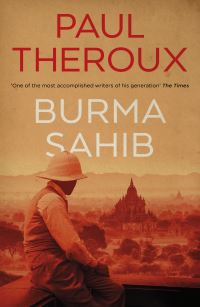
Before George Orwell was Orwell – the pen name he took on becoming a writer – he was Eric Blair, an unlikely policeman in Burma. 19 years old, unusually tall, highly intelligent, a diffident loner fresh from Eton, Blair stood out amongst his fellow trainees in 1920s Mandalay. It was here, over five years in the narrow colonial world of the Raj – a decaying system steeped in overt racism and petty class-conflict – that Eric Blair became the George Orwell we know: an anti-imperialist, a socialist and a writer of rare commitment. The inner journey he made in these years is remarkable, but in the absence of letters or diaries from the period, this richly complex transformation can only be told in fiction, as it is here by Paul Theroux, in one of his most striking and accomplished novels.
-
£18.99
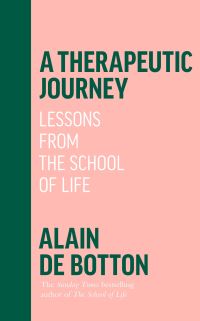
This is a text about getting unwell. About losing direction and hope. About imagining that we have let ourselves and everyone down. But it is also a book about getting better. About regaining the thread, rediscovering meaning and finding a way back to connection and joy. Here, Alain de Botton follows the arc of a mental health journey, from crisis to recuperation; the moments we realize we cannot cope; the acts of selfcare or therapy in which we find respite; and the days we finally reclaim a sense of stability. Written with understanding and kindness, it is both a source of companionship in our loneliest moments – whether it’s a relationship breakdown, a career setback or anxiety around the everyday – and a practical guide that will help us find reasons for hope.