Showing 1–12 of 173 resultsSorted by latest
-
£22.00
The great majority of people alive today have come of age in a world of remarkable stability, presided over by either one or two superpowers. This is not to say the world has been peaceful; but it has to an extent been predictable. As an increasing number of Great Powers now jostle for regional supremacy our world has become more fragile, unpredictable – and combustible. To understand the threats that face us in this complex new terrain, we must look to the lessons of the late nineteenth and early twentieth century – a time when Great Powers clashed and sought regional dominance, when nationalism and populism were on the rise, and many felt that globalization had failed them: a time, in other words, that carries eerie parallels with our own. ‘The Coming Storm’ is a prescient, thoughtful and chilling examination of the current state of the world.
-
£25.00
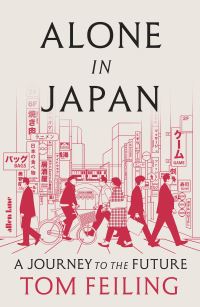
When Tom Feiling moved to Tokyo as a student in the early nineties, Japan was a beacon of the future: a rising superpower, a technology giant, a global symbol of prosperity, civility and success. When he returned 24 years later, the country was still a sign of things to come – but, he began to realize, it was no longer a beacon. It was a warning. This is a unique account of contemporary Japan, which travels from the quiet of its furthest flung villages to the aspiration and dynamism of its cities. It tells the story of how, from the mid-seventies onwards, Japanese society unknowingly embarked on a vast, silent process of transformation that is still unfolding today.
-
£25.00
The Hotel Lutetia is a Paris institution, the only ‘grand’ hotel on the city’s bohemian Left Bank. Ever since it opened, it has served as a meeting place for artists, musicians and politicians. Andre Gide took his lunch here, James Joyce lived in one of its rooms, Picasso and Matisse were regular guests. It has a darker history, too. During one short period, it became a focus for some of the most dramatic and terrible events in recent history. In the 1930s the Hotel Lutetia attracted intellectuals and political activists, forced to flee their homes when Hitler came to power, who met here with the hope of forming an alternative government. But when war came, Paris was occupied, and the hotel became the headquarters of the German military intelligence service – and the centre of their operation to root out enemies of the Reich.
-
£25.00
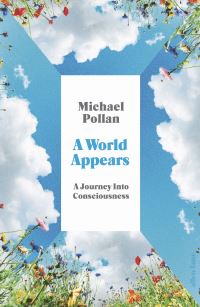
How does it feel to be you with your own personal feelings, thoughts and experiences? Every one of us is intimately familiar with consciousness, but no one knows how – or why – it came to be that three pounds of grey matter can generate a subjective point of view. The early 1990s marked the birth of a new science of consciousness, based on the assumption that the phenomenon could be explained in terms of brain activity, but that effort is faltering, and wilder ideas, such as panpsychism, are now getting a hearing. Indeed, there is now reason to doubt that ‘objective science’ as we have known it since Galileo has the right tools to plumb first-person experience. This title takes Michael Pollan from the laboratories where scientists are searching for the neural correlates of consciousness to encounters with philosophers and novelists and Buddhist monks, whom he finds have just as much to teach us about consciousness, if not more.
-
£20.00
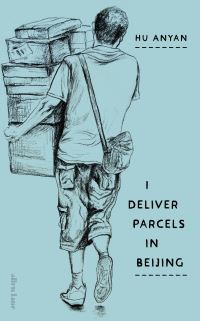
In the twenty years following Hu AnYan’s high school graduation, he has held nineteen different jobs. He’s been a convenience store clerk, a bicycle salesman, a security guard and a delivery driver (among many other things). He moves from city to city in China, slipping away any time the work gets too punishing or the bosses too bossy, carrying with him nothing but his copies of Chekhov and Carver. ‘I Deliver Parcels in Beijing’ is Hu’s account of his life as a low-wage labourer working to live, not living to work.
-
£30.00
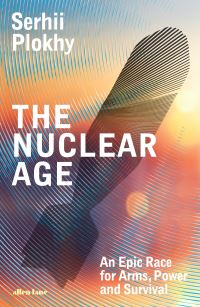
Acclaimed historian Serhii Plokhy paints an intricate picture of a world governed by fear. From the first artificial splitting of the atom in 1917 and the race to create the first atomic bomb in World War II, through the fraught arms race of the Cold War, to the imperialism, neo-colonial motivation and wars being waged today, the threat posed by nuclear weapons is as pertinent as ever. As he examines the motivations of key players, Plokhy confronts the crucial question of our age: what can we learn from the first nuclear arms race that can help us to stop the new one?
-
£20.00
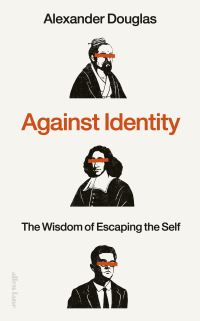
Modern life encourages us to pursue the perfect identity. Whether we aspire to become the best lawyer or charity worker, life partner or celebrity influencer, we emulate exemplars that exist in the world Рhoping it will bring us happiness. But this often leads to a complex game of envy and pride. We achieve these identities but want others to imitate us. We disagree with those whose identities contradict ours Рleading to polarisation and even violence. And yet when they thump against us, we are ashamed to ring hollow. In this book, philosopher Alexander Douglas seeks an alternative wisdom. Searching the work of three thinkers Рancient Chinese philosopher Zhuangzi, Dutch Enlightenment thinker Benedict de Spinoza, and 20th Century French theorist Ren̩ Girard Рhe explores how identity can be a spiritual violence that leads us away from truth.
-
£25.00
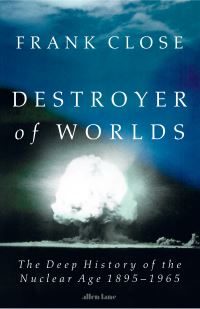
Henry Becquerel’s accidental discovery, in Paris in 1896, of a faint smudge on a photographic plate sparked a chain of discoveries which would unleash the atomic age. ‘Destroyer of Worlds’ is the story of how pursuit of this hidden source of nuclear power, which began innocently and collaboratively, was overwhelmed by the politics of the 1930s, and following devastation of Hiroshima and Nagasaki opened the way to a still more terrible possibility: a thermonuclear bomb, the so-called ‘backyard weapon’, that could destroy all life on earth – from anywhere.
-
£25.00
When longtime AI expert and journalist Karen Hao first began covering OpenAI in 2019, she thought they were the good guys. Founded as a nonprofit with safety enshrined as its core mission, it was meant, its leader Sam Altman told us, to act as a check against more purely market forces. But the core truth of this massively disruptive sector is that it requires an unprecedented amount of proprietary resources: the ‘compute’ power of scarce high-end chips, the sheer volume of data that needs to be amassed at scale, the humans on the ground ‘cleaning it up’ for sweatshop wages throughout the Global South, and a truly alarming spike in the need for energy and water underlying everything. In this book, Hao recounts the meteoric rise of OpenAI and shows us the sinister impact that this industry is having on society.
-
£35.00
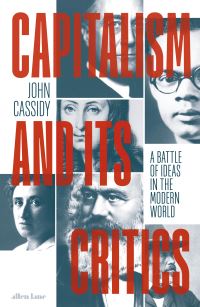
At a time when we are faced with fundamental questions about the sustainability and morality of the economic system, this book provides a kaleidoscopic history of global capitalism, from colonialism and the Industrial Revolution to the ecological crisis and artificial intelligence. John Cassidy adopts a bold new approach: he tells the story through the eyes of the system’s critics. From eighteenth-century weavers who rebelled against early factory automation to Eric Williams’s paradigm-changing work on slavery and capitalism, to the Latin American dependistas, the international Wages for Housework campaign of the 1970s, and the modern degrowth movement, this absorbing narrative traverses the globe.
-
£25.00
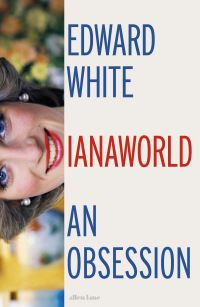
In’ Dianaworld’, Edward White offers both a portrait of the princess and a group portrait of those who existed in her orbit – from her royal in-laws, her servants, and the dilapidated ranks of the British aristocracy from which she rose, to drag performers, artists, Britain’s ethnic minorities, and the Gen Z superfans who maintain her status as a cultural icon. Drawing on a wide array of sources and perspectives, many never used in books about Diana or the royal family, White vividly recreates the world Diana lived in, explores the growth of her global reputation, and illuminates her lasting impact on the world she left behind.
-
£25.00
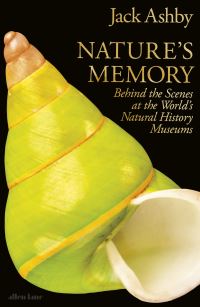
A behind-the-scenes tour through the world’s greatest natural history museums, revealing how their hidden secrets can help us in the fight against climate change.