Showing 1–12 of 14 resultsSorted by latest
-
£25.00
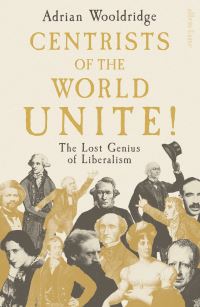
We live in an age of extremes: populist leaders are setting the agenda, autocracies are on the march, and the liberal establishment is a bewildered blob, devoid of new ideas or fresh solutions. Having once powered progress in the form of democracy, mass welfare and defeating totalitarianism, liberals have the power to save the world again – but only if they rediscover the lost genius of their creed. Guiding us skilfully and entertainingly through the intellectual, cultural and political histories of liberalism, this book lays out a centrist agenda for today’s problems. It reminds us of the dynamism and fixed principles that have shaped the successes of liberalism and warns us against splitting into sub-groups that fail to grapple with the common good.
-
£22.00
The great majority of people alive today have come of age in a world of remarkable stability, presided over by either one or two superpowers. This is not to say the world has been peaceful; but it has to an extent been predictable. As an increasing number of Great Powers now jostle for regional supremacy our world has become more fragile, unpredictable – and combustible. To understand the threats that face us in this complex new terrain, we must look to the lessons of the late nineteenth and early twentieth century – a time when Great Powers clashed and sought regional dominance, when nationalism and populism were on the rise, and many felt that globalization had failed them: a time, in other words, that carries eerie parallels with our own. ‘The Coming Storm’ is a prescient, thoughtful and chilling examination of the current state of the world.
-
£25.00
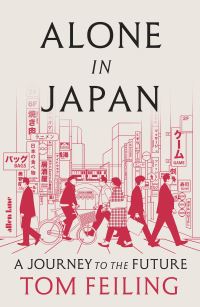
When Tom Feiling moved to Tokyo as a student in the early nineties, Japan was a beacon of the future: a rising superpower, a technology giant, a global symbol of prosperity, civility and success. When he returned 24 years later, the country was still a sign of things to come – but, he began to realize, it was no longer a beacon. It was a warning. This is a unique account of contemporary Japan, which travels from the quiet of its furthest flung villages to the aspiration and dynamism of its cities. It tells the story of how, from the mid-seventies onwards, Japanese society unknowingly embarked on a vast, silent process of transformation that is still unfolding today.
-
£25.00
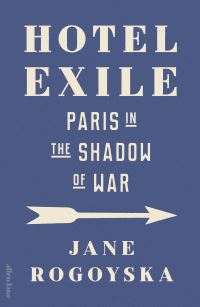
The Hotel Lutetia is a Paris institution, the only ‘grand’ hotel on the city’s bohemian Left Bank. Ever since it opened, it has served as a meeting place for artists, musicians and politicians. Andre Gide took his lunch here, James Joyce lived in one of its rooms, Picasso and Matisse were regular guests. It has a darker history, too. During one short period, it became a focus for some of the most dramatic and terrible events in recent history. In the 1930s the Hotel Lutetia attracted intellectuals and political activists, forced to flee their homes when Hitler came to power, who met here with the hope of forming an alternative government. But when war came, Paris was occupied, and the hotel became the headquarters of the German military intelligence service – and the centre of their operation to root out enemies of the Reich.
-
£25.00
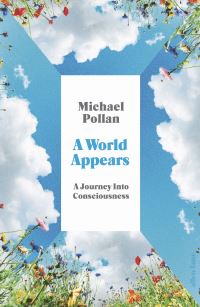
How does it feel to be you with your own personal feelings, thoughts and experiences? Every one of us is intimately familiar with consciousness, but no one knows how – or why – it came to be that three pounds of grey matter can generate a subjective point of view. The early 1990s marked the birth of a new science of consciousness, based on the assumption that the phenomenon could be explained in terms of brain activity, but that effort is faltering, and wilder ideas, such as panpsychism, are now getting a hearing. Indeed, there is now reason to doubt that ‘objective science’ as we have known it since Galileo has the right tools to plumb first-person experience. This title takes Michael Pollan from the laboratories where scientists are searching for the neural correlates of consciousness to encounters with philosophers and novelists and Buddhist monks, whom he finds have just as much to teach us about consciousness, if not more.
-
£40.00
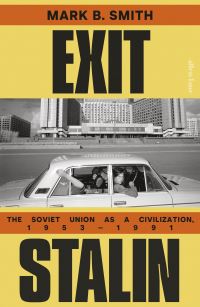
With Stalin’s death, the Soviet Union remained a repressive, harsh and belligerent place, but one which became more predictable for its citizens and one which made a genuine attempt to create the egalitarian, progressive country that the Russian Revolution had once promised. That this attempt would fail was not clear until the 1980s. Mark B. Smith’s book recreates the day-to-day life of this vast state, the largest ever to exist.
-
£40.00
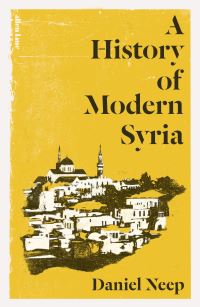
Few countries have had as vexed a political history as Syria. Carved out of the Ottoman empire at the end of the First World War, Syria was brutally ruled as a French colony, cut off by a series of new borders with equally newly created neighbours that pulled apart families, trade networks and political assumptions that had already been ravaged by the war. Syria’s subsequent history has been a series of attempts to make sense of its borders, including a failed attempt in the late 1950s to unite with Egypt and several humiliations at the hands of Israel’s armed forces. It has been a satellite of France, an ally of the USSR and, most recently, torn apart by a civil war that has now been in turn subverted by the rise of the Islamic State, an entity that refuse to acknowledge any of Syria’s existing borders.
-
£22.00
Economics is sold as pure and apolitical: scientific, neutral, exact. This book exposes its true role: to convince us there’s no alternative to capitalism. We live in a world dominated by the dogma that austerity is necessary, unemployment natural, endless wars inevitable and central banks all-powerful. It doesn’t have to be this way. In her bold manifesto, economist Clara E. Mattei tears the mask off our economic system. She unpacks key concepts like growth, inflation, unemployment and balanced budgets to show how they’re weaponized to enforce market dependence, not freedom, stripping us of the power to shape the democratic decisions that govern our daily lives. Enduring problems such as poverty and inequality are not accidents or bugs in the economy, but core features – justified with pseudoscientific models to support a system that unfairly rewards people with the most resources.
-
£40.00
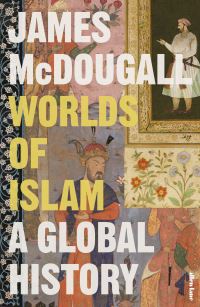
From its emergence in seventh century Arabia, Islam has been a faith on the move.Over the span of a thousand years, armies, missionaries, and merchants carried it to the edges of Europe, the coasts of Southeast Asia and the remote interior of China. From the Arab caliphate to the Mongol empire, from West Africa to the Philippines, Islam was a world-shaping force. By the nineteenth century, Muslims lived everywhere from South Africa to North America. In the age of European empires, through two World Wars and a Cold War, and into the globalised and fractured 21st century, Muslims lived through global conflicts and everyday struggles for adaptation and survival. Historian James McDougall charts the epic global story of Islam’s origins and transformations, as Muslims adapted to their changing times from late antiquity to the digital age, constantly remaking their own worlds as the wider world around them changed.
-
£25.00
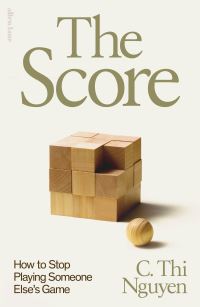
Scoring systems are everywhere. They underpin our daily lives – from social media to education and health – they have become pervasive and increasingly dangerous, warping our desires and outsourcing our values to external institutions. Scores are instructional manuals for behaviour. Instead of encouraging us to be more playful, to take pleasure in the journey of striving towards a goal, institutions weaponize scoring to impose their own interests. Philosopher C. Thi Nguyen shows us how games and their scoring systems, such as likes on social media or university rankings, have fundamentally changed our value systems, prioritising what can be measured and monetized over what is truly meaningful to us. In this love-letter to the immersive and profound power of games, Nguyen charts a way we might be able to break free from these constraints to lead more creative and joyful lives.
-
£20.00
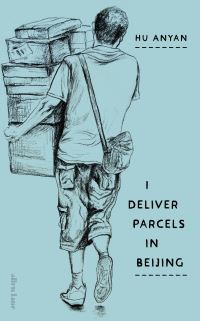
In the twenty years following Hu AnYan’s high school graduation, he has held nineteen different jobs. He’s been a convenience store clerk, a bicycle salesman, a security guard and a delivery driver (among many other things). He moves from city to city in China, slipping away any time the work gets too punishing or the bosses too bossy, carrying with him nothing but his copies of Chekhov and Carver. ‘I Deliver Parcels in Beijing’ is Hu’s account of his life as a low-wage labourer working to live, not living to work.
-
£30.00
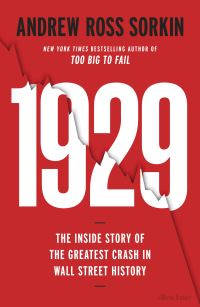
In 1929, the world watched in shock as the unstoppable Wall Street bull market went into a freefall, wiping out fortunes and igniting a depression that would reshape a generation. But behind the flashing ticker tapes and panicked traders, another drama unfolded – one of visionaries and fraudsters, titans and dreamers, euphoria and ruin. With unparalleled access to historical records and newly uncovered documents, New York Times bestselling author Andrew Ross Sorkin takes readers inside the chaos of the crash, behind the scenes of a raging battle between Wall Street and Washington and the larger-than-life characters whose ambition and naivety in an endless boom led to wreckage.